What if the most significant factor in your commercial fire sprinkler system cost San Francisco isn't the pipes themselves, but the water service hidden beneath the sidewalk? Most property owners expect a straightforward installation, yet the reality of SFPUC infrastructure requirements and 2026 SFFD code compliance often creates a complex financial puzzle. It's frustrating to face unexpected permitting delays or specialized labor fees when you just want your building to be safe and secure in your investment.
This guide, presented by Firemex Solutions Inc., provides a clear framework for budgeting your fire protection project, ensuring you account for every municipal fee and technical requirement. We'll explore how building types influence your bottom line, the value of leveraging insurance credits, and why a C-16 licensed contractor is your best defense against budget overruns. Protecting your assets requires more than hardware; it requires a partner who understands local regulations and engineering precision.
Table of Contents
Primary Drivers of Commercial Fire Sprinkler Cost in San Francisco
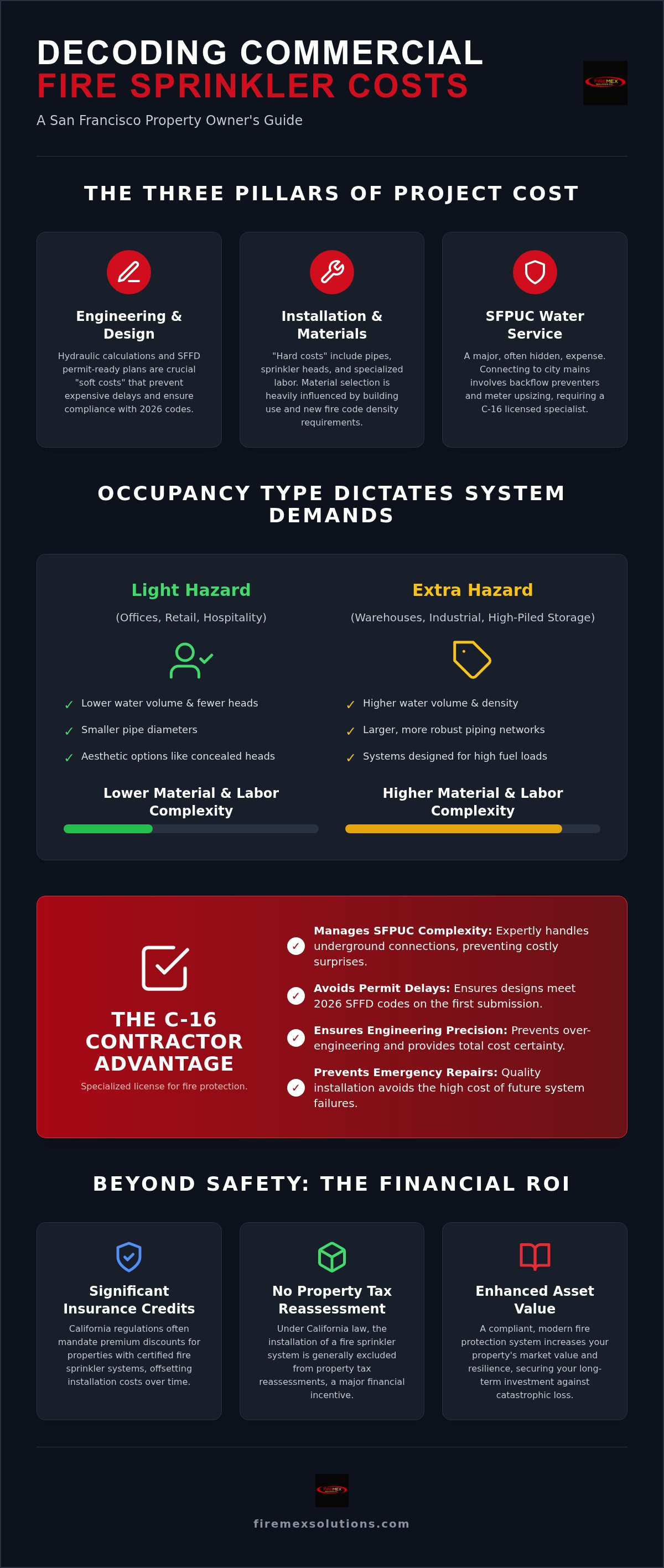
Calculating the commercial fire sprinkler system cost San Francisco requires looking beyond the initial installation. Total cost of ownership involves a trio of expenses: detailed engineering design, professional installation, and recurring fire sprinkler inspection fees. The 2026 San Francisco Fire Code updates have introduced stricter requirements for system density and material selection. These changes ensure your commercial assets withstand high-stakes emergencies, but they also influence your upfront material budget.
Budgeting involves balancing hard costs and soft costs. Hard costs include physical components like the Fire sprinkler system piping and heads. Soft costs cover the intellectual labor, such as hydraulic engineering and SFFD permit expediting. Expert oversight in these early stages prevents project delays and ensures your system meets every local mandate.
Infrastructure and SFPUC Water Service Requirements
In our city's dense urban environment, underground fire service is a major initial investment. This work involves the complex task of connecting your building to the municipal water supply. Underground fire service is the critical engineering link between city mains and building safety. To comply with NFPA 13 standards, most commercial projects require backflow preventers and water meter upsizing. These SFPUC infrastructure requirements are significant factors in the overall commercial fire sprinkler system cost San Francisco. Managing these connections requires a C-16 licensed contractor who understands the specific hurdles of San Francisco's underground utilities. We provide total certainty by handling the engineering details that general contractors often outsource.
Budgeting for Commercial Occupancies: From Retail to Industrial
The specific use of your building dictates the commercial fire sprinkler system cost San Francisco more than its size alone. Under NFPA 13 installation standards, occupancies are classified by hazard level. A 'Light Hazard' office requires fewer heads and lower water volume than an 'Extra Hazard' high-piled warehouse. Industrial sites demand larger piping and high-density discharge patterns to manage increased fuel loads. This engineering complexity directly impacts your budget for both materials and specialized labor.
Retail and hospitality projects in San Francisco often carry an 'aesthetic premium.' High-end boutiques or hotels frequently request concealed sprinkler heads and custom finishes to preserve interior design. These choices add to the final quote compared to exposed systems in industrial settings. Additionally, retrofitting historic San Francisco structures presents unique challenges. Integrating new piping into aging timber-frame or masonry buildings is significantly more labor-intensive than installing systems during a new commercial build. These factors all contribute to the shifting commercial fire sprinkler system cost San Francisco for different property types. If you're planning a project in an older building, consulting with a C-16 specialist early can help you identify structural obstacles before they become expensive surprises.
Engineering and Design: Avoiding Costly SFFD Permit Delays
Precision in fire sprinkler system design is the most effective way to prevent mid-project cost spikes. Professional hydraulic calculations ensure your system performs exactly as needed without the waste of over-engineering. Expert commercial fire protection designers understand the nuances of the SFFD approval process. They act as your advocate, ensuring your plans meet 2026 codes the first time to avoid the frustration of permit revisions. This proactive oversight provides total certainty and keeps your project moving forward without unnecessary fiscal strain.
Long-Term Financial Advantages: Insurance Credits and Compliance ROI
Investing in a sprinkler system offers financial returns beyond safety. California's 'Safer from Wildfires' regulation requires insurers to acknowledge mitigation efforts. For San Francisco property owners, local fire safety mandates often translate into significant insurance premium discounts. Additionally, California law generally excludes fire sprinkler installations from property tax reassessments. This means you can enhance your building's value without increasing your tax liability. These savings help offset the initial commercial fire sprinkler system cost San Francisco over time.
Proactive maintenance is a fiscal strategy. A consistent plan prevents the astronomical expenses associated with emergency fire sprinkler repair near me. Systems that sit dormant without professional oversight are prone to corrosion or mechanical failure. Regular testing ensures compliance and extends the life of your infrastructure. It's a disciplined approach that turns a safety requirement into a long-term asset protection tool.
The Value of a C-16 Licensed Contractor for SF Commercial Assets
In the Bay Area, the C-16 license is the mandatory standard for fire protection work. Hiring a general plumber might seem cost-effective initially, but it often leads to hidden expenses. Plumbers lack the specialized engineering knowledge required for complex commercial hydraulic systems. Firemex Solutions provides total certainty through 20+ years of local expertise. We act as your disciplined partner, ensuring every installation meets rigorous SFFD standards while respecting your commercial fire sprinkler system cost San Francisco budget. Our team manages the technical permit process so you don't have to worry about project delays. Total safety...
Securing Your Commercial Investment for 2026
Managing your commercial fire sprinkler system cost San Francisco requires a disciplined focus on both engineering precision and local regulatory compliance. You now understand how SFPUC infrastructure needs and occupancy hazard levels shape your initial budget. By prioritizing professional design and regular maintenance, you protect your assets while capturing long-term insurance credits and tax advantages. A successful project depends on a partner who navigates these complexities with quiet confidence and technical mastery.
As a C-16 Licensed, Bonded, and Insured contractor with over 20 years of experience, we specialize in ensuring your property meets all 2026 SFFD and SFPUC standards without unnecessary stress. Don't leave your safety or your budget to chance. Get a Professional Commercial Quote with Total Certainty from Firemex Solutions Inc.. We are ready to serve as your dependable shield, providing the expert oversight your business deserves for a secure future. Total safety...
Frequently Asked Questions
Is a fire sprinkler system required for all commercial buildings in San Francisco in 2026?
Most new commercial buildings and major renovations in San Francisco require a fire sprinkler system under 2026 SFFD codes. Specific mandates depend on the occupancy hazard classification and total square footage. While some older structures might have limited exemptions, any significant change in use or structural alteration triggers modern compliance. This necessity is a foundational factor in the commercial fire sprinkler system cost San Francisco.
How often does a commercial fire sprinkler system need to be certified in SF?
Commercial fire sprinkler systems in San Francisco must undergo a formal Title 19 five-year certification to remain compliant with state and local laws. Property owners should also schedule annual and quarterly inspections to ensure mechanical integrity. Don't overlook these regular check-ups; they prevent small issues from becoming expensive repairs. Maintaining a consistent certification schedule provides the documentation needed for insurance renewals and SFFD safety audits.
What is the difference between a wet pipe and a dry pipe system cost-wise?
Wet pipe systems are generally more cost-effective because they have fewer mechanical components and simpler designs. Dry pipe systems are more expensive due to the addition of air compressors and specialized valves required to prevent pipe freezing. In San Francisco's climate, wet pipes are the standard for most heated commercial interiors. Choosing the right system type is a major variable in your commercial fire sprinkler system cost San Francisco.
Can installing a fire sprinkler system reduce my commercial property insurance in California?
Installing a professionally engineered sprinkler system often leads to significant reductions in your commercial property insurance premiums. California's "Safer from Wildfires" regulations specifically encourage these safety improvements by requiring insurers to provide credits for fire-mitigated properties. These long-term savings help recover the initial investment over time. We recommend consulting with your insurance provider to see how a certified system influences your specific policy rates.