


Fire Sprinkler Testing in San Francisco & the Bay Area: The 2026 Compliance Guide
- May 6
- 8 min read
Did you know that while fire sprinklers are 92% effective at controlling a blaze, they only work if they pass a literal stress test under pressure? For many property owners, the 2026 compliance season brings a mix of confusion over Title 19 cycles and the fear of failing an SFFD audit. You likely want to avoid "corrective action" orders while ensuring your fire sprinkler testing doesn't lead to accidental water damage. At Firemex Solutions, we believe in providing the quiet confidence that comes from expert oversight and a "Reliable Guardian" approach to safety.
You deserve to know exactly how your system will perform during an emergency. We'll help you master the critical differences between a visual inspection and a full functional test to meet the NFPA 25, 2013 California Edition standards. This guide provides a clear roadmap through mandatory testing intervals, seismic bracing requirements, and the recent five-year delay for the San Francisco high-rise retrofit mandate. You'll gain the peace of mind that comes from 100% confidence in your system because we're Always Ready... to help you succeed in Protecting What MatterS Most!
Key Takeaways
Distinguish between visual inspections for corrosion and functional fire sprinkler testing that ensures your system operates correctly under pressure.
Master the specific Title 19 certification cycles, including quarterly, annual, and the 5-year internal inspections mandated by the NFPA 25, 2013 California Edition.
Decode California’s "Blue Tag" and "Yellow Tag" system to avoid corrective action orders and maintain a seamless compliance record with the SFFD.
Discover how to prepare your facility for earthquake safety checks and ensure technicians have clear access to critical riser rooms and sprinkler heads.
Table of Contents Fire Sprinkler Testing vs. Inspection: Clearing the Confusion California Title 19 and NFPA 25: Mandatory Testing Cycles Seismic Safety and Preparing Your System for Certification
Fire Sprinkler Testing vs. Inspection: Clearing the Confusion
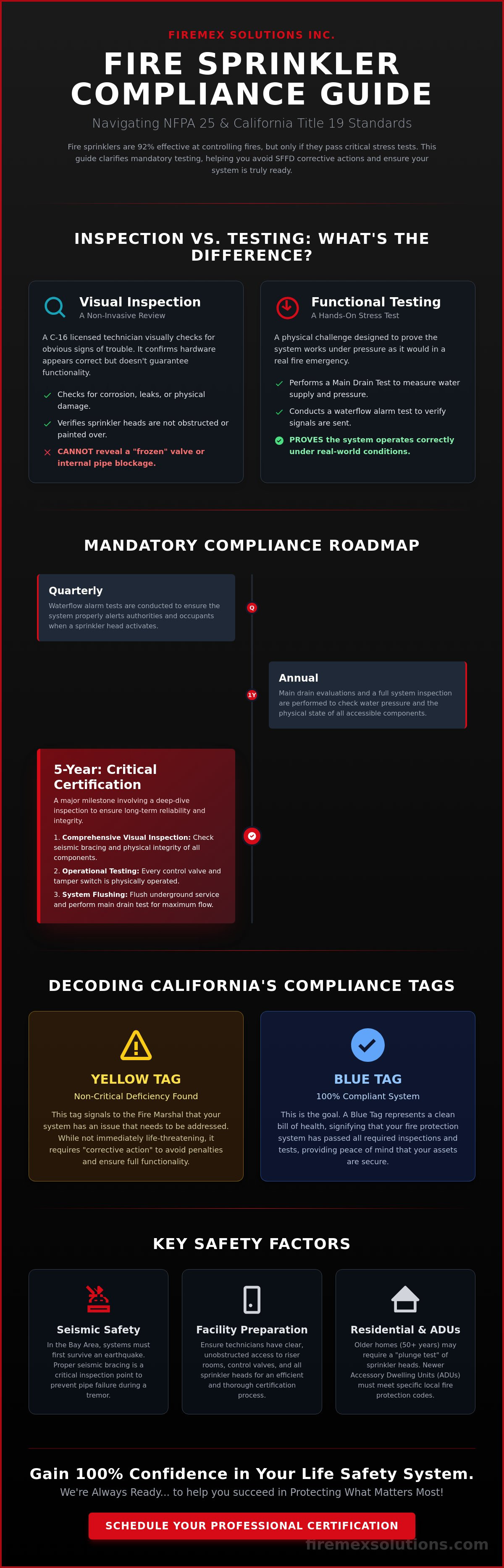
Understanding the difference between a visual check and a functional challenge is the first step toward true property protection. An inspection is a non-invasive visual review where a C-16 licensed technician looks for obvious signs of trouble like corrosion, leaks, or physical obstructions. In contrast, fire sprinkler testing is a hands-on, physical stress test designed to prove the system actually works under pressure. While an inspection confirms the hardware looks correct, it cannot reveal if a valve is "frozen" shut or if a pipe is completely blocked by internal sediment. To understand the foundational mechanics, it helps to review what a fire sprinkler system is and how its components interact. NFPA 25 serves as the national benchmark for these mandatory inspection, testing, and maintenance procedures.
The Functional "Stress Test" Explained
A main drain test is a critical part of the testing process. We measure the water supply and observe the pressure drop to ensure the pipes can handle the demand of a real fire. We also conduct a waterflow alarm test to verify that the SFFD or local authorities receive a signal the moment a head activates. This rigorous approach reflects our "Always Ready..." mindset, ensuring your system isn't just a decoration on the ceiling. Our goal is to provide A+ service that gives you 100% confidence in your life safety equipment.
Why Visual Checks Aren’t Enough in the Bay Area
San Francisco’s unique climate presents specific challenges for fire protection. The constant moisture and salt air can accelerate corrosion on metal components, often hiding behind a layer of dust or even illegal "painted-over" heads. A simple visual check won't catch internal sediment buildup that restricts water flow during an emergency. By performing comprehensive fire sprinkler testing, we ensure that every valve and alarm is fully operational. This proactive strategy is how we succeed in Protecting What MatterS Most!
California Title 19 and NFPA 25: Mandatory Testing Cycles
Compliance in California isn't just about following national rules. While NFPA 25 provides the technical foundation, California’s Title 19 adds a layer of state-specific enforcement that property owners must navigate. For commercial properties, this involves a steady rhythm of monthly valve inspections, quarterly waterflow tests, and annual main drain evaluations. Missing these intervals can lead to a "Yellow Tag" on your riser, signaling a non-critical deficiency to the fire marshal. A "Blue Tag" is the goal, representing 100% compliance and the peace of mind that your assets are secure.
The Critical 5-Year Fire Sprinkler Certification
This major milestone is more than just paperwork. It’s a deep dive into the system’s health that ensures reliability during a seismic event or fire. The process involves three essential steps:
Step 1: A comprehensive visual inspection of all components to confirm seismic and physical integrity.
Step 2: Operational testing of every control valve and tamper switch to ensure they function without hesitation.
Step 3: Flushing of the underground fire service and performing a main drain test to verify maximum water flow.
If you're approaching your certification deadline, our team can help you secure a professional system certification to stay ahead of SFFD audits.
Residential vs. Commercial Testing Protocols
Residential owners in Redwood City or Palo Alto often face different hurdles than high-rise managers in San Francisco. While many single-family homes require less frequent formal testing, newer Accessory Dwelling Units (ADUs) must meet specific local codes to ensure they're integrated safely into the property’s fire protection plan. For older homes with systems installed over 50 years ago, the code requires a "plunge test." This involves removing a sample of sprinkler heads and sending them to a lab to verify they still activate at the correct temperature. It’s a specialized part of fire sprinkler testing that prevents system failure when it matters most. By staying proactive, you maintain the safety-conscious environment your family deserves. We take pride in being the disciplined partner you need, Always Ready... and focused on Protecting What MatterS Most!
Seismic Safety and Preparing Your System for Certification
In the Bay Area, a fire sprinkler system must do more than just suppress flames; it must survive an earthquake first. While national standards often focus on manufacturing, California’s high seismic design categories require systems to withstand significant ground movement. During your scheduled fire sprinkler testing, we evaluate the structural integrity of your piping to ensure it won't rupture during a tremor. This level of safety management is what provides the quiet confidence property owners need in a high-stakes environment.
Seismic Bracing: The Bay Area Necessity
Effective earthquake protection relies on sway braces and flexible couplings. These components allow the system to move with the building rather than snapping under stress. Local SFFD codes are particularly strict about the "clearance" where pipes pass through walls or floors. If these gaps are obstructed or improperly sealed, the system can fail when you need it most. If you've noticed loose hangers or damaged bracing, you may need a residential fire sprinkler repair Bay Area specialist to restore your system's integrity before your official audit.
Partnering with a Reliable Guardian for Compliance
Preparing for your certification doesn't have to be stressful. You can help ensure an A+ service by following a simple preparation checklist before our technicians arrive:
Clear all storage and debris from riser rooms to allow full access to control valves.
Ensure a three-foot clear space around all sprinkler heads to allow for proper spray patterns.
Check for "painted-over" heads or heads with heavy dust buildup, as these are automatic fail points under NFPA 25.
Firemex Solutions brings 20 years of experience navigating the specific quirks of SFFD and San Jose Fire Department regulations. We handle the complex paperwork and reporting so you don't have to. Our team acts as a dependable shield for your assets, ensuring 100% confidence that your property meets every legal and safety requirement. Protecting What MatterS Most! starts with professional fire sprinkler testing. We're Always Ready... to serve as your partner in safety.
Secure Your Property with Professional Compliance Management
Maintaining a fire protection system in the Bay Area requires more than just a quick look at the pipes. It demands a disciplined approach to the mandatory Title 19 and NFPA 25 cycles we've explored throughout this guide. By prioritizing functional fire sprinkler testing and ensuring your seismic bracing meets current California Building Code standards, you move beyond mere paperwork into a state of true safety. You deserve the peace of mind that comes from knowing your system will actually perform during an emergency.
Firemex Solutions brings over 20 years of dedicated experience to every property we protect. Our C-16 licensed professionals understand the specific, evolving demands of the SFFD and local fire marshals, ensuring you achieve 100% confidence in your compliance standing. Don't let a "Yellow Tag" or a missed 5-year certification cycle compromise your assets or your legal standing. We provide the technical expertise and reliable oversight needed to keep your systems operational and your tenants safe.
Schedule Your 5-Year Title 19 Certification with Firemex Solutions Today!
We're here to serve as your dependable shield, providing the A+ service you expect from a seasoned industry partner. We're Always Ready... to help you succeed in Protecting What MatterS Most!
Frequently Asked Questions
How often is fire sprinkler testing required in California?
Under California Title 19 regulations, you must perform monthly visual inspections of control valves and quarterly testing of waterflow alarm devices. Additionally, you are required to conduct annual main drain tests and a comprehensive internal inspection every five years. These mandatory intervals, based on the NFPA 25, 2013 California Edition, ensure your system remains fully operational and compliant with SFFD requirements.
What is the difference between a fire sprinkler inspection and a fire sprinkler test?
An inspection is a non-invasive visual check where a technician looks for signs of physical damage, such as leaks or corrosion. A fire sprinkler testing procedure is a functional challenge that physically operates valves, alarms, and flow switches to prove they work under pressure. While an inspection confirms the system looks safe, the test provides 100% confidence that the hardware will perform as designed during a fire.
Will fire sprinkler testing cause water damage to my property?
Professional testing should not cause water damage because we discharge the water through controlled main drains or test headers into appropriate drainage areas. Our C-16 licensed professionals take specific precautions to monitor pressure levels and secure all discharge points before the test begins. This disciplined approach protects your assets while verifying that the system can handle its maximum flow requirements without failure.
How long does a standard fire sprinkler certification take for an SF building?
The duration depends on the building's size, but a 5-year certification for a small residential property usually takes four to eight hours. For the 126 pre-1975 residential high-rises currently navigating the 2026 compliance landscape, the process may span two to three days. We focus on a steady, authoritative rhythm to complete the work efficiently while ensuring every seismic brace and valve is thoroughly vetted.
What happens if my system fails the 5-year Title 19 test?
If your system fails, the technician will document the deficiencies and may place a "Yellow Tag" on your riser, indicating that repairs are needed. You must then schedule the necessary fire sprinkler repair work to resolve the issues and secure your "Blue Tag" certification. Addressing these points promptly prevents the local fire marshal from issuing formal corrective action orders or fines for non-compliance.
Can I perform fire sprinkler testing myself?
You cannot legally perform these tests yourself because California law requires a contractor with a valid C-16 Fire Protection License to sign off on the certification. Professional fire sprinkler testing involves specialized equipment and technical knowledge of SFFD and NFPA codes that property owners typically don't possess. Partnering with a licensed expert ensures your paperwork is valid and your system remains a dependable shield for your property.
Comments