


Landlord Responsibility for Fire Safety in California and Liability
A fire doesn’t automatically make a landlord liable. In California, a landlord’s responsibility for fire safety includes providing working smoke alarms, and liability may arise when a failure to address a safety hazard contributes to someone’s injury.
It’s understandable to want a clear answer about who is responsible and what should have been in place. Across California, rental properties need smoke alarms in bedrooms and hallways. This article explains how California’s safety duties relate to fire injuries, which alarms and other features landlords provide, and how responsibility may differ depending on the circumstances. You’ll have a clearer picture of what tenants can expect and where fire sprinkler systems fit into rental-property protection.
Table of Contents
Are smoke detectors required in Irvine, CA rentals?
Yes. California landlords must provide working smoke alarms in rental housing, including properties across the San Francisco Bay Area. Requirements cover alarm locations and maintenance, as well as carbon monoxide detection.
Smoke and Carbon Monoxide Alarms
Smoke alarms warn occupants of fire, while carbon monoxide detectors alert them to a separate, odorless gas hazard. California landlords must provide working alarms, and tenants must not remove them. California Legislature identifies Health & Safety Code 17926 as the law requiring carbon monoxide detectors. A smoke alarm and a carbon monoxide detector serve different purposes, so one does not replace the other.
California Rental Smoke Alarm Requirements
California rentals need smoke alarms in every bedroom, outside each sleeping area, and on every level. Landlords must install and test alarms and replace batteries at the start of each tenancy. Older alarms with replaceable batteries may need testing and battery replacement to remain functional. If an alarm chirps, notify the landlord promptly in writing. A dated notice records the problem and repair request.
Requirements by Rental Property Type
Alarm placement depends partly on the type of rental. Apartment buildings need smoke alarms in common areas, while single-family homes need alarms on every floor. Rooming houses require alarms in every bedroom. Sleeping areas must also be covered, including bedrooms and nearby hallways. Landlords must keep required alarms working in all these housing types.
California does not have one penalty amount that applies to every fire-code violation; consequences depend on the violation and enforcement. Separately, when destruction ends a California lease, the landlord must account for the tenant’s security deposit within 21 days, according to California Legislature.
I Was Hurt in a Fire at My Rental, Is My Landlord Liable?
California landlords may be liable when failing to provide basic fire safety contributes to an injury. The cause of the fire, any known hazards, and how the landlord responded all matter. Understanding landlord responsibility for fire safety in California helps explain why each incident must be assessed based on its specific facts.
Negligence and Fire Safety
Negligence means failing to address a known safety hazard that contributes to harm. An ignored hazard that makes a fire more dangerous or escape more difficult may support an injury claim. For example, a tenant can document a blocked exit or a reported safety defect. The landlord’s knowledge, repair response, and inspection records can help show whether the hazard contributed to the injury. These details also help assess landlord responsibility for fire safety in California.
Liability for Injuries and Property Loss
A landlord may be legally responsible for a rental fire injury when missing or faulty basic safety measures contributed to it. If a fire began outside the rental property, California Civil Code 1941.1 is cited in connection with the landlord’s responsibility for structural repairs. A tenant who negligently caused property damage may be liable under California Civil Code 1714. The fire’s origin and each party’s actions shape responsibility.
After a fire, anyone with burns or smoke inhalation should seek medical care first. Preserve photos, fire and medical reports, and earlier repair requests. These records can help explain how the fire started and whether an unresolved hazard increased the harm.
Tenant Responses to Unfixed Hazards
If a landlord has not fixed a fire-safety hazard, report it promptly in writing and keep a dated copy. Describe the problem clearly, such as a faulty electrical fixture or an unusable exit. Photograph the condition when it is safe to do so, and save messages and earlier repair requests. This creates a record of notice and the landlord’s response.
After a disaster, organize this evidence alongside inspection records and any fire report. Legal advice can help assess how the fire’s cause, notice of the hazard, and resulting injury or property loss relate to a claim.
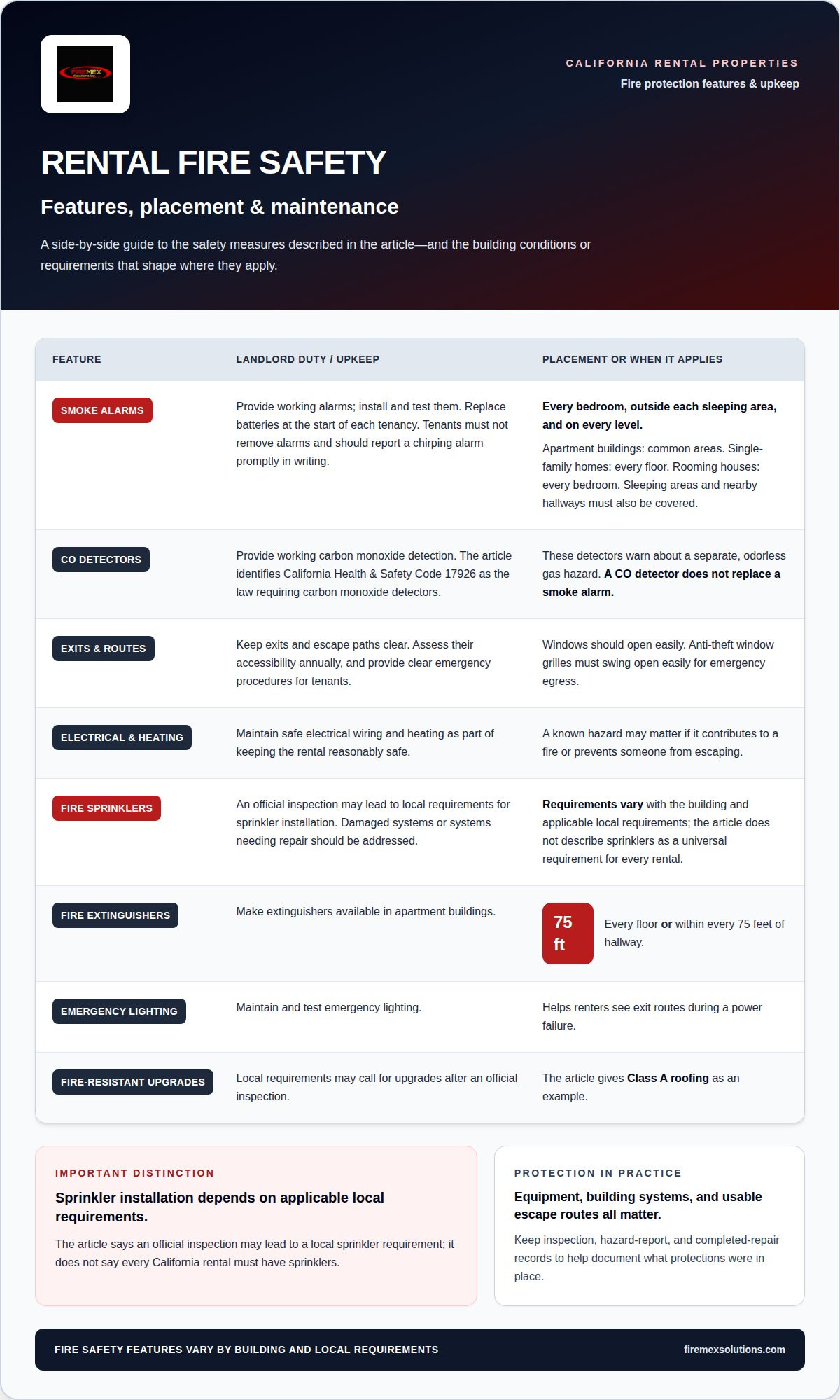
Landlord-provided fire and safety features
California landlords must keep rental properties reasonably safe, including maintaining clear exits and safe electrical wiring and heating. These conditions support habitability and may affect liability if a known hazard contributes to a fire or prevents escape. Smoke alarms are only one part of fire protection; safe exit routes and maintained building systems matter too.
Features vary by building and applicable local requirements. An official inspection may lead to local requirements for fire-resistant upgrades, such as Class A roofing, or sprinkler installation. In apartment buildings, fire extinguishers must be available on every floor or within every 75 feet of hallway. Emergency lighting should also be maintained and tested, so renters can see exit routes during a power failure.
Landlords should keep escape paths clear and assess their accessibility annually. Anti-theft window grilles must swing open easily for emergency egress, and windows must open easily. Clear emergency procedures can help tenants understand how to respond during a fire. These details turn installed safety features into usable protections rather than equipment that cannot help during an evacuation.
When a fire sprinkler system is damaged or needs repairs, arrange fire sprinkler repair to address the system issue. Clear records of inspections, reported hazards, and completed repairs can help explain what protections were in place. For readers weighing fire-related liability, this is general information, not legal advice; consult an attorney about how specific evidence and circumstances apply.
Firemex Solutions
Firemex Solutions Inc. helps property owners address fire sprinkler system needs related to rental safety. Turn to the team when planning a new system, working through sprinkler design, or addressing a system that needs repair or maintenance. Firemex provides residential and commercial sprinkler systems, underground fire service, system design, repairs, maintenance, and certifications for different property needs.
For a rental with a sprinkler concern, the next step depends on the system’s condition and the building project. Firemex Solutions Inc. handles the sprinkler-system aspect; smoke alarms, clear exits, and other landlord duties remain separate parts of fire safety. Understanding these responsibilities helps owners focus on the right protections for their property.
Contact Firemex Solutions Inc. to discuss your fire sprinkler system needs.
Make Fire Protection Part of Your Next Property Decision
Fire-safety planning is not just a response to a past incident. It can also guide how you maintain or improve a rental property, especially when a sprinkler system is part of its protection. Understanding landlord responsibility for fire safety in California helps owners distinguish questions about legal duties from questions about the condition or design of a sprinkler system.
For residential and commercial properties, Firemex Solutions works on sprinkler systems and underground fire service. Consider these services when planning system work or addressing a sprinkler concern; they do not replace other fire-safety obligations. To discuss your property’s sprinkler needs, request a free estimate from Firemex Solutions.
Contact Firemex Solutions to discuss your property’s fire sprinkler system needs and take a practical step toward stronger fire protection.
Frequently Asked Questions
Who Is Responsible If There Is A Fire At My Rental Unit?
Responsibility is not automatic simply because a fire occurred; the cause and each party’s conduct matter. An investigation may distinguish an appliance malfunction, an external fire, or a tenant’s negligent act. Keep the incident report, photographs, repair history, and communications together. These records can help clarify what happened and whether a property condition contributed to the loss. An attorney can assess how the evidence relates to a specific claim.
What Is a Landlord's Legal Responsibility After a Fire in the San Francisco Bay Area?
After a fire, a landlord’s duties depend on the damage and whether the rental remains habitable. California Civil Code § 1933 addresses a rental agreement when a unit is completely destroyed. Partial damage instead raises repair and habitability questions, including those addressed by Civil Code § 1941.1. The practical distinction is whether occupants can safely use the unit, not simply whether repairs are visible.
Are California landlords required to install smoke alarms and where?
Yes. California rentals require smoke alarms in bedrooms, outside sleeping areas, and on each level. For installation, a ceiling-mounted alarm should sit 4 inches from a wall; a wall-mounted alarm should be 4 to 12 inches below the ceiling. Press the test button once a month. Correct positioning and regular testing help ensure an alarm can alert occupants.
What fire extinguishers or sprinkler systems are California landlords required to provide?
Extinguisher requirements vary by building and applicable local rules. In apartment buildings, extinguishers must be available on each floor or within every 75 feet of hallway. Local ordinances may require sprinkler installation or fire-resistant upgrades after an official inspection. The building type and inspection findings affect which features apply, so an extinguisher requirement should not be assumed to replace a sprinkler requirement.
What are California landlord requirements for fire exits, hallways, and escape routes?
Landlords must keep exits clear, while tenants should keep common areas unobstructed and avoid placing flammable items near exits. In multi-story housing, emergency-procedure information helps residents understand escape arrangements. If a hallway is blocked or an exit window will not open, report it in writing and keep a copy. This record identifies the location and safety concern.
Comments