top of page

All Posts

A failed hydrostatic test doesn't just stall a project; it can cost a developer thousands in excavation and re-work fees. You've likely felt the frustration of juggling conflicting demands between city water departments and the fire marshal. It's a high-stakes balancing act where a single oversight in the underground line can halt your entire timeline. This guide simplifies the complex process, ensuring you meet the critical fire sprinkler system pressure requirements California mandates while managing the specific nuances of Bay Area coordination.

We'll walk through the essential NFPA 24 standards, the 200 psi hydrostatic testing process, and the latest 2026 SFPUC backflow preventer protocols. By mastering these technical details, you'll secure a code-compliant foundation that protects both your assets and your construction schedule. Let's explore how to bridge the gap between municipal water supply and internal fire suppression engineering.

Table of Contents

Understanding the Underground Fire Service: The Lifeline of Your Property

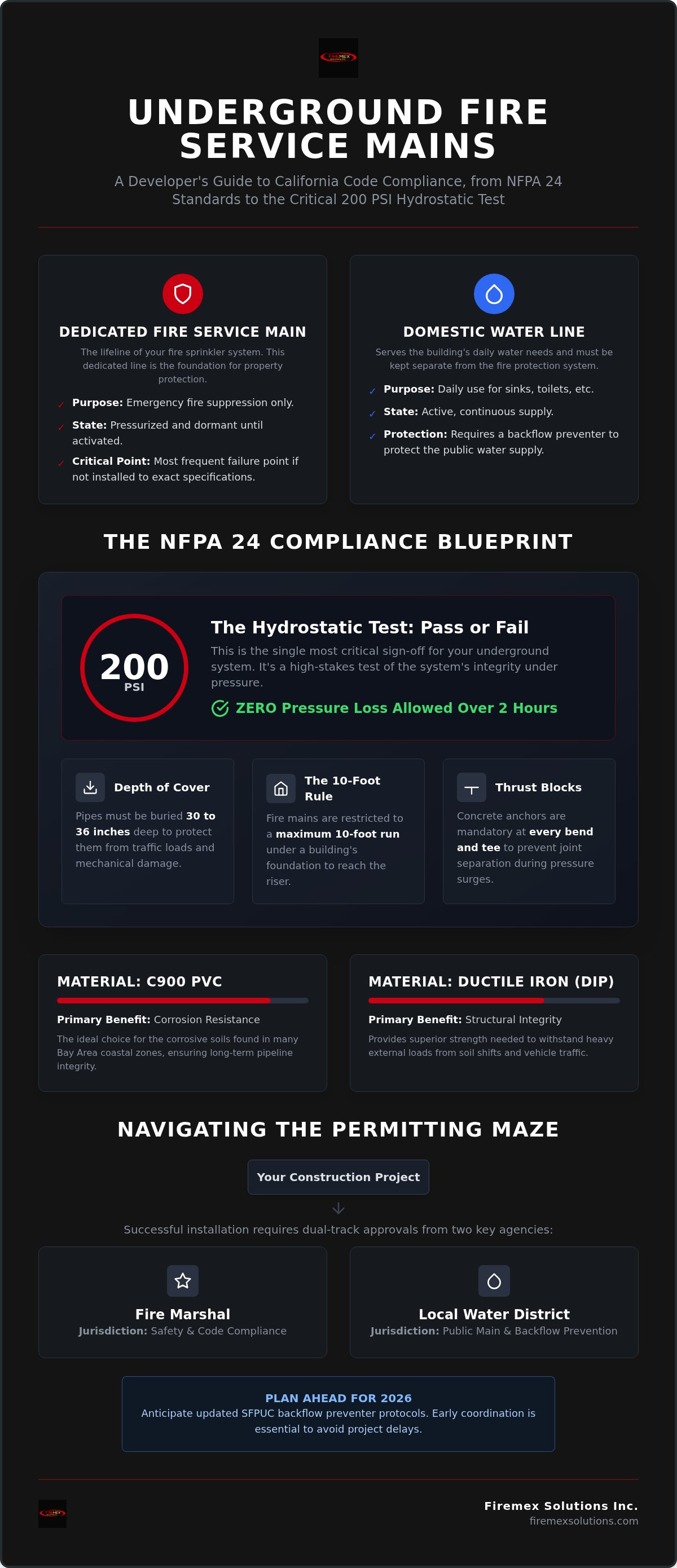
The underground fire service is a dedicated water line extending from the public main directly to the base of the building's fire riser. Developers must distinguish this from domestic water lines; while domestic lines serve daily needs, the fire main remains pressurized and dormant until an emergency occurs. It's the critical foundation for any Fire sprinkler system. Because it's buried, this portion is the most frequent failure point if not installed to exact specifications. Issues like improper bedding or poor joint restraints often lead to leaks during high-stakes safety events.

Protecting the city's potable water is equally vital. A backflow preventer acts as a one-way gate, ensuring stagnant water from the fire lines never re-enters the public supply. Meeting the fire sprinkler system pressure requirements California enforces requires a system that can withstand 200 psi during testing without a single drop of loss. For 2026, staying compliant with updated SFPUC backflow protocols is a non-negotiable step for project approval and long-term liability management.

Key Components of an Underground Fire System

The technical journey starts at the city tap and moves through the lead-in pipe toward the building. This transition is where the underground engineering must align with the specific fire sprinkler system pressure requirements California inspectors look for during the final riser sign-off. Key elements include:

  • Fire Department Connection (FDC): An external inlet for firefighters to pump additional water into the system to boost internal pressure.

  • The Riser Transition: The point where heavy underground mains meet the internal residential fire sprinkler systems.

  • Material Selection: We often weigh C900 PVC against Ductile Iron Pipe (DIP). C900 resists the corrosive soils found in many Bay Area coastal zones, while DIP provides the structural integrity needed for heavy external loads.

This engineering ensures the system performs under the gravity of a safety event, providing the peace of mind that only a code-compliant foundation can offer. Proper material choice and component placement prevent the costly re-work that haunts many uncoordinated projects.

Navigating NFPA 24 and Bay Area Compliance Requirements

NFPA 24 serves as the national standard for private fire service mains, providing the technical framework needed to satisfy California's Automatic Sprinkler System Regulations. In the dense urban environments of the Bay Area, compliance starts with protecting the pipe from external loads. Depth of cover is a primary concern; pipes must be buried deep enough to avoid mechanical damage from heavy vehicle traffic and soil shifts. Typically, this requires a minimum of 30 to 36 inches of cover, though specific municipal codes may vary based on local conditions.

Structural limitations are equally strict. The "10-foot rule" restricts how far a fire main can run under a building's foundation. While a short extension is allowed to reach the riser, running mains deep into a building footprint is generally prohibited. To prevent joint separation during high-pressure surges, we install concrete thrust blocks at every bend and tee. These anchors are vital for meeting the fire sprinkler system pressure requirements California inspectors verify during high-pressure testing. If you're unsure about your site's layout, Finding the Best Fire Protection Company Near Me in the San Francisco Bay Area can help ensure your design stays within these rigid boundaries.

Coordinating with Local Water Districts (SFPUC, EBMUD, and Beyond)

Successful installation requires dual-track permitting. You must secure approval from the Fire Marshal for safety compliance and the local water department for the public main connection. Agencies like SFPUC and EBMUD have specific standards for backflow preventers. In San Mateo and Santa Clara counties, double check backflow assemblies are often mandatory to protect the potable supply. Managing these bureaucratic layers is just as critical as the physical trenching to keep your project on schedule. It's about building a foundation of total certainty from the street to the riser.
Fire sprinkler system pressure requirements California

The Installation Process: From Trenching to Hydrostatic Testing

Installation begins with precise excavation. Bay Area terrain often presents challenges, from rocky hillside soil to dense clay. We prioritize stable bedding and trench safety to prevent the pipe from settling or shifting over time. Once the line is laid, pipe joining must be meticulous. Before the system reaches the riser, we perform a mandatory flush. This step clears out construction debris, ensuring that dirt or stones don't compromise the internal heads later. It's a functional necessity for long-term reliability.

The most critical milestone is the hydrostatic test. To meet the fire sprinkler system pressure requirements California mandates, the underground line must hold 200 PSI for two hours without any pressure drop. This rigorous standard confirms that every joint and fitting can handle the surge of a safety event. We cross-reference these results with the California Fire Code fire flow requirements to ensure the water supply matches your building’s specific hazard classification. Only after the line passes this test do we begin the final backfilling and compaction.

Preparing for the Fire Marshal Inspection

A successful visual inspection is required before you cover the trench. The Fire Marshal will verify the depth of cover, the presence of mechanical restraints, and the placement of thrust blocks. Common reasons for failure include small leaks at joints or improper bedding materials. We act as your Reliable Guardian during this phase, managing the coordination with the marshal to ensure a smooth sign-off. Our team handles the technical oversight so you can focus on the next stage of your build without the stress of costly re-work or inspection delays.

Securing Your Project's Fire Safety Foundation

Navigating the transition from city mains to building risers requires more than just mechanical skill. It demands strict adherence to NFPA 24 standards and a precise understanding of the fire sprinkler system pressure requirements California fire marshals demand for final certification. By prioritizing proper material selection and coordinating early with local water districts like the SFPUC or EBMUD, you eliminate the risk of failed hydrostatic tests and the high costs of re-work. These steps are essential for maintaining your project's timeline and ensuring the long-term integrity of your infrastructure.

As C-16 Licensed Fire Protection Contractors with over 20 years of local safety expertise, Firemex Solutions Inc. acts as your Reliable Guardian. We handle the technical complexities and municipal coordination so your construction schedule remains on track. Request a consultation for your underground fire service project today...

Your building's safety foundation starts beneath the surface. We're here to ensure that foundation is unbreakable and fully compliant from day one.

Frequently Asked Questions

How deep does an underground fire service line need to be buried in the Bay Area?

Underground fire lines in the Bay Area typically require a minimum of 30 to 36 inches of cover above the pipe. This depth protects the infrastructure from mechanical damage caused by heavy vehicle traffic and external loads. While California doesn't face deep frost issues, local municipal codes may mandate deeper burial in specific soil conditions to ensure long-term structural integrity.

Can I use the same trench for my domestic water and underground fire service?

You can often use the same trench, but strict separation requirements apply to prevent contamination and ensure maintenance access. Domestic and fire lines must maintain specific horizontal and vertical separation as mandated by local water departments like EBMUD or SFPUC. Keeping these lines distinct is vital for meeting the fire sprinkler system pressure requirements California inspectors verify during the final site sign-off.

What is a hydrostatic test, and why is it required for fire lines?

A hydrostatic test is a high-pressure evaluation where the underground line is pressurized to 200 psi for two hours. It's required to prove the system's structural integrity and ensure no leaks exist at the joints or fittings. Passing this test is a non-negotiable step for fire sprinkler system pressure requirements California enforces, providing total certainty that the lifeline will perform during an emergency.

Who is responsible for the connection between the city main and my property line?

The property owner is generally responsible for the costs and coordination of the connection from the public main to the building. While the city water department often performs the actual tap into the main, a C-16 licensed contractor must manage the installation from the property line to the riser. This partnership ensures that the transition meets both municipal water standards and state fire codes.
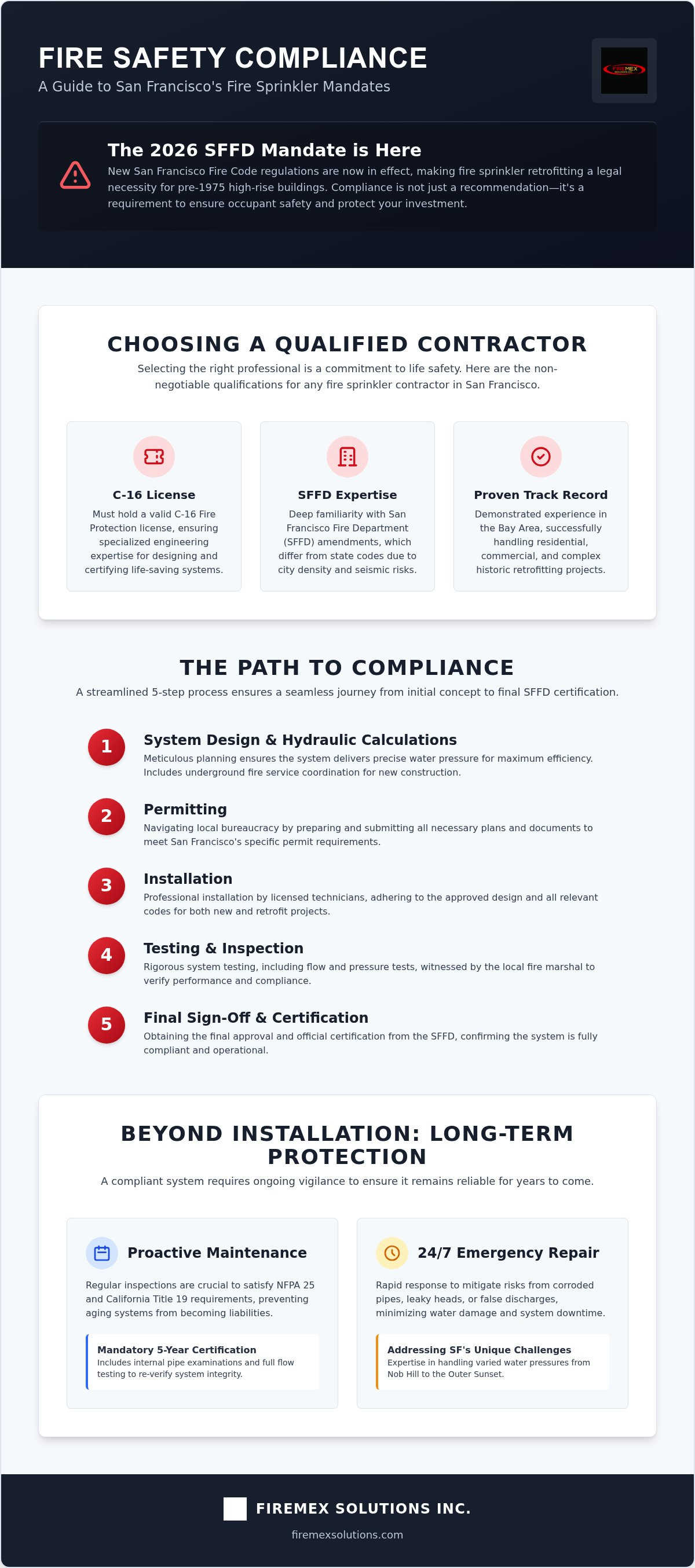


With the 2026 San Francisco Fire Code mandate now in full effect, your building's safety is no longer just a recommendation. It is a legal necessity. You likely feel the weight of these regulations, especially if you're searching for a fire sprinkler contractor San Francisco property owners trust to navigate retrofitting requirements for pre-1975 high-rises. It's stressful to worry about failing a mandatory SFFD inspection or facing high costs for emergency repairs. We understand that you need more than a technician; you need a partner who ensures your property remains a safe haven. Safety first...

This guide provides the roadmap to achieving total certainty in your fire protection strategy. You'll learn how to manage Title 19 certifications and C-16 licensed installations with ease. We'll explore the essential steps to coordinate with local fire marshals and protect your long-term investment through expert oversight. Reliable protection...

Table of Contents

Choosing a Qualified Fire Sprinkler Contractor in San Francisco

Selecting the right fire sprinkler contractor San Francisco property owners rely on isn't just a business decision; it's a commitment to life safety. You need a professional who holds a valid C-16 Fire Protection Contractor license. This specific certification ensures the team possesses the specialized engineering expertise required to design systems that actually work when they're needed most. While general contractors handle broad construction, only a C-16 specialist can legally certify these life-saving assets.

San Francisco presents unique challenges. The city’s high density and seismic activity require a contractor with deep familiarity with San Francisco Fire Department (SFFD) amendments. Whether you're managing a historic retrofit or a modern multi-family complex, your partner must understand how local codes differ from standard California regulations. They should demonstrate a proven track record in the Bay Area, handling everything from residential fire sprinkler systems to complex commercial layouts.

Essential SF Compliance and Licensing Standards

For a comprehensive overview of fire sprinkler systems, one must look at how engineering meets local law. In SF, this means balancing hydraulic efficiency with the structural integrity of older buildings. A local fire protection company near me provides the rapid response necessary for both compliance and emergency oversight. They ensure that every installation meets the rigorous 2026 standards. This local expertise is the difference between a passed inspection and a costly compliance delay. A dedicated fire sprinkler contractor San Francisco specialist ensures your building remains a safe, compliant environment for every occupant.

Comprehensive Fire Protection: From Design to Certification

When you hire a professional fire sprinkler contractor San Francisco team, the process begins with meticulous fire sprinkler system design utilizing advanced hydraulic calculations. These calculations ensure your system delivers the exact water pressure needed for maximum efficiency without wasting resources. For new construction, this phase includes complex underground fire service coordination, bridging the gap between municipal water mains and your building's internal network. Accurate engineering prevents costly delays during the build.

Once the physical installation is complete, the focus shifts to long-term reliability. A qualified fire sprinkler contractor San Francisco specialist implements a recurring inspection schedule to satisfy NFPA 25 and California Title 19 requirements. This includes the mandatory five-year certification cycle involving internal pipe examinations and flow testing. Obtaining these official certifications is vital. It protects your property from legal liability and ensures your insurance coverage remains valid. These steps provide the peace of mind that your system will perform exactly as intended during a crisis.

Streamlining SFFD Approvals and New Installations

Navigating the local bureaucracy requires a disciplined approach. We follow a clear five-step process for system approval: design, permitting, installation, testing, and final sign-off. Understanding the San Francisco fire sprinkler permit requirements is the first hurdle in this journey. Modern architecture in the city often demands creative engineering to fit life-safety systems into tight or non-traditional spaces. By managing every detail from the initial blueprint to the final inspector's handshake, we provide a seamless experience. If you're ready to secure your property, consider partnering with an experienced fire protection team to oversee your next project. Total certainty...

Fire sprinkler contractor San Francisco

Proactive Maintenance and Emergency Sprinkler Repair in the Bay Area

Aging infrastructure leads to hidden vulnerabilities within your safety system. Corroded pipes, leaky sprinkler heads, or unexpected false discharges can escalate into major property damage. As a dedicated fire sprinkler contractor San Francisco specialist, we provide 24/7 emergency fire sprinkler repair to mitigate these risks. Our team responds rapidly to minimize water damage and system downtime. We understand that a malfunctioning system is a gap in your building's armor. Response ready...

San Francisco's varied topography creates unique water pressure challenges. Nob Hill's requirements differ significantly from those in the Outer Sunset. Finding a fire sprinkler contractor San Francisco residents can depend on means choosing a partner who understands these local nuances. We utilize localized expertise to navigate these variables, ensuring your system operates within safe parameters. Maintaining detailed records of every intervention is a core part of our service. This meticulous documentation ensures a seamless fire sprinkler inspection when regulatory deadlines arrive.

The Value of a Long-Term Fire Protection Partner

Adopting a proactive maintenance plan is more cost-effective than relying on reactive, emergency-only repairs. Our "Reliable Guardian" approach focuses on consistent oversight to prevent system failures before they occur. We align every maintenance task with NFPA 13 installation standards to guarantee peak performance. This disciplined strategy is especially critical for homeowners. Protecting your family requires specialized care, which is why we emphasize the importance of residential fire sprinkler repair Bay Area services for single-family residences. Constant vigilance ensures total certainty...

Secure Your Property with Total Certainty

Meeting the 2026 San Francisco fire safety mandates doesn't have to be a source of stress. By prioritizing a specialized C-16 partner, you ensure your building meets rigorous SFFD standards while protecting your long-term investment. We've explored how professional hydraulic design, underground coordination, and proactive maintenance work together to create a dependable shield for your assets. Choosing an experienced fire sprinkler contractor San Francisco specialist is the most effective way to eliminate compliance anxiety and prevent costly emergency failures. Our team brings over 20 years of local experience to every project, providing a seamless loop of design, installation, and repair services tailored to the Bay Area's unique challenges. Reliability matters...

Request a Professional Quote from Firemex Solutions Today to partner with our C-16 licensed specialists. We're here to help you achieve lasting peace of mind and property safety.

Frequently Asked Questions

How often does a San Francisco building need a fire sprinkler inspection?

Most San Francisco buildings require a professional inspection at least once a year to maintain compliance with California Title 19 and NFPA 25 standards. These yearly checks verify that the system remains operational and free of obstructions. Additionally, a more rigorous five-year certification cycle is mandatory for all properties. This thorough process involves internal pipe examinations to ensure total certainty.

Can I repair my own fire sprinkler system in a residential property?

No, you shouldn't attempt to repair a fire sprinkler system yourself. California law requires a licensed C-16 contractor to perform any work on life-safety systems. Self-repairing these complex assets can lead to system failure during an emergency or accidental water damage. Hiring a professional fire sprinkler contractor San Francisco specialist ensures your home remains protected and your insurance coverage stays valid.

What is the difference between a 5-year fire sprinkler test and a routine inspection?

A routine inspection is primarily a visual check performed annually to identify obvious leaks or damage. In contrast, the five-year test is a comprehensive certification required by Title 19. It involves flushing the system, performing internal pipe inspections for corrosion, and conducting hydrostatic testing. This deeper look is essential for identifying hidden issues that visual inspections might miss. Safety first...

Does San Francisco require fire sprinklers in all new residential constructions?

Yes, San Francisco requires automatic fire sprinkler systems in all new residential constructions, including single-family homes and duplexes. This mandate aligns with the California Residential Code established in 2011. For modern property owners, this means integrating life-safety systems into the initial design phase. Working with an expert fire sprinkler contractor San Francisco team ensures these new installations meet all SFFD specific requirements.

What should I do if a fire sprinkler head starts leaking in my SF apartment?

If a sprinkler head leaks, immediately contact your building management or a professional repair service. Avoid touching or hanging anything from the sprinkler head, as this can trigger a full discharge. If you have access to the main control valve and it's safe to do so, you can shut off the water to minimize damage. Swift action prevents minor leaks from becoming disasters.

How long does a fire sprinkler installation take for a commercial building in the Bay Area?

Commercial installation timelines typically range from several weeks to several months depending on the building's size and complexity. The process involves multiple stages, including design approval, permitting through the SFFD, and the physical installation of piping and heads. Historic retrofits often take longer due to structural constraints. A disciplined contractor provides a clear schedule to ensure the project stays on track.


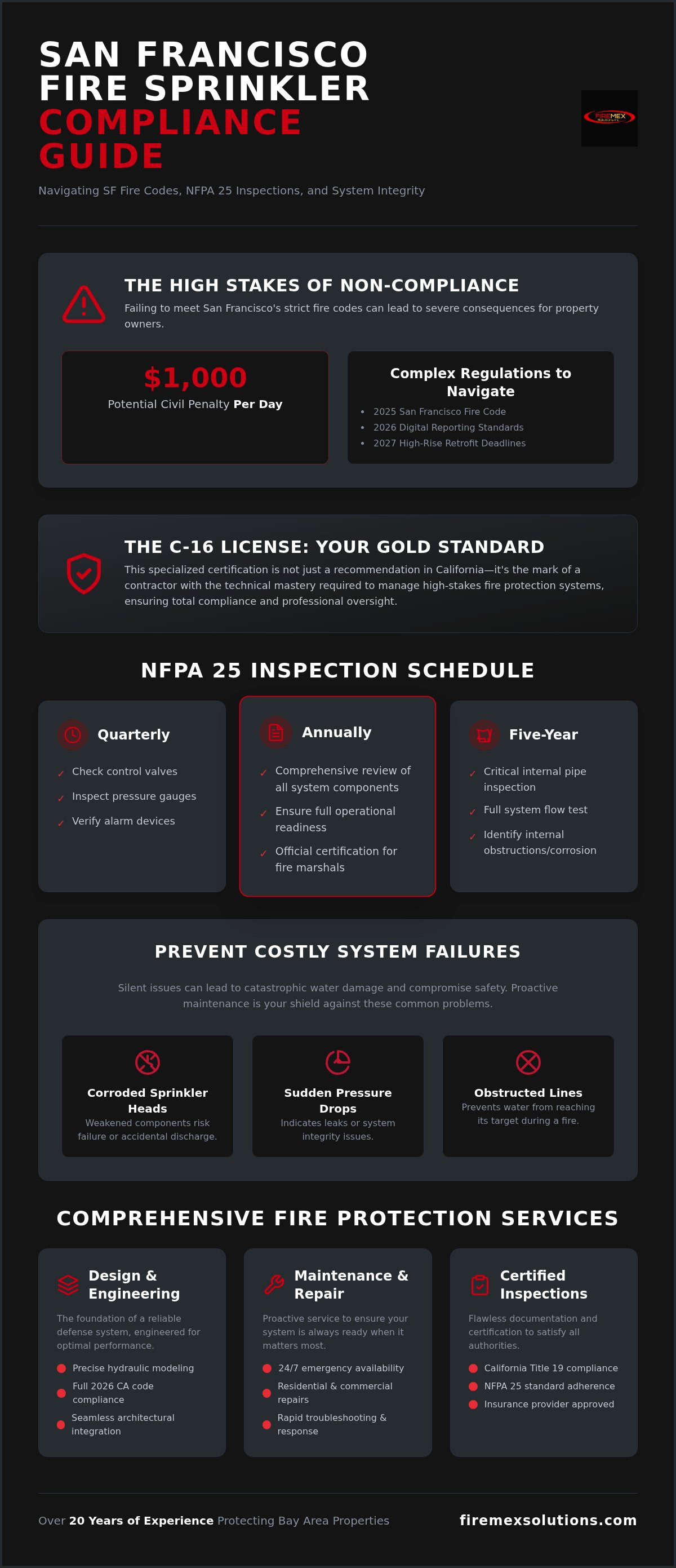
Did you know that failing to meet the latest San Francisco fire codes can result in civil penalties of up to $1,000 per day? Managing a property in the Bay Area means facing some of the strictest safety regulations in the country. It's often overwhelming to keep track of the 2025 San Francisco Fire Code and the new digital reporting standards that went into effect on January 1, 2026. This guide provides the essential steps to secure a successful fire sprinkler inspection San Francisco requires to keep your building compliant and safe.

We'll break down the 2027 high-rise retrofit deadlines, NFPA 25 testing frequencies, and how a C-16 licensed partner ensures your system remains a reliable shield. With over 20 years of experience, we understand the gravity of these requirements. You'll learn how to obtain clear documentation and maintain total certainty in your property's protection.

Table of Contents

Navigating Local Fire Sprinkler Inspection Requirements in San Francisco

Maintaining fire sprinkler systems in the Bay Area is about more than just checking boxes. It's about protecting your legacy. In California, a C-16 license isn't just a recommendation; it's the gold standard for fire protection. This specialized certification ensures your contractor possesses the technical mastery to manage high-stakes safety equipment. While national standards provide a baseline, San Francisco municipal codes often demand more. The city follows a doctrine where the most restrictive requirement prevails. This means local property owners must meet higher bars for digital reporting and system readiness when scheduling a fire sprinkler inspection San Francisco.

We act as your Reliable Guardian. We handle the technical burden so you can focus on your business or family. Compliance brings peace of mind, knowing your assets and lives are shielded by professional oversight. Our team bridges the gap between complex State Fire Marshal regulations and the practical needs of your property.

Understanding NFPA 25 and California State Fire Marshal Standards

California Title 19 and NFPA 25 dictate strict maintenance cycles that every property must follow. A standard fire sprinkler inspection San Francisco routine includes:

  • Quarterly: Checking control valves, gauges, and alarm devices.

  • Annually: A comprehensive review of all system components to ensure operational readiness.

  • Five-Year: A critical internal pipe inspection and full flow test.

Firemex provides the official certifications that satisfy fire marshals and insurance providers alike. For a deeper look at these requirements, check out our Fire Sprinkler Inspection in San Francisco: The 2026 Property Owner’s Guide. Our 20 years of experience ensures your documentation is flawless and your system is ready when it matters most.

Essential Maintenance and Repair for Bay Area Fire Systems

System failures often stem from silent issues like corroded heads, sudden pressure drops, or obstructed lines. These problems don't announce themselves until a crisis occurs. Routine maintenance acts as a proactive shield for your property investment. It prevents accidental discharges that lead to catastrophic water damage and ensures you're prepared for your next fire sprinkler inspection San Francisco. For major modifications or system upgrades, you'll likely need a San Francisco fire sprinkler permit to remain compliant with local safety laws.

Firemex specializes in both delicate residential fire sprinkler repair and large-scale commercial overhauls. We don't just fix pipes; we restore the security of your building. Our team treats every repair with the gravity it deserves, ensuring your fire sprinkler inspection San Francisco results are flawless. If you're concerned about aging components, you can request a professional maintenance review to catch small issues before they become expensive failures.

24/7 Emergency Repairs and Rapid Troubleshooting

When a sprinkler head leaks or a pipe bursts, every second counts. Immediately locate and shut off the main water control valve to minimize damage. Because emergencies don't follow a business schedule, 24/7 availability is a core pillar of our service. As your Reliable Guardian, we provide the rapid response needed to protect your assets during a crisis. For more detailed instructions on handling sudden system failures, refer to our guide on Emergency Fire Sprinkler Repair Near Me: The Bay Area Guide to Rapid Response. Always ready... Always responsive...

Fire sprinkler inspection San Francisco

Professional Design and Underground Fire Service Engineering

Engineering a fire protection system isn't just about layout; it's a precise science where hydraulic calculations serve as the foundation of a reliable defense. These calculations ensure that water pressure and flow rates are perfectly calibrated to suppress a fire in its earliest stages. For developers across the Bay Area, from Oakland to San Jose, coordinated engineering is essential for passing the mandatory fire sprinkler inspection San Francisco requires for new occupancy. We ensure every blueprint aligns with the latest 2026 California automatic fire extinguishing systems standards. Our design process focuses on three core pillars:

  • Precise hydraulic modeling for optimal water pressure.

  • Full compliance with updated 2026 California building codes.

  • Seamless integration with your specific architectural specifications.

Modern San Francisco architecture often prioritizes clean lines and minimalist aesthetics. We specialize in integrating discreet residential systems that blend into high-end designs without compromising life safety. By balancing technical necessity with visual appeal, we protect your property's value while maintaining total compliance with local safety mandates. Our approach ensures that safety components are effective yet nearly invisible to the untrained eye.

Coordinating Underground Fire Service for New SF Developments

Underground fire service is the dedicated water supply line from the city main to the building's riser.

Managing this installation involves complex coordination between local utility providers and building contractors to ensure seamless water delivery. With our 20-year history of successful residential fire sprinkler systems installations, we act as the bridge between municipal infrastructure and your property's internal safety network. Our experienced team manages the logistical hurdles of underground excavation and utility tie-ins, simplifying the path to your final fire sprinkler inspection San Francisco and long-term certification. Total certainty begins deep beneath the surface.

Achieve Total Certainty in Your Fire Protection Strategy

Securing your property against fire risks requires more than just meeting a deadline. It's about maintaining a constant shield of safety for your residents or employees. By prioritizing regular maintenance and understanding the latest 2026 California building codes, you protect both your physical assets and the lives within them. A professional fire sprinkler inspection San Francisco ensures your system remains operational and compliant with the city's strict fire marshal standards. Whether you need a sophisticated underground service installation or a rapid repair, partnering with a seasoned expert provides the peace of mind you deserve.

As a C-16 Licensed Fire Protection Contractor with over 20 years of industry experience, we serve as a Reliable Guardian for properties across San Francisco, San Jose, and Oakland. Secure Your Property with Firemex Solutions Inc. Today. We're here to help you navigate every regulatory hurdle with quiet confidence and expert oversight.

Frequently Asked Questions

How often do I need a fire sprinkler inspection in San Francisco?

You must follow the inspection cycles mandated by NFPA 25 and California Title 19. This includes quarterly checks for control valves and gauges, a comprehensive annual inspection of all system components, and a rigorous five-year internal pipe inspection. Adhering to this schedule ensures your fire sprinkler inspection San Francisco documentation remains current and your property stays fully compliant with local fire marshal standards.

What is the difference between a fire sprinkler test and a visual inspection?

A visual inspection is a physical walk-through to identify signs of corrosion, leaks, or obstructed heads. A system test involves physically operating the components, such as performing a flow test to verify water pressure and alarm triggers. Both elements are critical parts of a professional fire sprinkler inspection San Francisco to provide total certainty that the system will perform during an emergency.

Who is authorized to perform fire sprinkler certifications in the Bay Area?

Only contractors holding a valid C-16 Fire Protection license from the California Contractors State License Board are authorized to certify these systems. It's essential to work with a seasoned professional who understands the specific digital reporting standards of the San Francisco Fire Department. A licensed contractor provides the expert oversight necessary to protect your assets and satisfy both legal and insurance requirements.

Does California law require fire sprinklers in all residential homes?

California law has required automatic fire sprinklers in all new one and two-family dwellings built since January 1, 2011. In San Francisco, additional mandates apply to older buildings. Specifically, approximately 126 pre-1975 residential high-rise buildings must complete sprinkler retrofitting by the 2027 deadline. These regulations are designed to provide a dependable shield for lives and property in high-density urban environments.


LOGO FIREMEX REGISTRADO SIN FONDO BLANCO.PNG

Copyright © 2024 by FIREMEX SOLUTIONS INC. ®

All Rights Reserved.

bottom of page