


2026 California Fire Code: Bay Area Commercial Guide
A renovation that looks minor on paper can change a commercial building’s fire-protection scope. For owners asking what the California fire code for commercial buildings 2026 means for a planned project, start with the code cycle: the 2025 California Fire Code took effect January 1, 2026. The requirements that apply also depend on the building’s use, the proposed work, and local review.
Before design, permitting, or construction begins, clarify the project details that shape the review. This guide explains how code-cycle timing, occupancy, project scope, local amendments, and sprinkler planning fit together. It also outlines practical steps for preparing a commercial sprinkler project and coordinating design or modifications with the permit process.
Table of Contents
California Fire Code for Commercial Buildings in 2026: What Sets the Requirements?
The California Fire Code (CFC) sets statewide fire and life-safety provisions for buildings, including commercial properties. It is Part 9 of the California Building Standards Code, a broader framework that adopts and amends model standards for use in California. The California Building Standards Code provides an overview of that framework.
For projects subject to the new cycle, the 2025 CFC took effect January 1, 2026. It is based on the 2024 International Fire Code, with California-specific provisions. State requirements are only one part of the review. The local authority having jurisdiction (AHJ), such as a city or county fire department, interprets and enforces requirements and may apply local amendments. Requirements can therefore vary across Bay Area jurisdictions. Identify the AHJ for the project address and confirm the applicable amendments and permit-review procedures.
Does the 2026 code apply to a repair, renovation, or new permit?
The name of the work alone does not determine which requirements apply. A new building, tenant improvement, change in occupancy, and repair to an existing sprinkler system can raise different code questions. For example, a repair limited to a system component may be reviewed differently from work that changes a space’s use or alters its fire-protection design. The project scope and existing conditions both matter.
Start by identifying the code cycle adopted for the permit and describing the building’s current use and proposed work. Then bring those details to the AHJ for project-specific direction. Don’t assume a small renovation is automatically exempt, or that every repair triggers a full upgrade. Clarifying the review early helps establish the sprinkler design and permit needs before plans advance.
How to Plan Commercial Fire Code Compliance and Sprinkler Scope
Turn code questions into a clear project brief before sprinkler design begins. For the California fire code for commercial buildings 2026, the building’s actual use and proposed work frame the review. Existing system conditions and available water-supply information help inform the sprinkler scope, while local requirements and project-specific facts guide the review.
What should a commercial sprinkler project team establish first?
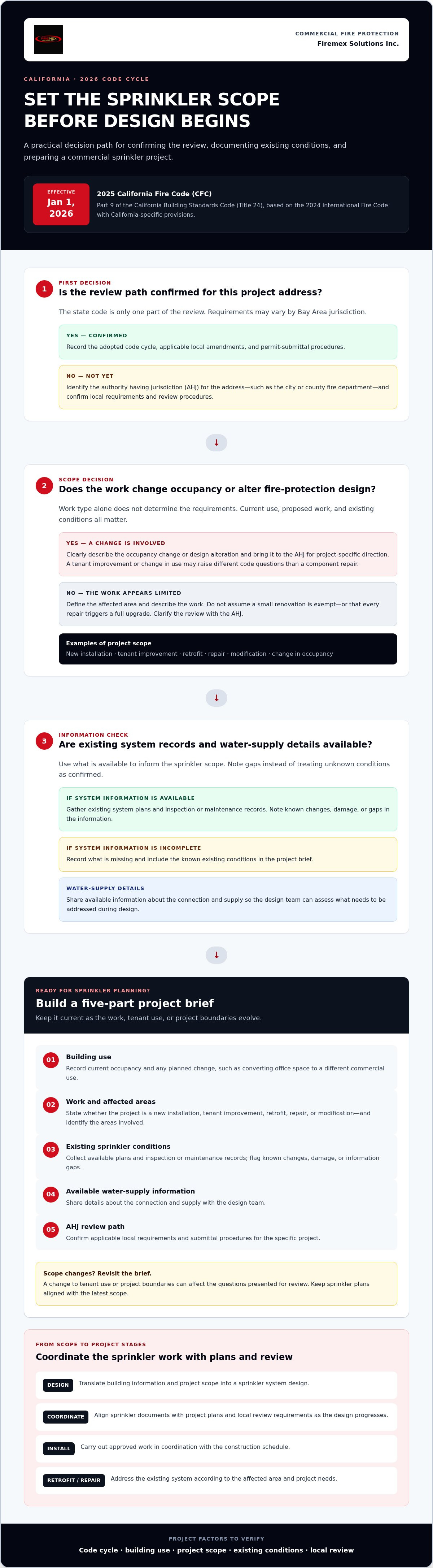
Gather the core project details in sequence. A clear brief gives the design team and local reviewer a shared picture of the work before plans are developed:
Describe the building use. Record the current occupancy and any planned change, such as converting office space to a different commercial use.
Define the work. Clarify whether the project involves a new installation, tenant improvement, retrofit, repair, or modification, and identify the areas affected.
Document existing sprinkler conditions. Gather available system plans and inspection or maintenance records. Note known changes, damage, or gaps in the existing information.
Identify water-supply information. Share available details about the connection and supply so the design team can assess what needs to be addressed during design.
Map the review path. Confirm submittal procedures and applicable local requirements with the authority having jurisdiction (AHJ). The California Department of General Services provides access to the California Building Standards Code (Title 24), while the AHJ provides direction on local review for the specific project.
Keep the brief current as the work evolves. A change to tenant use or project boundaries can affect the questions presented for review, so update the sprinkler plans to match the latest scope. Use this commercial fire protection compliance checklist to organize early planning details. Firemex provides commercial sprinkler design-build services to help move a project from scope to sprinkler design.
Move from California Fire Code Questions to a Commercial Sprinkler Project
Once the review path is clearer, translate the findings into a sprinkler project scope. The California fire code for commercial buildings 2026 informs the design conversation, while the building layout, existing system condition, and approved project plans shape the work. A coordinated process connects code questions with practical design and installation decisions.
How can Bay Area owners prepare for sprinkler design and installation?
Firemex Solutions Inc. serves commercial property owners across the San Francisco Bay Area with design-build sprinkler systems, installations, retrofits, and repairs. With over 20 years of experience and State Lic. No. C16-1024654, Firemex develops cost-effective design solutions for the building and project scope.
Project stages may include:
Design: Translate building information and project scope into a sprinkler system design.
Plan coordination: Align sprinkler documents with project plans and local review requirements as the design progresses.
Installation: Carry out the approved work in coordination with the construction schedule.
Retrofit or repair: Address the existing system according to the affected area and project needs, whether the scope involves a modification or repair.
Broader compliance planning can help keep sprinkler decisions connected to other project considerations. The San Francisco commercial fire protection guide offers a related planning resource.
For a commercial sprinkler project in the Bay Area, Firemex can help move the work from design through installation or retrofit. Discuss the project scope and request a free estimate.
Put Your Commercial Fire-Safety Plans in Motion
Clear decisions at the planning stage can help your team move from early project discussions to construction with fewer avoidable surprises. Treat the California fire code for commercial buildings 2026 as a starting point for coordinating with the local authority and aligning sprinkler work with the building’s intended use. As plans develop, keep the scope, review comments, and system design connected so changes can be addressed before they disrupt the work.
Firemex Solutions Inc. supports Bay Area commercial properties with sprinkler design-build, installation, retrofit, and repair services. With over 20 years of experience in the fire protection industry and State Lic. No. C16-1024654, the team can develop a practical approach around your project needs.
Have a commercial sprinkler project to plan? Request a free estimate for your commercial sprinkler project and take the next step toward a clear plan for protecting your building and the people who use it.
Frequently Asked Questions
Does the 2026 California Fire Code automatically require existing commercial buildings to upgrade?
No. Owners shouldn’t assume the 2026 code automatically requires every existing commercial building to upgrade. The outcome depends on adopted requirements, building conditions, project scope, and local review. For example, a system serving an unchanged space may raise different review questions from one affected by a major layout or use change. Establish the applicable code with the local authority before planning system work.
Can a commercial tenant improvement affect fire sprinkler requirements?
Yes, depending on the work, occupancy, existing sprinkler system, and local review. Moving partitions or changing how a tenant uses part of a suite may prompt different design questions from a finish-only update. Record the affected rooms, intended use, and known system changes early. Then coordinate sprinkler drawings with permit documents so the review reflects the actual tenant-improvement scope.
Who determines which fire code applies to a commercial building in California?
California’s adopted building standards set statewide provisions, while the local authority having jurisdiction (AHJ) applies them and any local amendments during review. The reviewing agency depends on the property location and permit scope. For projects in San Francisco, San Jose, Oakland, Redwood City, Los Altos, Hayward, Fremont, Burlingame, Belmont, San Mateo, San Carlos, Palo Alto, Cupertino, Berkeley, Santa Rosa, Concord, Saratoga, or Mountain View, identify the reviewer for the project address.
Are fire sprinklers required in every California commercial building?
There isn’t a universal yes or no. Whether sprinklers are required depends on the building’s occupancy and characteristics, applicable code provisions, and local amendments. Apply the California fire code for commercial buildings 2026 to the specific property and proposed work, rather than treating it as a blanket rule. Have the local reviewing agency assess the building’s details and permit scope.
Comments