


Annual Private Fire Hydrant Inspection in Oakland: Owner Duties
Private fire hydrants in Oakland should be inspected annually, and property owners are responsible for their inspection, testing, and maintenance. An annual private fire hydrant inspection in Oakland helps determine whether a hydrant is accessible, operable, and ready to support fire protection.
A hydrant may look intact from the street yet still need attention. An inspection goes beyond appearance: it can include checking the hydrant’s condition, flushing it, and identifying problems that require repair.
This article explains what makes a hydrant private, how an owner’s duties differ from the fire department’s role, and what an annual inspection involves. It also covers the records an inspection can produce, helping you understand the work and what to do if a deficiency is found.
Table of Contents
So, what is a private fire hydrant?
A private fire hydrant is a valved connection to a water main that supplies water to fire protection equipment. Unlike a public street hydrant, it serves a private property’s fire-protection system. A private hydrant may be required when a structure is more than 400 feet from a public hydrant, with distance measured by an approved fire code official.
In Oakland, local Fire Code amendments appear in Chapter 15.12 of the Oakland Municipal Code, and Oakland Fire inspectors conduct field inspections under those amendments. NFPA 25 is also relevant to private fire service mains and related components, although jurisdictions may use different documents for hydrants. The applicable requirements therefore involve both local rules and relevant fire-protection standards.
Inspection costs depend on the scope of work, site conditions, testing required, and any repairs needed. Requesting a quote is the way to determine the price.
Oakland introduced inspection scheduling through its Online Permit Center Portal in 2026. The city also lists an Annual Inspection In-Take Request Form among its fire inspection documents. After testing, the inspection report should be filed with the proper local authority.
A useful report records the inspection date and time, visual findings, static pressure readings, test results, and any repairs or deficiencies. It should also state the hydrant’s compliance status and recommendations. These details document the hydrant’s condition and help firefighters understand whether it can connect reliably to firefighting equipment. During flushing, water runs until foreign material clears, and the report records relevant findings. Keep the report with maintenance records to create a clear history of testing, repairs, and follow-up work.
Owner and fire department responsibilities
Responsibility depends on whether a hydrant serves private property or a public street. That distinction matters for routine maintenance and during a fire emergency.
Owner Responsibilities for Private Hydrants
The property owner is responsible for inspecting, testing, and maintaining private hydrants, including addressing defects. This keeps the equipment accessible and ready to supply water when firefighters need to extinguish a fire. Owners should keep hydrants clear of snow, ice, and other materials that could obstruct access or cause damage. The California State Fire Code requires 3 feet of clear space around hydrants, except as otherwise required or approved. A blocked hydrant can hinder operation even if it was recently tested.
Qualified Inspection Providers
Private hydrant inspections and testing should be performed by a licensed professional. The work involves assessing the hydrant’s condition and operation, so qualified inspection supports reliable findings and clear maintenance records. Oakland Fire inspectors conduct field inspections under local Fire Code amendments in Chapter 15.12 of the Oakland Municipal Code. That municipal inspection role is distinct from the owner’s responsibility to maintain private hydrants and correct their defects.
Public and private hydrants may have different maintenance responsibilities. A defect in a hydrant serving a private facility, for example, is the owner’s responsibility, not part of the public hydrant maintenance program. Keep access clear and arrange inspections and repairs to help maintain readiness for firefighters. Public hydrants serve the street network; private hydrants support fire protection on a property.
Annual fire hydrant inspections
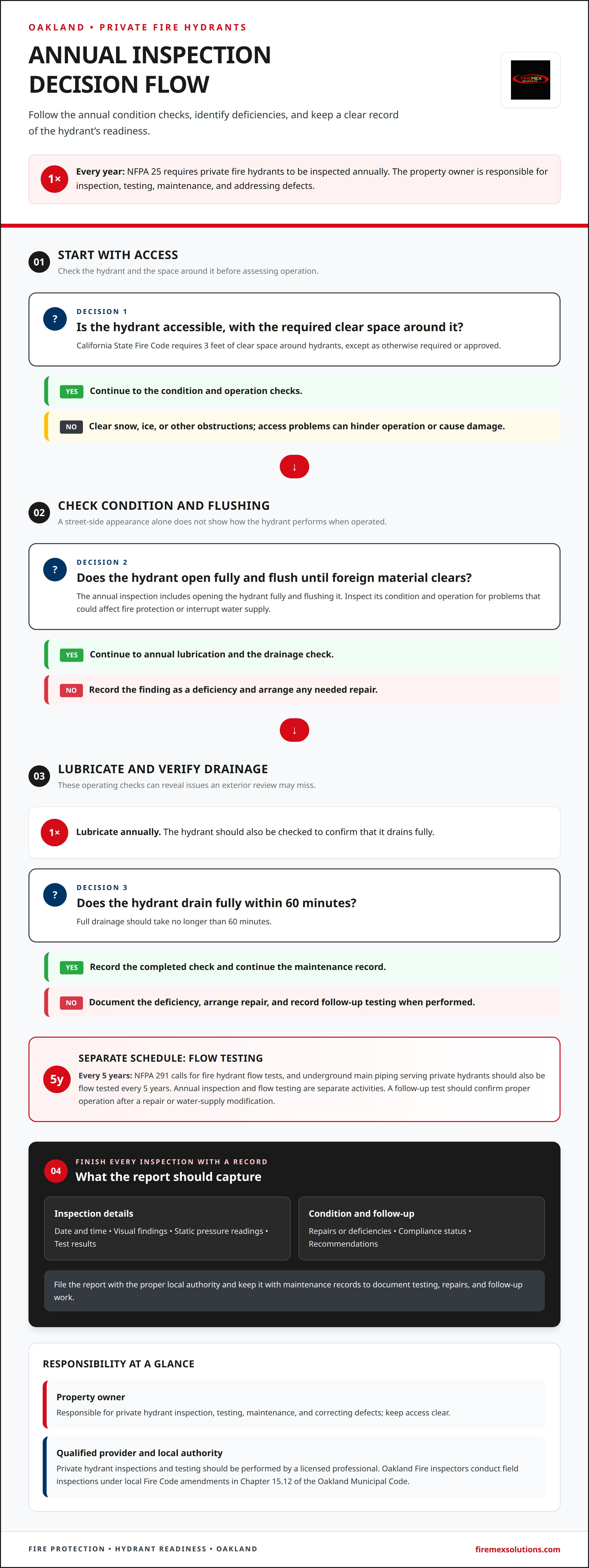
For an annual private fire hydrant inspection in Oakland, owners should distinguish the recurring condition check from less frequent flow testing. NFPA 25 requires private fire hydrants to be inspected annually. The assessment considers the hydrant’s condition and operation, including issues that could affect fire protection or interrupt the water supply. A visual check alone cannot show how the equipment performs when operated.
During the annual inspection, the hydrant should be opened fully and flushed until foreign material clears. Flushing during the inspection helps clear foreign material from the hydrant. The hydrant should also be lubricated annually, and full drainage should take no longer than 60 minutes. These checks help reveal operational problems, such as incomplete drainage, that an exterior review may miss.
Annual inspection and flow testing are separate activities. NFPA 291 calls for fire hydrant flow tests every 5 years, and underground main piping serving private hydrants should also be flow tested every 5 years. A follow-up test should confirm proper operation after a repair or water-supply modification. It can show whether the change affected flow or pressure.
During an annual private fire hydrant inspection in Oakland, records should distinguish the annual inspection from five-year flow testing. NFPA 25 is relevant to private fire service mains and related components, but jurisdictions may use different documents for hydrants. If a defect is found, documenting repairs and any follow-up testing gives owners a record of the work completed. This helps track maintenance and assess whether the hydrant operates as intended for fire protection.
Firemex Solutions
Firemex Solutions Inc. helps property owners with related fire-protection needs through residential and commercial fire sprinkler systems, underground fire service, system design, and maintenance. If inspection findings involve connected underground fire service or a wider sprinkler system, these services can help address the property’s fire-protection infrastructure.
Clear hydrant testing records and identified deficiencies can inform decisions about related system work. Firemex Solutions Inc. designs, repairs, and maintains sprinkler systems, with installations aligned to current state codes and national safety standards.
Contact Firemex Solutions Inc. to discuss your property’s fire-protection system needs.
Plan the Next Step for Your Property
Use the inspection findings to set maintenance priorities for the property. If a deficiency affects connected fire-protection infrastructure, consider how it relates to the wider system instead of treating the hydrant as an isolated asset. This broader view can guide decisions about follow-up work and the property’s overall readiness.
For an annual private fire hydrant inspection in Oakland, organize the report, note unresolved issues, and identify which parts of the fire-protection system may need attention. Clear records give property owners a practical starting point for discussing system needs and planning maintenance.
Firemex Solutions Inc. can discuss fire-protection system needs related to residential or commercial properties. Discuss your property’s needs with Firemex Solutions Inc., and take the next step with a clear view of the work ahead.
Frequently Asked Questions
What is included in a hydrant inspection report?
A hydrant inspection report records findings that explain the system’s condition and potential next steps. It can include visual observations, flow and pressure test results, deficiencies, repairs, compliance status, and recommendations. For example, a note about a damaged operating component can link a test result to a specific repair. Keeping the findings together makes the report useful for maintenance planning and authority review.
What must be inspected and tested during a private fire hydrant inspection in Oakland?
An annual inspection evaluates the hydrant’s physical condition and operation, including whether it can be opened and flushed effectively. It also considers accessibility and drainage. An obstruction near the hydrant, for example, may limit access even if the equipment operates. Underground main flow testing is separate from the annual hydrant inspection, so records should specify which work was completed.
What are the required flow, pressure, and operating tests for private hydrants?
Annual inspections can include fully opening and flushing the hydrant to clear foreign material. Annual lubrication and drainage checks are also part of the inspection. NFPA 291 calls for flow tests every 5 years, and underground piping serving private hydrants should also be flow tested every 5 years.
What inspection reports or certificates must be submitted to Oakland Fire Department?
The inspection report is the documented record to file with the proper local authority after testing. Oakland lists an Annual Inspection In-Take Request Form among its fire inspection documents, and its Online Permit Center Portal supports inspection scheduling. Keep a copy of the completed report with the property’s maintenance records. Local fire departments may require documentation showing compliance with private hydrant inspection requirements.
What happens if a private hydrant fails inspection or is not inspected annually in Oakland?
A failed inspection identifies a deficiency that requires attention from the property owner responsible for the private hydrant. The report can document the issue and recommended repair, creating a record of what remains unresolved. After a repair or water-supply modification, a follow-up test should confirm proper operation. No specific penalty for a missed inspection is established in the available requirements.
Comments