


California Title 19 Inspection Requirements: The 2026 Compliance Checklist
A fresh certification tag on your fire sprinkler riser doesn't mean your property is permanently protected. Staying compliant with California Title 19 inspection requirements demands a disciplined, ongoing maintenance schedule rather than a single test checked off every five years.
Untangling the dense legal overlap between state Title 19 rules and California NFPA 25 standards is frustrating, especially when an overlooked valve check risks fire marshal citations, red-tagging, or insurance disputes. You don't have to handle these technical mandates in the dark. This practical 2026 checklist outlines every required testing interval, state AES reporting form, and proactive maintenance milestone you need to secure verified riser tags, protect your occupants, and keep your fire sprinklers operating flawlessly.
Table of Contents
Understanding California Title 19 Mandates and Inspection Intervals
California Code of Regulations Title 19 governs automatic water-based fire extinguishing infrastructure across commercial properties under state Health and Safety Code statutes. The regulation formally adopts and enforces the California Edition of NFPA 25, establishing technical standards tailored to the state's seismic and environmental conditions. Commercial fire sprinkler systems don't just require periodic checkups; they demand continuous, documented verification to remain lawful and operational. Mastering California Title 19 inspection requirements requires property managers to distinguish between rapid surface checkups and legally certified mechanical tests.
Mandatory Inspection Frequencies: Quarterly, Annual, and 5-Year Cycles
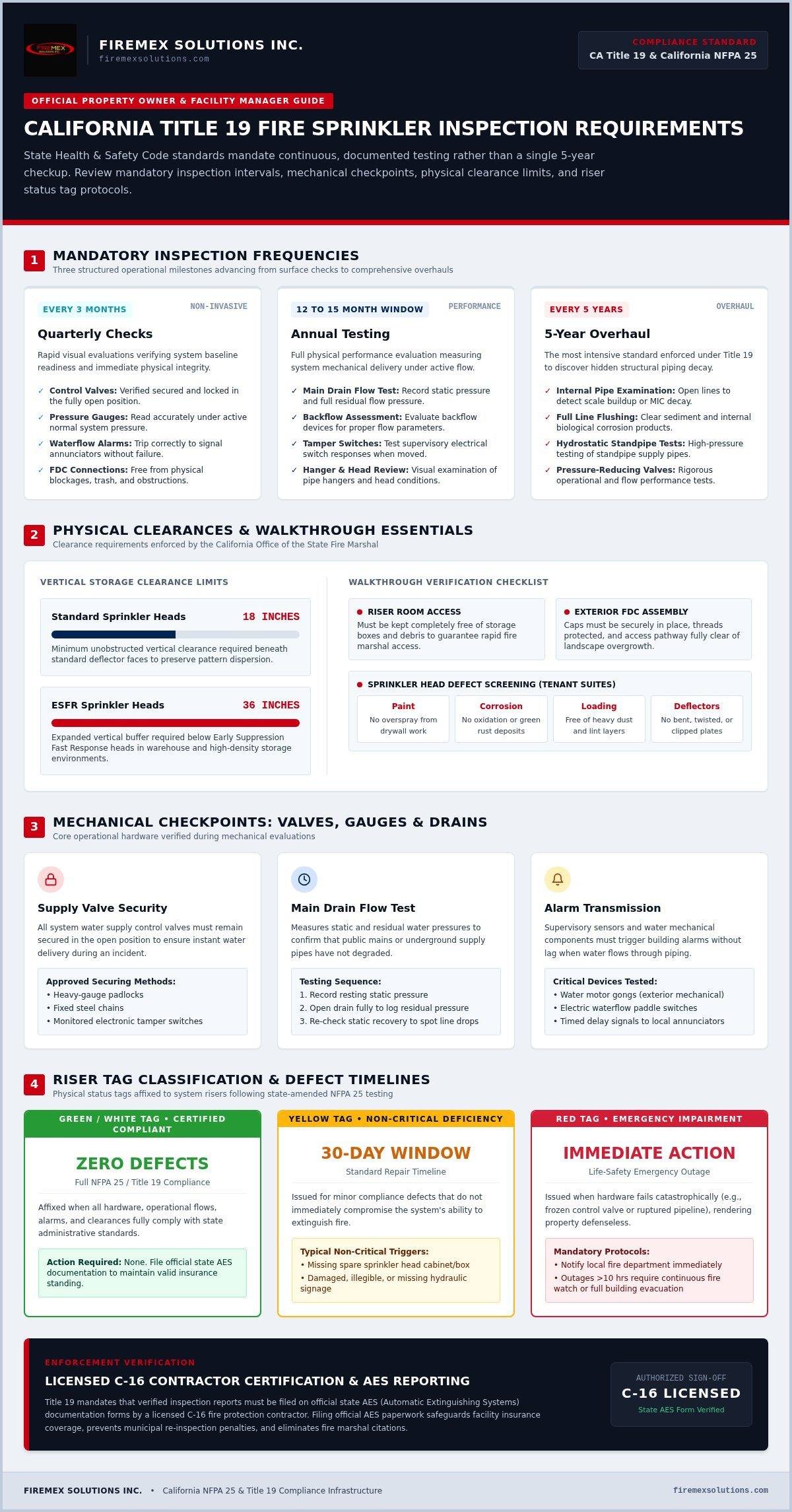
State compliance is structured around three core operational milestones, advancing from simple visual evaluations to comprehensive structural overhauls:
Quarterly Checks: Non-invasive visual reviews verify that control valves are locked open, system pressure gauges read accurately, waterflow alarms trip correctly, and fire department connections remain clear of physical obstructions.
Annual Testing: A physical performance evaluation conducted within a 12- to 15-month operating window. Technicians execute main drain flow tests to measure static and residual supply pressure, assess backflow devices, test tamper switches, and visually inspect pipe hangers and sprinkler heads.
Five-Year Overhaul: The most intensive standard enforced by California Title 19 inspection requirements. This cycle includes flushing lines, conducting internal pipe examinations to detect microbiologically influenced corrosion (MIC) or scale buildup, testing pressure-reducing valves, and executing standpipe hydrostatic pressure tests.
The Property Owner Title 19 Fire Sprinkler Inspection Checklist
Preparing a commercial facility for an official walkthrough prevents unexpected failure tags. Enforcement standards published by the California Office of the State Fire Marshal require unimpeded access to critical hardware. Riser rooms must remain free of storage, while exterior fire department connections (FDC) need intact caps and clear clearance. Sprinkler heads throughout tenant suites require visual examination to catch paint overspray, corrosion, physical loading, or bent deflectors. Maintain at least 18 inches of clearance beneath standard sprinkler heads, expanding to 36 inches for ESFR heads, so water distribution patterns stay uncompromised.
Critical Mechanical Checkpoints: Valves, Gauges, and Main Drains
Mechanical verification safeguards life safety and property value. When evaluating California Title 19 inspection requirements, focus on these mechanical essentials:
Valve Position and Security: All supply control valves must remain secured in the open position using padlocks, heavy chains, or monitored tamper switches.
Main Drain Evaluation: Technicians record static pressure, open the main drain fully to log residual pressure under flow, and re-check static recovery. Significant pressure drops indicate supply line obstructions or closed street valves.
Alarm Verification: Water motor gongs and electric flow switches must trigger supervisory signals to local enunciators within specified time delays.
Coordinate routine checks alongside our commercial fire protection compliance checklist to align mechanical testing with broader building safety protocols. For scheduled testing or system upgrades, partnering with Firemex Solutions Inc. ensures experienced C-16 specialists handle every inspection phase with care.
Resolving Deficiencies and Securing Your Official Title 19 Certification
Inspection findings culminate in an official physical tag affixed to the system riser. A white or green tag confirms full compliance with zero defects, verifying that the hardware satisfies state-amended NFPA 25 inspection and testing standards. A yellow tag signals non-critical deficiencies, such as missing spare sprinkler head boxes or damaged signage, granting property owners a standard 30-day window to complete repairs. A red tag warns of an emergency impairment, like a frozen valve or ruptured line. When an inspector issues a red tag, building owners must notify the local fire department immediately. Outages extending past 10 hours require a continuous fire watch or full evacuation. Arranging swift corrections through professional fire sprinkler inspection services keeps your building defended and compliant.
Partnering with a C-16 Licensed Fire Protection Contractor
General plumbers and handymen cannot legally sign official state forms or complete certified repairs on life-safety risers. Property owners should always verify that a technician holds an active C-16 license through the California Contractors State License Board before work begins.
State regulations also require maintaining signed AES documentation and maintenance logs on-site for at least five years for fire marshal verification. Structured record-keeping prevents municipal penalties and protects insurance policy standing. Contact Firemex Solutions Inc. to manage your California Title 19 inspection requirements and safeguard your property with experienced fire protection specialists.
Protect Your Property With Proactive Title 19 Compliance
Maintaining verified life-safety systems isn't just about passing periodic audits; it's about safeguarding occupants and operations against unexpected disasters. Navigating California Title 19 inspection requirements is straightforward when you implement a structured maintenance plan, correct minor deficiencies before thirty-day deadlines expire, and keep verified AES logs accessible on-site.
As a fully licensed California C-16 fire protection contractor with over two decades of dependable fire protection expertise serving the Bay Area, we bring quiet confidence and thorough oversight to every riser room. You don't have to carry the burden of compliance alone. Take the uncertainty out of your regulatory calendar and Schedule your Title 19 sprinkler inspection with Firemex Solutions today.
Frequently Asked Questions
How often does a building require a California Title 19 fire sprinkler inspection?
Commercial facilities must undergo quarterly visual checks, annual mechanical tests, and a five-year internal overhaul. While building owners can perform visual checks on basic gauges, full compliance testing must adhere to state windows, meaning annual evaluations cannot exceed a fifteen-month gap between service dates.
What happens if our fire sprinkler system receives a yellow or red tag?
A yellow tag gives building owners thirty days to complete non-critical repairs through a licensed contractor before local authorities enforce re-inspection penalties. A red tag marks an immediate critical impairment, requiring swift notification to local municipal authorities and the implementation of a continuous fire watch if repairs extend beyond ten hours.
Can building maintenance staff perform our required California Title 19 inspections?
In-house staff may only conduct routine visual checks on accessible gauges and locked control valves. Official certification tags, required five-year pipe flushings, and annual main drain tests legally require an active C-16 fire protection contractor license to satisfy California Title 19 inspection requirements and municipal fire department portals.
What is the difference between NFPA 25 and California Title 19 requirements?
NFPA 25 serves as the baseline national standard for inspecting water-based extinguishing equipment. California Title 19 codifies that standard into enforceable state law while adding strict amendments, including standardized state AES reporting forms, mandatory riser tagging protocols, and regional seismic brace verification requirements tailored specifically to California properties.
Comments