


ESFR Sprinkler Design: 2026 Bay Area Warehouse Guide
What if your warehouse ceiling could do the work of a thousand in-rack heads while eliminating the constant fear of a forklift striking a pipe? Many Bay Area facility managers feel restricted by legacy fire systems that cap vertical storage and demand expensive, high-maintenance rack configurations. You've likely felt the frustration of trying to balance maximum pallet density with the strict oversight of local fire marshals. Safety first...
This guide helps you master ESFR sprinkler system design for warehouses to reclaim your floor space and ensure safety. We'll explore the critical updates in the 2025 California Building Standards Code, effective as of January 1, 2026, and how they impact your project. You will learn about high K-factor head selection, ASCE 7-22 seismic requirements for the San Francisco region, and the exact steps needed to secure local permit approval for high-piled storage. Always ready...
Table of Contents
Understanding ESFR Sprinkler Systems: The High-Output Solution for Modern Warehousing
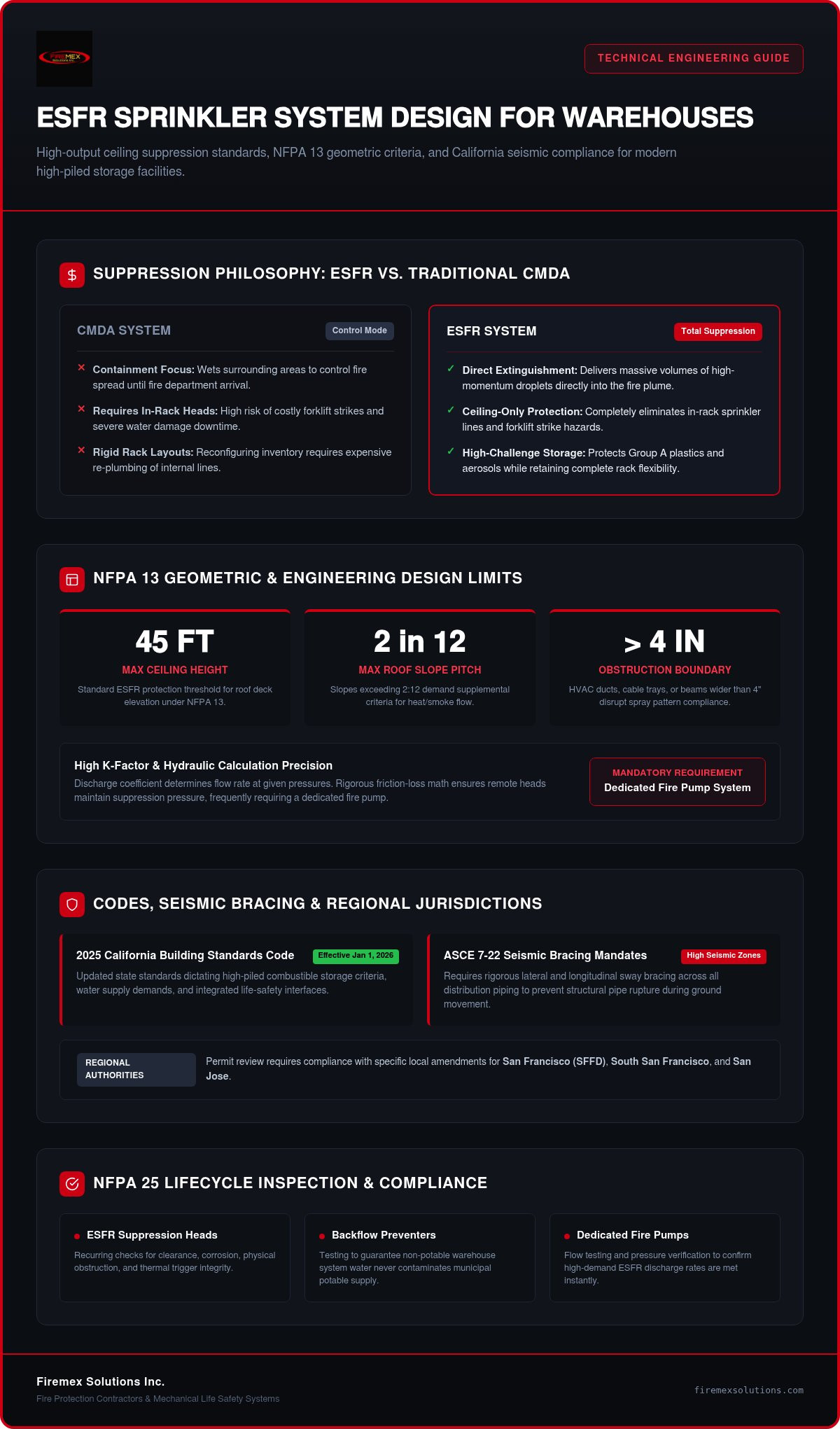
Modern logistics demands more than just containment; it requires total suppression. Early Suppression Fast Response (ESFR) systems represent a fundamental shift in how we protect high-volume facilities. Unlike traditional automatic fire sprinkler systems that aim to control a fire until the department arrives, ESFR is engineered to extinguish it rapidly at the source. This high-output design is a cornerstone of modern ESFR sprinkler system design for warehouses, delivering massive volumes of water directly into the fire plume through specialized high K-factor heads.
The most significant operational advantage is the complete elimination of in-rack sprinklers. For many Bay Area facility managers, in-rack piping is a constant liability. Forklift strikes on low-hanging heads lead to catastrophic water damage and warehouse downtime. By moving protection to the ceiling, you reclaim vertical space and remove the physical risks associated with traditional rack-mounted hardware. This design-build approach provides a tangible "Storage Flexibility" ROI. It allows you to store high-challenge commodities, including Group A plastics and aerosols, without the structural limitations of legacy fire systems.
ESFR vs. Control Mode Density Area (CMDA): Choosing the Right Protection
Traditional CMDA systems focus on containment, wetting the surrounding area to prevent fire spread. ESFR uses a suppression philosophy, attacking the fire with high-momentum droplets. Choosing suppression means your warehouse layout isn't locked in place. You can reconfigure racks for changing inventory needs without the massive expense of re-plumbing internal lines. It's a professional, safety-conscious choice that prioritizes long-term agility and asset protection. We see this as a disciplined investment in your facility's future.
Critical Design Criteria for ESFR Systems: Compliance with NFPA 13 Standards
Success in ESFR sprinkler system design for warehouses begins with the physical geometry of your facility. Ceiling heights and roof slopes are the primary gatekeepers for viability. Under current NFPA 13 sprinkler installation standards, standard ESFR protection typically covers roof decks up to 45 feet. If your roof slope exceeds 2 in 12, the system requires supplemental design criteria to account for the altered heat and smoke flow. These technical boundaries ensure that the suppression heads activate exactly when needed. Safety first...
Obstructions present the most common compliance hurdle. Because ESFR heads produce high-momentum droplets, items like HVAC ducts, cable trays, or structural beams wider than 4 inches can disrupt the spray pattern. This "obstruction rule" is non-negotiable; failing to account for a single light fixture can jeopardize your entire fire marshal approval. Most systems also demand a robust water supply, often requiring a dedicated fire pump to maintain the high pressures necessary for suppression.
The Role of Hydraulic Calculations in Engineering Approval
Precise engineering math is the backbone of a reliable system. Our fire sprinkler system design process uses advanced hydraulic calculations to account for pipe friction and building-specific variables. This ensures that even the most remote sprinkler heads receive the exact pressure required for suppression. K-factor is the discharge coefficient that determines the flow rate at a given pressure. Getting these details right provides the total certainty you need during the permitting phase. If you're planning a new layout, consulting with a professional ensures your design meets every local requirement.
Implementing Your ESFR System in the San Francisco Bay Area
Bay Area seismic requirements add a layer of complexity to ESFR sprinkler system design for warehouses. Because our region sits in high Seismic Design Categories, we must implement rigorous lateral and longitudinal sway bracing. These measures, required by ASCE 7-22 and the 2025 California Fire Code, prevent pipe rupture during significant ground movement. Navigating the specific permitting nuances of the South SF and San Jose fire departments is equally critical. Every jurisdiction has unique local amendments that can delay your project if they aren't addressed during the initial engineering phase. Safety first...
Long-term safety requires more than just a successful installation; it demands a lifecycle approach to maintenance. You must commit to a rigorous fire sprinkler system inspection schedule to remain compliant with NFPA 25. These recurring tests verify that your suppression heads, backflow preventers, and fire pumps are ready for a high-challenge event. Following the Office of the State Fire Marshal AES regulations is the only way to maintain your facility's certification and satisfy insurance requirements under California law. This ongoing oversight alleviates the stress of regulatory management for property owners.
The Firemex Advantage: Local Expertise in Design and Installation
Firemex Solutions Inc. provides the quiet confidence property owners need in this high-stakes industry. With 20+ years of tenure, we are experts in commercial fire protection in South San Francisco. Our team acts as a dependable shield for your business, managing everything from complex underground fire service to the final ESFR sprinkler system design for warehouses. As a C-16 licensed partner, we streamline the path to fire marshal approval and final certification. We suggest reviewing our commercial fire safety checklist before starting any warehouse modification. Total certainty...
Secure Your Warehouse Future with Professional ESFR Design
Investing in the right fire suppression technology is a commitment to the longevity of your business and the safety of your assets. By mastering the technical requirements of ESFR sprinkler system design for warehouses, you eliminate the operational headaches of in-rack systems while ensuring your facility meets the rigorous 2026 California standards. From managing complex hydraulic calculations to installing seismic bracing that protects against regional risks, every detail matters for your compliance and peace of mind.
Firemex Solutions Inc. brings 20+ years of engineering expertise and a specialized focus on South SF compliance to every project. As a C-16 Licensed Fire Protection Contractor, we provide the total certainty you need to navigate local fire department approvals with ease. Request a Professional ESFR Design Consultation from Firemex Solutions Inc. today to optimize your storage and safety. Total certainty...
Frequently Asked Questions
Can ESFR sprinklers be used for any type of warehouse storage?
ESFR sprinklers are optimized for Class I through IV commodities and Group A plastics, but they aren't a universal fix for every facility. Certain hazardous materials, like flammable liquids or specific high-piled aerosols, often require different protection strategies. Proper ESFR sprinkler system design for warehouses in cities like Oakland or Fremont necessitates a thorough commodity classification to ensure the suppression heads can actually extinguish the specific fire threat. Safety first...
What is the maximum ceiling height allowed for an ESFR sprinkler system?
Standard NFPA 13 prescriptive tables typically cap ceiling-only ESFR protection at 45 feet for storage heights up to 40 feet. However, specific application listings for K-28.0 heads can extend this protection to 48-foot ceilings in modern Bay Area distribution centers. If your facility in San Jose or South SF exceeds these heights, our engineering team must evaluate specialized listings or supplemental protection to maintain total safety.
Do ESFR systems require a fire pump for installation in the Bay Area?
Most ESFR installations in the Bay Area require a dedicated fire pump to meet the high-volume water demands of suppression-mode heads. These systems typically need between 1,500 and 2,500 gallons per minute. Since municipal water mains in Redwood City or San Mateo might not provide this pressure naturally, a pump ensures the system operates with total certainty during a fire event. Professional oversight is essential here...
How often does an ESFR system need to be inspected for compliance?
Your system requires periodic inspections under NFPA 25 standards to ensure long-term reliability and local compliance. This includes weekly or monthly visual checks of gauges and valves, along with more rigorous annual physical testing of the heads and water supply. Regular maintenance is a legal necessity for warehouse operators in San Francisco and across the Peninsula to satisfy fire marshal audits and insurance mandates.
Comments