


Commercial Fire Sprinkler System Design in the Bay Area: 2026 Compliance Guide
In the San Francisco Bay Area, a minor oversight in hydraulic calculations can stall a project for months and lead to expensive rework. You likely recognize that staying current with the 2025 California Fire Code and local AHJ amendments is a constant challenge. Achieving a precise commercial fire sprinkler system design Bay Area authorities will approve requires more than basic engineering. It demands localized expertise that accounts for Title 24 mandates and the rigorous seismic bracing standards unique to our region.
You deserve the peace of mind that comes with a system built for long term reliability and safety. This guide will help you master the complexities of California fire codes and engineering requirements to ensure your property is fully protected. We'll examine the 2026 compliance standards, the impact of the latest NFPA 13 updates, and the steps needed to secure a design that passes city review without delay. Expert Oversight... Total Certainty...
Table of Contents
Navigating California Fire Codes and Bay Area Compliance Standards
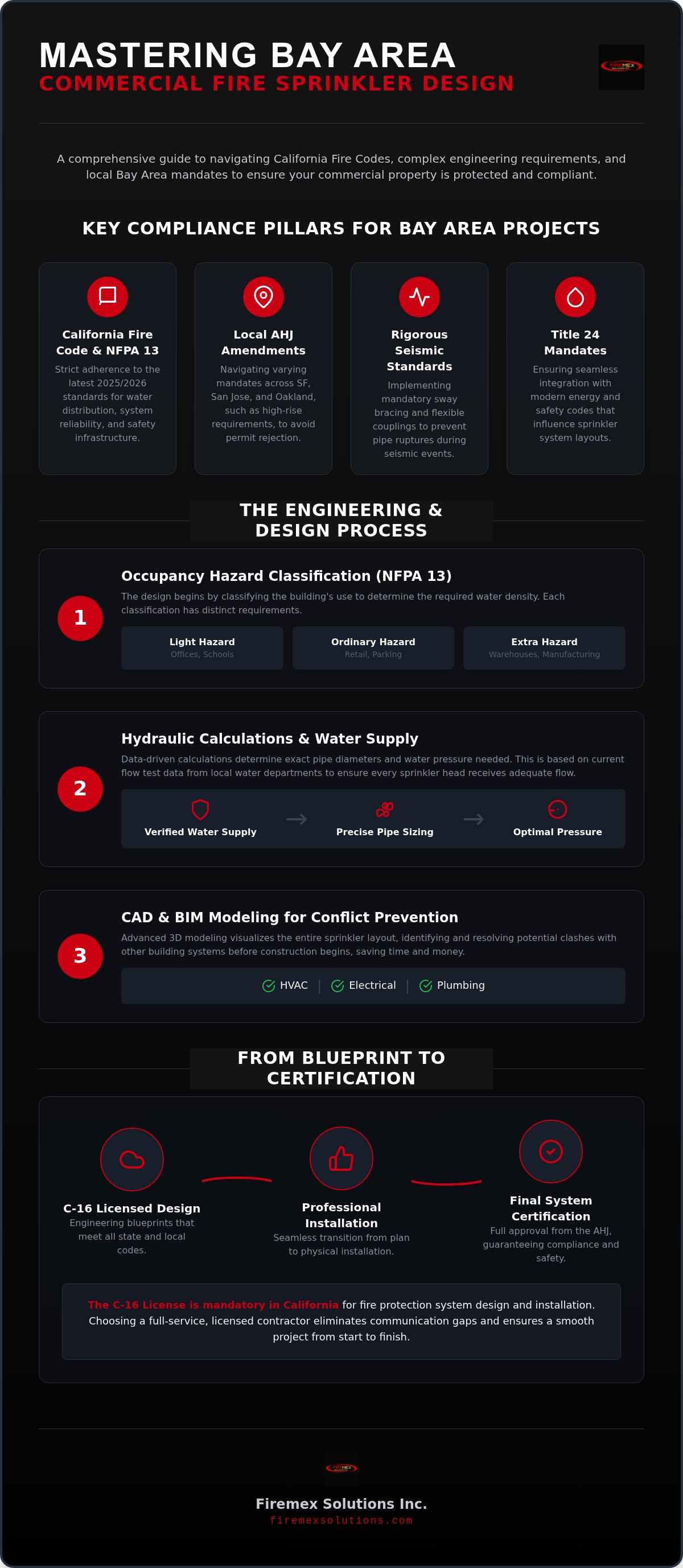
Effective commercial fire sprinkler system design Bay Area is a sophisticated engineering process. It maps out precise water distribution to suppress fire in non-residential structures before it can threaten life or property. Every design must strictly adhere to the 2025 California Fire Code and NFPA 13 standards. These codes ensure that a Fire sprinkler system operates with total reliability during an emergency. Compliance isn't optional; it's the foundation of your building's safety infrastructure. Reliable Guardian...
Local requirements often vary between cities. The Authority Having Jurisdiction (AHJ) in San Francisco might enforce stricter high-rise mandates than those in San Jose or Oakland. For example, San Francisco requires automatic sprinklers in buildings exceeding 55 feet in height. Navigating these regional amendments requires a deep understanding of local city codes to pass the compliance checklist. This specialized knowledge prevents permit rejections and keeps your project on schedule. Expert Oversight...
Understanding NFPA 13 and Title 24 Requirements
Accurate design begins with identifying the correct occupancy classification. NFPA 13 categorizes buildings into Light, Ordinary, or Extra Hazard groups. A retail space has different water density needs than a high-piled storage facility. Additionally, California Title 24 energy and safety codes influence modern sprinkler layouts, requiring seamless integration with other building systems. We coordinate directly with local water departments to secure current flow test data. This ensures your hydraulic calculations are based on real-world pressure, not guesswork. Total Certainty...
The Engineering Process: Hydraulic Calculations and Seismic Safety
The engineering phase transforms a conceptual safety plan into a functional reality. Precise hydraulic calculations determine the exact pipe diameter and water pressure required to meet your building's specific hazard level. This data-driven approach ensures that every sprinkler head receives the necessary flow to suppress a fire effectively. In modern commercial fire sprinkler system design Bay Area projects, we utilize advanced CAD and BIM modeling. These digital tools allow us to visualize the entire layout in 3D, identifying and resolving potential conflicts with HVAC, electrical, and plumbing systems before construction begins. Total Certainty...
Securing an adequate water supply is the cornerstone of a reliable system. We prioritize the design of the underground fire service as a critical first step. Without a robust connection to the city main that accounts for local pressure fluctuations, even the most advanced interior layout will fail. If you're starting a new development, our team can help you coordinate these essential underground fire service requirements early in the process. Expert Oversight...
Why Seismic Bracing is Essential for Bay Area Commercial Buildings
In Northern California, seismic resilience is a legal and functional necessity. Designs must comply with NFPA 13 requirements for Seismic Design Categories D through F. This involves the strategic placement of sway bracing and flexible couplings. These components allow the system to move with the building's structure rather than snapping under stress. Seismic bracing is a mandatory safety feature in Northern California commercial builds. By preventing pipe ruptures and accidental discharge during tremors, these safeguards preserve both your property and the system's life-saving capabilities.
Choosing a C-16 Licensed Contractor for Your Commercial Project
Selecting the right partner is as critical as the engineering itself. In California, a C-16 license is the mandatory standard for anyone laying out or installing fire protection systems. This specialized certification ensures the contractor understands the complex design and installation standards required by state law. Choosing a full-service partner allows for a seamless transition from your initial commercial fire sprinkler system design Bay Area blueprint to the physical commercial fire protection installation. This continuity eliminates communication gaps between the engineer and the field crew. Expert Oversight...
Designing for the future means thinking beyond the first day of occupancy. A professional design should integrate long-term accessibility for fire sprinkler inspection and maintenance. By planning valve locations and testing points during the design phase, you reduce the complexity of future safety audits. This foresight provides property owners with total certainty and lasting peace of mind. Reliable Guardian...
From Blueprint to Installation: The Firemex Guardian Approach
Firemex Solutions leverages over 20 years of experience in South San Francisco to simplify the compliance journey. We manage the entire permit process, acting as your liaison with local fire marshals to ensure approvals move quickly. Our team prioritizes the creation of accurate "as-built" drawings. These documents are vital for any future emergency fire sprinkler repair or system modifications. Our deep roots in the Bay Area mean we understand the specific nuances of every local jurisdiction. Total Certainty...
Securing Your Property with Expert Fire Protection Engineering
Navigating the 2026 California Fire Code requires technical precision and a deep understanding of local requirements. From seismic bracing that survives tremors to hydraulic calculations that ensure water reaches the fire source, every engineering detail matters for your safety. Achieving a compliant commercial fire sprinkler system design Bay Area authorities will approve is the first step toward long term property protection. Firemex Solutions brings over 20 years of industry experience as a C-16 licensed contractor. We provide a full service approach that seamlessly transitions from technical blueprints to professional installation and maintenance. Schedule your commercial fire sprinkler design consultation with Firemex Solutions today. Protecting your assets and employees is a significant responsibility. We are here to provide the expert oversight and total certainty you need to move forward with confidence. Expert Oversight... Total Certainty...
Frequently Asked Questions
What is the difference between NFPA 13 and NFPA 13R for commercial buildings?
NFPA 13 is the comprehensive standard for commercial structures, while NFPA 13R applies specifically to low-rise residential buildings up to four stories. For most mixed-use or strictly commercial properties in San Jose or Oakland, NFPA 13 is the required engineering standard. It's focused on both property protection and life safety. In contrast, 13R primarily targets life safety within residential dwelling units.
How often does a commercial fire sprinkler design need to be updated during a renovation?
You must update your fire sprinkler design whenever a renovation changes the building's layout, occupancy type, or hazard level. If you're converting a retail space in Redwood City into a high-piled storage area, the original commercial fire sprinkler system design Bay Area must be recalculated. Local fire marshals in cities like Palo Alto require updated plans for any modifications to the overhead piping.
Do all Bay Area commercial buildings require seismic bracing for fire sprinklers?
Virtually all commercial buildings in the Bay Area require seismic bracing because they are located in high-risk Seismic Design Categories. A compliant commercial fire sprinkler system design Bay Area must include sway bracing and flexible couplings to meet NFPA 13 standards. Whether your project is in Fremont or Hayward, these engineered supports ensure the system remains functional during a significant earthquake.
How long does it typically take to get fire sprinkler design permits in San Francisco?
Permit approval times for fire sprinkler designs in San Francisco typically range from several weeks to a few months depending on the project's scope. In 2026, you should plan for potential delays as the SFFD reviews high volumes of new construction. Working with a C-16 contractor helps you navigate these administrative hurdles. It's the best way to ensure your application is complete.
Comments