


Title 19 Inspection: 2026 Bay Area Property Owner's Guide
What if the difference between a seamless certification and a five-figure fine is simply the way you organize your paperwork? For many Bay Area property owners, learning how to prepare for a Title 19 inspection brings a wave of anxiety regarding potential system shutdowns and the technical nuances of California State Code. It's common to feel overwhelmed by the subtle differences between NFPA 25 standards and the rigorous requirements enforced by the State Fire Marshal.
Firemex Solutions Inc. understands that your priority is the safety of your tenants and the continuity of your operations. Our guide offers a practical roadmap to master these complex regulations, ensuring your fire sprinkler system passes the first time. You'll gain total certainty that your property is ready for its 2026 certification, protecting your assets and your peace of mind. Safety first...
Table of Contents
Understanding Title 19 Compliance for California Fire Sprinkler Systems
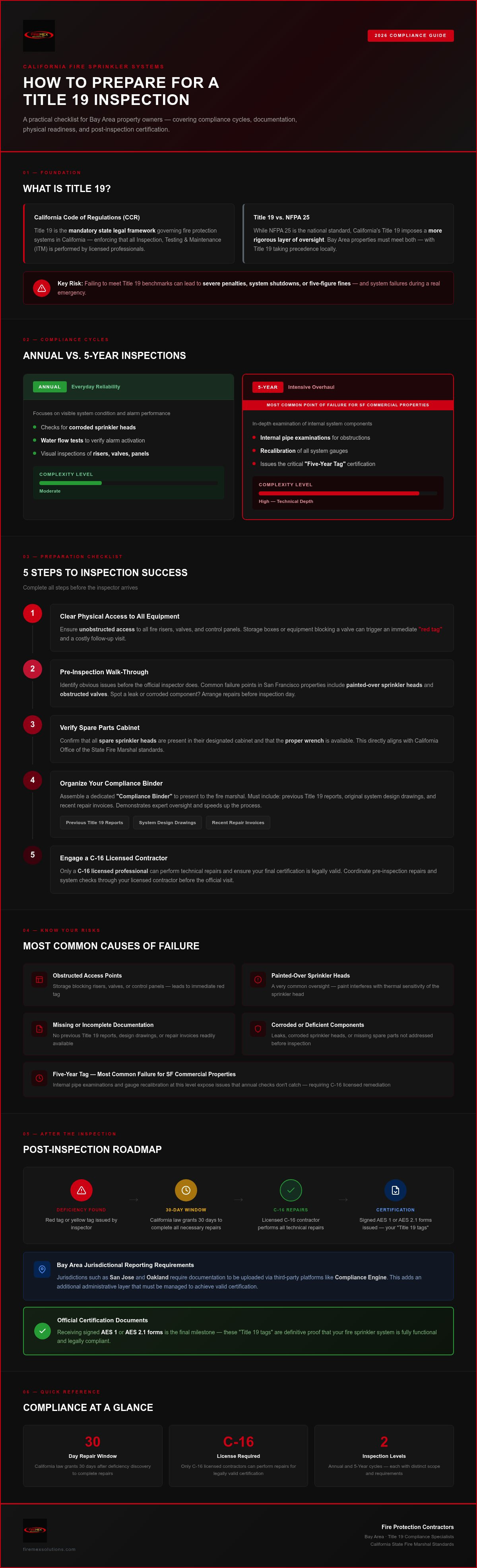
Title 19 of the California Code of Regulations (CCR) serves as the definitive legal standard for fire safety across the state. While many property owners are familiar with national NFPA 25 standards, California implements Title 19 to provide a more rigorous layer of oversight for fire sprinkler systems. Title 19 is the mandatory state framework that ensures fire protection systems are inspected, tested, and maintained (ITM) by licensed professionals. For Bay Area owners, failing to meet these heightened benchmarks can lead to severe penalties or system failures during a crisis.
Understanding these requirements is the first step when you're looking at how to prepare for a Title 19 inspection. Firemex acts as your shield, translating these complex legal codes into a clear maintenance plan that protects both lives and property.
The Critical Difference Between Annual and 5-Year Inspections
Compliance cycles alternate between two levels of scrutiny. Annual inspections focus on visibility, including checks for corroded sprinkler heads and water flow tests to verify alarm activation. These ensure everyday reliability. In contrast, the 5-year inspection is an intensive overhaul involving internal pipe examinations to check for obstructions and the recalibration of system gauges. The "Five-Year Tag" is a critical certification; it's the most common point of failure for SF commercial properties due to its technical depth. Knowing these differences helps you determine how to prepare for a Title 19 inspection by scheduling the correct service level. Firemex provides the expertise to secure your certification without last-minute stress.
The Essential Title 19 Preparation Checklist: 5 Steps to Success
Physical readiness is the backbone of a successful certification. When considering how to prepare for a Title 19 inspection, your first move should be ensuring clear access to all fire risers, valves, and control panels. Inspectors need unobstructed space to work. If a technician can't reach a valve because of storage boxes or equipment, it can lead to an immediate "red tag" and a costly follow-up visit. Perform a pre-inspection walk-through to identify obvious issues like painted-over sprinkler heads or obstructed valves. These small oversights are common causes of failure for San Francisco properties.
Consistency in maintenance is vital. Firemex recommends checking that all spare sprinkler heads are present in their designated cabinet and that the proper wrench is available. This attention to detail aligns with the standards set by the California Office of the State Fire Marshal. If you spot a leak or a corroded component during your walk-through, it's best to contact Firemex for a professional repair before the official inspector arrives.
Organizing Your Fire Safety Records and Documentation
Compliance is as much about the document trail as it is about the hardware. You'll need to gather previous Title 19 reports, original system design drawings, and any recent repair invoices. We suggest creating a dedicated "Compliance Binder" to present to the fire marshal. This organized approach demonstrates expert oversight and can significantly speed up the process. For a deeper look at specific local requirements, read our guide on fire sprinkler inspection in the Bay Area. Knowing how to prepare for a Title 19 inspection includes having these records ready to prove your system's history of reliability.
Navigating Post-Inspection Repairs and Certification in the Bay Area
If the inspection reveals deficiencies, don't panic. You'll enter the "Corrective Action" phase. California law typically grants a 30-day window to complete necessary repairs. This period is your opportunity to address "red tags" or "yellow tags" before they escalate into expensive fines. Hiring a C-16 licensed contractor like Firemex Solutions Inc. is vital. Only a licensed professional can perform these technical repairs to ensure your final certification is legally valid.
Bay Area property owners must also navigate local reporting rules. For example, jurisdictions like San Jose or Oakland often require documentation to be uploaded via third-party platforms like Compliance Engine. This adds a layer of complexity to how to prepare for a Title 19 inspection. Firemex manages these administrative hurdles, acting as your dependable shield against compliance gaps. We ensure every technical detail matches the rigorous standards of the State Fire Marshal.
Securing Your Official Certification and Peace of Mind
The final milestone is receiving your signed AES 1 or AES 2.1 forms. These documents, often referred to as "Title 19 tags," are the definitive proof that your system is fully functional. They act as a verbal seal of quality for your facility. While the inspection itself is high-stakes, recurring maintenance plans significantly lower the long-term costs of compliance. By catching small leaks or gauge issues early, you avoid emergency repair fees later. Our team provides specialized support for commercial fire protection South San Francisco businesses can rely on. Knowing how to prepare for a Title 19 inspection ensures your property remains a safe haven for everyone inside.
Protecting Your Assets with Total Certainty
Mastering California’s safety regulations is about more than just avoiding fines; it’s about the quiet confidence that your building and its occupants are secure. You now understand the critical differences between annual checks and the rigorous 5-year overhaul. By organizing your compliance binder and ensuring clear access to your system's hardware, you've already taken the most important steps. Learning how to prepare for a Title 19 inspection transforms a complex legal requirement into a manageable part of your maintenance routine.
Firemex Solutions Inc. brings over 20 years of local Bay Area experience to every site. As specialized C-16 Licensed fire protection experts, we serve as your dependable shield against regulatory confusion. Schedule your Title 19 inspection with Firemex Solutions Inc. today! We’re here to handle the technical details so you can focus on running your business. Your safety is our constant priority...
Frequently Asked Questions
How often is a Title 19 inspection required for Bay Area buildings?
Title 19 of the California Code of Regulations mandates that fire sprinkler systems undergo an inspection every year. This annual check focuses on visual components and basic water flow. Additionally, a more rigorous 5-year inspection is required to examine internal piping and calibrate gauges. Firemex helps property owners in San Francisco and San Jose stay ahead of these cycles to maintain continuous compliance and safety.
What is the difference between Title 19 and NFPA 25?
Title 19 is the specific California law that governs fire safety, whereas NFPA 25 is the national standard. While NFPA 25 provides a baseline, California adds more stringent reporting and testing protocols through Title 19. Understanding these state-specific nuances is a key part of how to prepare for a Title 19 inspection. Firemex ensures your system meets these localized benchmarks rather than just general national guidelines.
Can any plumber perform a Title 19 fire sprinkler inspection?
No, a standard plumbing license is not sufficient for fire sprinkler certifications in California. You must hire a C-16 Licensed fire protection contractor to perform these inspections and sign the official AES forms. Firemex Solutions Inc. holds this specialized license and brings over 20 years of experience to properties in Oakland and Redwood City. Using an unlicensed individual can lead to invalid certifications and legal liability.
What happens if my building fails its Title 19 inspection?
If a deficiency is found, the inspector will issue a "red tag" or "yellow tag" indicating the system needs repairs. You typically have a 30-day window to complete these corrective actions. Once the repairs are finished by a C-16 professional, a re-inspection is conducted to secure your final certification. Firemex handles both the repairs and the reporting to local jurisdictions like Hayward or Fremont.
Comments