


Fire Sprinkler System Inspection: The SF Bay Area Compliance Manual for 2026
Did you know that fire sprinklers reduce the risk of fire-related deaths by 87% and slash property damage by 80%? A professional sprinkler system inspection isn't just a bureaucratic hurdle; it's a professional audit of your property's "Reliable Guardian" against catastrophe. We understand that the 2025 San Francisco Fire Code and the new retrofit mandates effective January 1, 2026, can feel like a complex maze. It's natural to feel anxious about potential system failures or fines that can reach $5,000 per violation.
You deserve the peace of mind that comes from knowing your assets are protected by a certified system. We promise to help you achieve full compliance with the 2026 NFPA 25 standards and California Title 19 requirements. This guide covers the latest $153 inspection fees, the specific demands of the SFFD, and the steps you need to take to ensure your fire suppression is Always Ready... to keep your residents safe. At Firemex Solutions, we're committed to Protecting What MatterS Most! through expert oversight and A+ service.
Key Takeaways
Understand the mandatory legal weight of NFPA 25 and California Title 19 to ensure your building meets the strict 2026 standards.
Learn what to expect during a professional sprinkler system inspection, including visual assessments of hangers and functional testing of tamper switches.
Discover how a detailed "Pass/Fail" report validates your compliance status and protects you from the fear of unexpected system failure.
Follow a clear roadmap for resolving deficiencies through specialized repair and maintenance to keep your suppression system in peak condition.
Secure your official certification with a C-16 licensed contractor to avoid high-rise re-inspection fees and potential insurance claim denials.
Table of Contents
Understanding Sprinkler System Inspection Requirements in the Bay Area
A professional sprinkler system inspection is a comprehensive audit of your building's mechanical and hydraulic integrity. It's the technical process of verifying that every pipe, valve, and head will perform flawlessly during a crisis. In California, compliance for 2026 relies on two pillars: the national NFPA 25 standards and the more rigorous California Title 19 regulations. While NFPA 25 provides the baseline, Title 19 adds state-specific mandates that account for our unique seismic risks and environmental factors. Following these rules isn't just about avoiding fines; it's about maintaining a reliable shield for your property.
Local expertise is vital because the Bay Area isn't a monolith. A building in San Jose faces different environmental stressors than a property in coastal Redwood City or San Mateo, where salt-air corrosion can degrade fire sprinkler systems faster than inland locations. As a property owner, you're the first line of defense. You're responsible for maintaining detailed records for fire marshals and insurance providers for at least three years. We're here to ensure you have 100% confidence in those records, keeping you Always Ready... for any official audit.
Commercial vs. Residential Inspection Nuances
Commercial properties follow strict, mandatory inspection cycles, but the landscape for residential fire sprinkler systems is rapidly evolving. San Francisco's 2025 Fire Code, which takes full effect on January 1, 2026, requires specific retrofits for pre-1975 residential high-rises. Additionally, Bay Area homeowners building Accessory Dwelling Units (ADUs) must navigate specific sprinkler mandates that often vary based on the unit's square footage and proximity to the primary residence.
Local Code Compliance: From SFFD to San Jose Fire
Local fire departments often impose standards that exceed national guidelines. For instance, the SFFD requires specific documentation and filing procedures for commercial fire protection that differ from San Jose Fire Department protocols. Failing to provide the correct localized filing can lead to re-inspection fees of $307 per visit. We stay disciplined and focused on these local details, because Protecting What MatterS Most! starts with precise, city-specific compliance.
The Fire Sprinkler Inspection Process: What to Expect
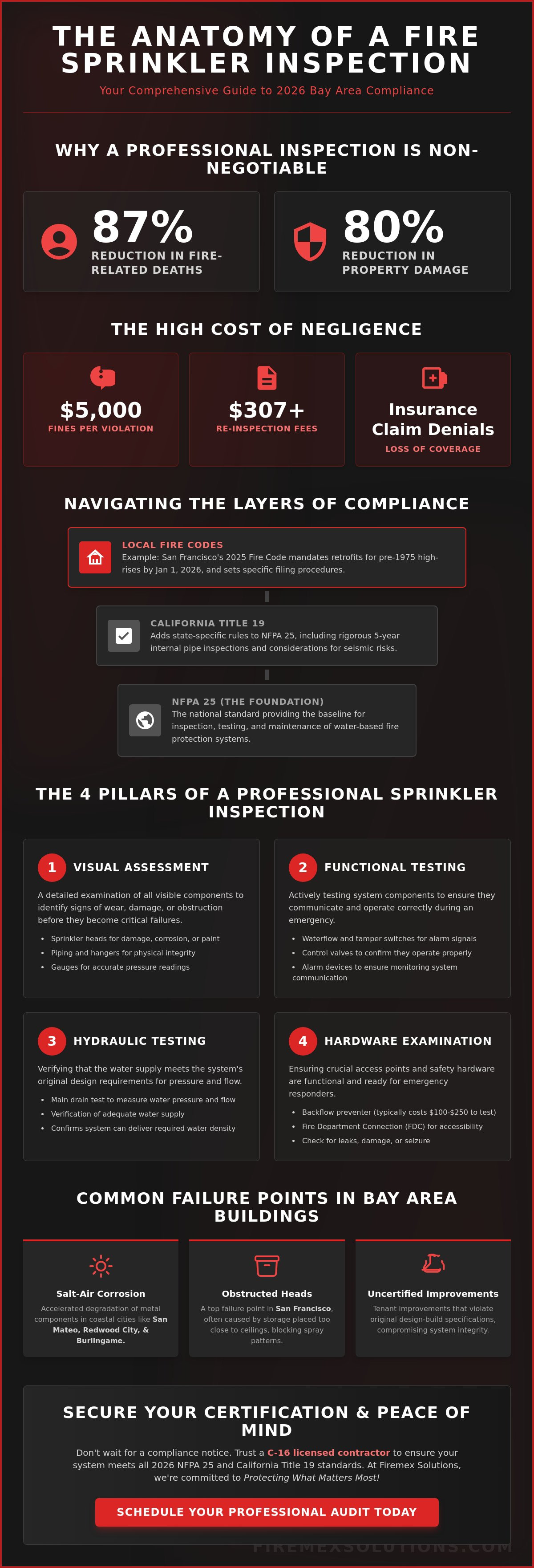
Understanding the technical steps of a sprinkler system inspection helps demystify the process and ensures your property remains a safe haven. This isn't a casual walk-through; it's a rigorous technical audit designed to verify your building's integrity. We follow the NFPA 25 standard to ensure every component functions as intended. The process includes:
Visual Assessment: We examine sprinkler heads, piping, and hangers for signs of physical damage, corrosion, or accidental painting.
Functional Testing: Our team triggers alarm devices, including waterflow and tamper switches, to confirm they communicate correctly with your monitoring system.
Hydraulic Testing: We perform a main drain test to verify that the water supply and pressure still meet the system's design requirements.
Hardware Examination: We inspect the backflow preventer and fire department connection (FDC) to ensure firefighters can access your system without delay.
The cost for annual testing of a backflow preventer typically ranges from $100 to $250 as of May 2026. This systematic approach provides the A+ service you expect while keeping your property Always Ready... for any emergency.
Common Failure Points in Bay Area Buildings
In coastal cities like Burlingame, San Mateo, and Redwood City, salt-air corrosion is a relentless enemy. It degrades metal components faster than the national average. In San Francisco, "obstructed heads" are a top failure point, often caused by storage units placed too close to the ceiling. Uncertified tenant improvements also frequently violate original design-build specs. With steel pipe costs up 20% as of early 2026, preventative maintenance is a smart financial move. Stay ahead of these risks with a professional fire protection audit.
The 5-Year Inspection: Beyond the Annual Check
California Title 19 mandates a rigorous 5-year internal pipe inspection. Our team performs a sprinkler system inspection that goes deeper than the surface during these cycles to check for "mic" (microbiologically influenced corrosion). This is vital because sprinklers are effective 96% of the time they operate, but only if they aren't blocked by internal decay. Detecting these issues early prevents catastrophic failure and protects your investment. We take this responsibility seriously because we're committed to Protecting What MatterS Most! for every client we serve.
Securing Your Certification and Protecting What MatterS Most
Once the physical sprinkler system inspection concludes, you'll receive a detailed Pass/Fail report. This document is the legal record of your property's safety status. A passing report confirms you meet all California Title 19 inspection requirements. If we identify deficiencies, don't worry. We provide a clear path forward. Addressing these through specialized residential fire sprinkler repair Bay Area services prevents the $307 re-inspection fee and keeps your property in good standing with the fire marshal.
The final step is securing your official system certification. This document provides 100% confidence that your suppression system will perform as designed. Many Bay Area owners see insurance premium reductions of 30% to 70% once they prove their systems are fully compliant. Building a relationship with a premier fire protection company near me ensures you never miss a deadline. It's about more than just a certificate; it's about a permanent state of readiness.
Documentation and Your Fire Marshal Visit
Fire marshals expect to see organized, accessible paperwork. You must keep AES 1 and AES 2 forms on-site for a minimum of three years. For managers in Hayward or Fremont, digital records are now essential. They allow for quick responses during audits and simplify the management of multiple properties. We help you organize these files so you're Always Ready... for any official visit.
Choosing a Reliable Guardian for Your System
Firemex Solutions has served the Bay Area for over 20 years. We combine deep technical proficiency with a welcoming, service-oriented approach. We treat your property with respect while ensuring every pipe and valve meets national safety standards. Our team provides the A+ service you need to sleep soundly at night. Ensure your system is Always Ready—Schedule your inspection today! We remain focused on Protecting What MatterS Most!
Secure Your Peace of Mind for 2026
Maintaining a fire-safe property in the Bay Area requires more than just meeting a deadline; it's about ensuring your "Reliable Guardian" is functional and ready for any emergency. By staying ahead of the 2026 NFPA 25 and California Title 19 standards, you eliminate the anxiety of failed audits or insurance denials. A professional sprinkler system inspection provides the technical validation you need to protect lives and property. You deserve the comfort that comes from a certified system that won't let you down when it counts.
Firemex Solutions brings over 20 years of localized fire protection expertise to your doorstep. We specialize in navigating the specific mandates of the SFFD and other Bay Area fire departments. Our team is committed to providing A+ service that gives you 100% confidence in your system's performance. Don't wait for a violation notice or a real-world crisis to act. Partner with a team that understands the gravity of your safety needs. Schedule Your 2026 Sprinkler System Inspection with Firemex Solutions today. We're Always Ready... to help you succeed in Protecting What MatterS Most!
Frequently Asked Questions
How often is a sprinkler system inspection required in San Francisco?
Annual inspections are mandatory for most commercial and multi-unit residential systems under California Title 19 regulations. You must also schedule a more comprehensive five-year inspection that includes internal pipe assessments to check for obstructions. The 2026 mandates for pre-1975 residential high-rises include additional phased deadlines for system upgrades. Staying on this schedule ensures you avoid the $307 re-inspection fee and maintain a valid certificate of occupancy.
What is the difference between fire sprinkler testing and a visual inspection?
A visual assessment focuses on identifying physical damage, accidental paint, or corrosion on heads and piping. In contrast, a professional sprinkler system inspection includes functional testing of mechanical components. This involves triggering waterflow switches and performing main drain tests to verify hydraulic pressure levels. While a visual check is a vital first step, functional testing provides 100% confidence that the system will actually activate during a fire.
Do I need to be present during the fire sprinkler inspection of my Bay Area business?
You don't need to be personally present as long as a designated representative provides our team with access to all riser rooms and tenant spaces. Technicians must reach every sprinkler head and control valve to ensure a thorough audit. Providing clear access to all areas helps us deliver A+ service and prevents the need for costly return visits. We handle the technical compliance while you focus on your daily business operations.
What happens if my fire sprinkler system fails its annual inspection?
If your system fails, you'll receive a detailed report outlining the specific deficiencies that require repair. You typically have 30 days to correct these issues and schedule a follow-up sprinkler system inspection to secure your certification. Failing to address these violations can result in state fines ranging from $500 to $5,000 per violation. We provide a clear roadmap for all necessary repairs to help you return to "Always Ready" status quickly.
Comments