


Foam-Water Sprinkler Systems and Vapor Suppression
Flammable-liquid protection depends on controlling vapors as well as cooling the surface. Foam-water sprinkler systems for high-hazard areas combine water with low-expansion foam concentrate to help control flammable-liquid fires. The foam helps cover the fuel, suppress vapors, slow flame spread, and reduce re-ignition risk, while water helps cool the protected area.
It is easy to focus on whether sprinklers will discharge, but performance also depends on the foam mix, pressure, discharge, and coverage. A weakness in any of these can affect how the system responds when a hazard develops.
This guide explains how foam-water systems work, how foam helps suppress vapors, and which deficiencies can undermine performance. It also explains why inspection, testing, and maintenance of the system and foam concentrate supply matter for dependable protection.
Table of Contents
What Are Foam Water Fire Sprinkler Systems?
These systems mix water and foam concentrate to protect against flammable-liquid fires. NFPA 16 describes their purpose for high-hazard fire risks.
High-Hazard Flammable-Liquid Applications
Foam-water sprinkler systems for high-hazard areas are designed for fuel storage and transfer, chemical handling, refineries, and aircraft facilities. These occupancies can involve flammable liquids whose vapors and surface fires need specialized protection. NFPA 11 covers low-, medium-, and high-expansion foam, while NFPA 16 addresses foam-water systems. In the United States, permits and fire-code requirements depend on local rules and facility design. Unlike standard sprinklers, these systems add foam concentrate; water-mist systems use a different discharge approach.
Foam Suppression and Tank Chambers
Foam spreads across burning liquid, helping separate fuel from ignition, cool the surface, and smother fire and vapors. A foam chamber is an NFPA-11 Type II air-aspirating device that discharges foam onto a tank’s liquid surface. The European Union required existing PFOS-based foam stocks to be removed from service by June 27, 2011, under Directive 2006/122/ECOF. AFFF, AR-AFFF, FFFP, AR-FFFP, FP, and AR-FP contain fluorinated surfactants and may leave PFAS in the environment.
System Types, Concentrates, and Design
For foam-water sprinkler systems for high-hazard areas, concentrate selection depends on the fuel and application. Design weighs the hazard, water supply, pressure, discharge, and required coverage. NFPA 30’s stated provision calls for foam solution with 4 sprinklers flowing. Installation involves assessing the property, designing for its requirements, and following applicable industry standards and local regulations. Project costs depend on design, site conditions, concentrate, and maintenance needs. Inspections and testing help assess readiness.
Foam-water solution and vapor suppression
Effective suppression depends on delivering the right foam solution to the hazard area. In foam-water sprinkler systems for high-hazard areas, foam and water provide different but complementary fire-control effects.
Foam and Water Suppression Roles
Foam concentrate helps form a layer over fuel, separating the liquid surface from ignition and limiting vapor release. Water helps cool the protected area. This combination matters because discharge must address both the burning fuel and the heat that can sustain a fire. System performance depends on the correct mix, pressure, discharge, and coverage.
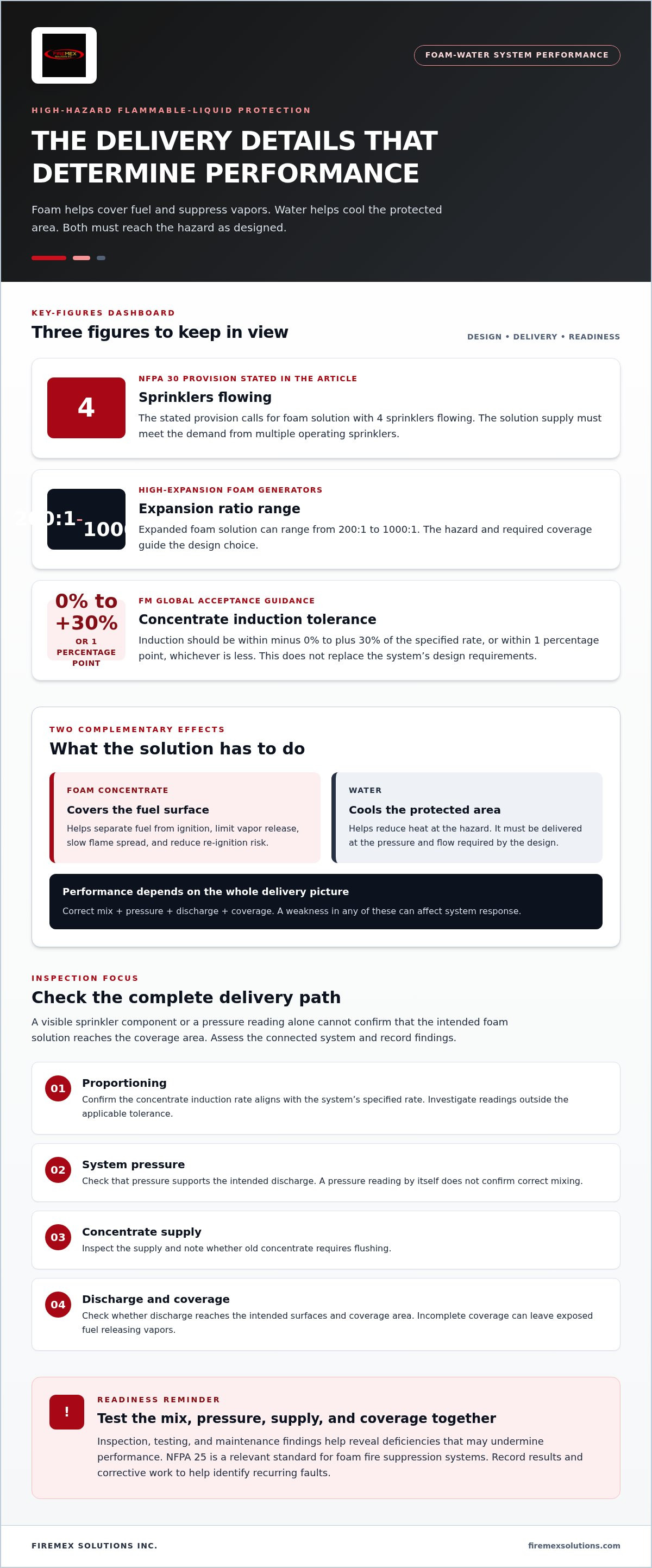
NFPA 30’s stated provision calls for foam solution with 4 sprinklers flowing. That requirement connects the solution supply to the demand from multiple operating sprinklers. Designers consider the hazard area and water supply to ensure the solution can reach the intended surfaces. If coverage is incomplete, exposed fuel may continue releasing vapors.
Cooling and Vapor Suppression
Foam-water sprinkler systems for high-hazard areas use foam to help suppress fire and vapors, slow flame spread, and reduce re-ignition risk. Water helps reduce heat at the hazard. Neither effect replaces proper application: foam must reach the surface, and water must be delivered at the pressure and flow required by the design.
Expansion affects how foam solution occupies a space. High-expansion foam generators produce expanded foam solution at ratios ranging from 200:1 to 1000:1, which can help protect larger spaces. The hazard and required coverage guide the design choice. System design considerations help connect discharge performance with the area being protected.
Common foam system deficiencies
A foam-water system can look intact yet fail to deliver the intended solution. In industrial facilities, incorrect proportioning, inadequate pressure, or an interrupted concentrate supply can weaken suppression before the discharge reaches the hazard.
Inspection, testing, and maintenance should assess the foam-to-water ratio, system pressure, discharge components, and concentrate supply. NFPA 25 is a relevant standard for foam fire suppression systems. Regular checks help identify performance problems, while maintenance may include flushing old foam concentrate from the system.
Focus inspection records on conditions that can affect delivery:
Proportioning: Confirm the foam concentrate induction rate aligns with the system’s specified rate.
Pressure: Check that system pressure supports the intended discharge.
Concentrate supply: Inspect the supply and note whether old concentrate requires flushing.
FM Global acceptance guidance calls for foam concentrate induction to be within minus 0% to plus 30% of the specified rate, or within 1 percentage point, whichever is less. This is a performance criterion, not a substitute for the system’s design requirements. A measured ratio outside the applicable tolerance signals a need to investigate the proportioning equipment and supply path.
Testing should assess the complete delivery path, not just visible sprinkler components. A pressure reading alone will not show whether concentrate mixes correctly, and a satisfactory ratio will not establish that discharge reaches the intended coverage area. Record results and corrective work to help identify recurring faults.
For support with fire sprinkler maintenance, schedule a maintenance discussion.
Firemex Solutions Inc.: Residential Fire Sprinkler Systems
Firemex Solutions Inc. helps property owners plan protection through residential and commercial sprinkler systems and fire sprinkler system design. For a building project, design takes the property’s layout and fire protection needs into account.
Foam-water protection for flammable-liquid hazards involves specialized system considerations. Firemex Solutions Inc. designs and installs residential and commercial sprinkler systems, as well as underground fire service. Matching the system to the property’s needs is an important part of planning dependable protection.
Contact Firemex Solutions Inc. for a free estimate on a residential or commercial sprinkler project.
Plan the Next Step for Your Facility
Use this guide to shape a practical fire-protection discussion around your facility’s hazards, operations, and future changes. For foam-water sprinkler systems for high-hazard areas, include system performance and maintenance responsibilities in the planning process from the outset.
Firemex Solutions Inc. offers residential and commercial fire sprinkler systems and underground fire service for building fire-protection needs. These services address sprinkler and underground infrastructure, while the right approach depends on the protection your property requires. Discuss your project with Firemex Solutions Inc. to identify the relevant needs and plan the next steps.
Contact Firemex Solutions Inc. to discuss your fire sprinkler needs and take a considered next step toward protecting your property.
Frequently Asked Questions
What is a foam-water sprinkler system and how does it work?
A foam-water system delivers water mixed with foam concentrate through sprinklers or other discharge devices. For example, a facility’s design identifies the protected hazard zone and required discharge coverage, then matches the proportioning equipment and concentrate supply to that design. Intended performance depends on these components working together, not on sprinkler heads alone.
Which high-hazard occupancies require foam-water sprinkler systems?
No occupancy label alone determines the need for foam-water protection. The relevant factor is whether the facility presents a flammable-liquid hazard that calls for this system under applicable design and fire-code requirements. Industrial process plants, marine applications, and jet-engine test facilities are examples. In the San Francisco Bay Area, property owners in San Francisco, San Jose, Oakland, Redwood City, Los Altos, Hayward, Fremont, Burlingame, Belmont, San Mateo, San Carlos, Palo Alto, Cupertino, Berkeley, Santa Rosa, Concord, Saratoga, and Mountain View can assess hazards by zone.
How do foam-water sprinkler systems compare with standard sprinklers and water-mist systems?
Unlike standard sprinklers, foam-water systems add foam concentrate to water. Water-mist systems use a different discharge approach.
What are NFPA 11 and NFPA 16 requirements for foam-water sprinkler systems?
NFPA 11 covers low-, medium-, and high-expansion foam, while NFPA 16 addresses foam-water systems and their purpose in high-hazard fire risks. The stated NFPA 30 provision calls for foam solution with four sprinklers flowing.
What environmental and health risks are associated with firefighting foam, including PFAS?
Some foam types, including AFFF and AR-AFFF, contain fluorinated surfactants and may leave PFAS in the environment. Chemical foam can require more involved cleanup because it is distributed throughout the protected space, and foam agents can be corrosive.
Comments