


The Complete Fire Sprinkler System Winterization Guide for 2026
- 2 days ago
- 7 min read
Did you know that freeze-related damage is a leading cause of non-fire sprinkler system impairment during the winter months? According to the National Fire Protection Association, even a brief cold snap can compromise the integrity of your safety infrastructure. This fire sprinkler system winterization guide helps you navigate the technical demands of the 2026 NFPA 25 standards. We understand that the fear of expensive water damage from burst pipes is a heavy burden for any property owner. It's often difficult to balance the nuances of wet versus dry system maintenance while ensuring your facility remains fully compliant.
You deserve the peace of mind that comes from knowing your life-safety systems are prepared for the harshest conditions. This article provides a clear roadmap to protect your investment and ensure your system works in an emergency despite the cold. We'll cover essential seasonal protection checklists, the latest requirements for listed antifreeze solutions, and the specific internal valve inspections required for 2026. By following these professional steps, you can shield your assets from the elements and maintain the high-stakes reliability your property requires. Total certainty...
Table of Contents
Understanding the Risk: Why Fire Sprinkler Winterization is Non-Negotiable
Preparing your fire suppression infrastructure for cold weather is a core responsibility for any property owner. Fire sprinkler winterization is the systematic process of shielding pipes and components so they remain functional when temperatures drop. This fire sprinkler system winterization guide emphasizes that safety isn't seasonal; it's a constant commitment to protecting lives and property. By taking proactive steps, you act as a dependable shield for your assets.
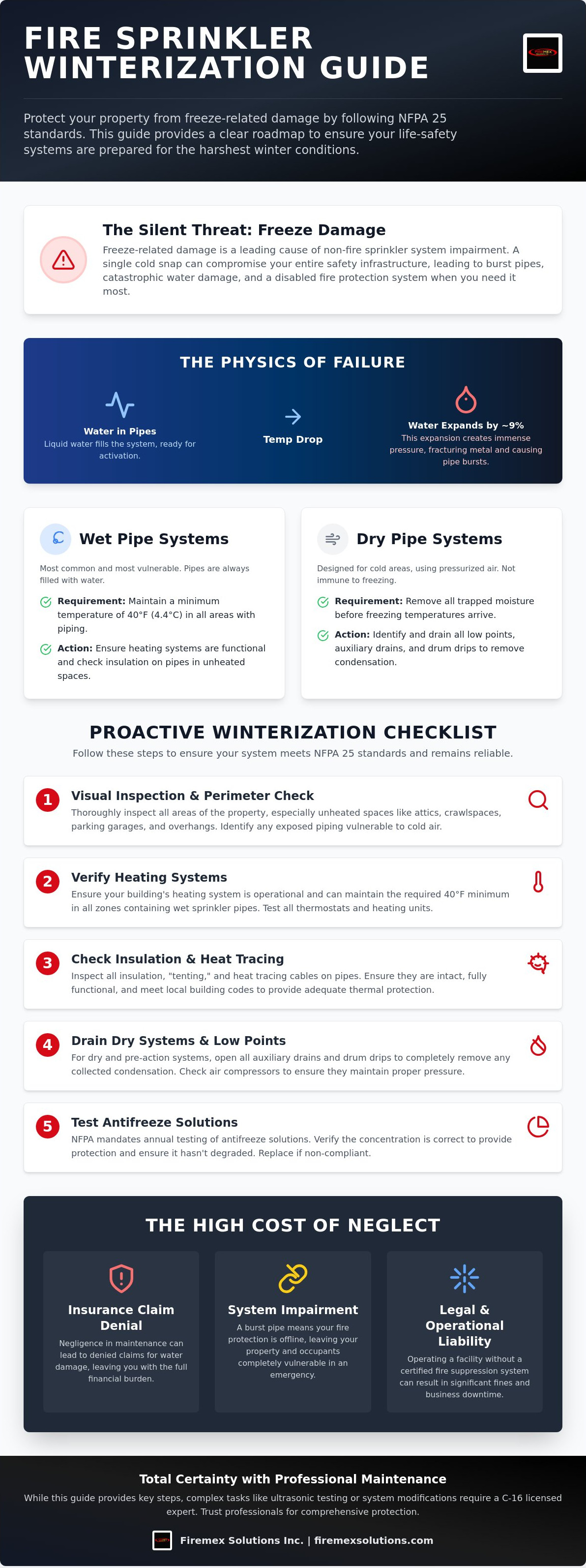
The physics of a pipe burst are simple but devastating. When water freezes, it expands by roughly 9%. This expansion creates immense pressure within the piping network that can easily fracture metal or plastic components. A single failure point leads to a dual threat. You face catastrophic water damage that can ruin inventory and structural elements, while the system simultaneously becomes impaired. This leaves the building entirely unprotected during a fire emergency, a risk no business should take.
Many Bay Area residents believe they're exempt from these risks. This "Bay Area Myth" ignores recent meteorological data showing significant frost events in regions like Santa Rosa and San Jose. Cold pockets can form in unheated attics, crawlspaces, or parking garages even when the street level feels mild. Relying on luck isn't a strategy for safety management.
Wet Pipe vs. Dry Pipe Systems: Different Winter Needs
Understanding fire sprinkler systems is the first step in identifying your specific risks. Wet pipe systems are the most common and the most vulnerable because they're always filled with water. NFPA 25 standards require these areas to be maintained at a minimum of 40°F. Conversely, dry pipe systems use pressurized air to hold back water. While they're designed for cold areas, they aren't immune to freezing. Condensation often collects in low points or auxiliary drains. If this moisture isn't drained, it will freeze and cause the same mechanical failures seen in wet systems.
The Consequences of Neglecting Seasonal Maintenance
The legal and financial stakes of skipping winter prep are high. Insurance providers often include clauses that require property owners to perform adequate system maintenance. If a pipe bursts due to negligence, you might find your damage claims denied. Beyond the cost, a compromised system means significant downtime. Operating a commercial facility without a certified, functioning fire suppression system is a major legal liability. Following a professional fire sprinkler system winterization guide ensures you meet regulatory standards and maintain the peace of mind that comes with total certainty.
A Step-by-Step Guide to Winterizing Your Fire Sprinkler System
Securing your property starts with a thorough physical assessment. This fire sprinkler system winterization guide recommends a perimeter check to identify exposed piping in unheated areas. Attics, crawlspaces, and parking garages are prime candidates for freeze damage. You must verify that all "tenting" or insulation around residential sprinkler heads remains intact. These components must meet specific local SF building codes to provide adequate protection and maintain system integrity.
Your building's heating system is your first line of defense. It must maintain a minimum of 40°F in all zones containing wet pipes. Don't forget to inspect and test heat tracing cables and insulation jackets for exterior or underground fire service lines. These specialized tools keep water flowing even when the ground temperature drops. Ensuring these components are operational provides the total certainty your facility requires during the winter months.
For Dry Pipe Systems: Draining the Low Points
Dry systems require specific technical attention because they aren't always moisture-free. You need to identify and drain auxiliary drains, also known as drum drips, to remove accumulated condensation before it freezes. A drum drip is a collection point for moisture that must be manually emptied. If left full, the trapped water will expand and crack the valve assembly. Additionally, check the air compressor for proper operation. It's essential for maintaining the "dry" state of the system and preventing accidental trips that could flood the pipes in freezing weather.
Antifreeze Loops and Solution Testing
Antifreeze plays a vital role in protecting residential systems in colder microclimates. However, you can't just set it and forget it. NFPA requirements mandate that antifreeze solutions are tested annually to ensure they haven't degraded or reached unsafe concentration levels. If your solution is out of compliance, it won't protect your pipes and could even become a safety hazard. For expert assistance with these technical tests, you can rely on professional residential fire sprinkler repair Bay Area services. If you're unsure about your system's readiness, consulting with a licensed fire sprinkler contractor is a disciplined way to ensure safety.
Professional Maintenance and NFPA 25 Winter Compliance
Winterization is a critical component of your mandatory fire sprinkler inspection cycle. It isn't just a seasonal chore; it's a regulatory requirement that ensures your system meets the 2026 NFPA 25 standards. Professional contractors use specialized equipment to verify system health. For example, ultrasonic thickness testing allows technicians to check for internal pipe corrosion that could lead to a catastrophic failure under the added pressure of freezing water. These academic-grade descriptors reflect the high-level technical proficiency required to maintain life-safety systems.
Any modifications or repairs identified during this fire sprinkler system winterization guide process must be handled by a contractor holding a C-16 license. This specific certification ensures all work remains legal and compliant with state safety codes. Establishing a recurring maintenance plan is a disciplined way to manage your budget. It helps you avoid the steep costs of emergency repairs when a sudden freeze event occurs. This proactive oversight provides property owners with total certainty and a verbal seal of quality for their records.
Why Local Bay Area Expertise Matters
The San Francisco Bay Area features complex microclimates that demand localized knowledge. While the coastal fog in San Francisco provides a buffer, the valley floors of Concord and Saratoga often face freezing temperatures that can catch unprepared owners off guard. Understanding these regional variations is essential for proper system design and maintenance. Furthermore, deep familiarity with South San Francisco building codes ensures that your certifications are processed quickly and accurately. This specialized oversight acts as a dependable shield for your assets and lives.
Emergency Response: What to Do if a Pipe Freezes
If you suspect a pipe has frozen, you must take immediate action to prevent a flood. Start by shutting off the main water valve and contacting an fire sprinkler repair near me specialist. Speed is essential to minimize structural damage. You should never use a torch or any open flame to thaw fire sprinkler pipes. The intense heat can trigger an accidental head discharge or damage the pipe's integrity. Professional intervention is the only way to ensure the system is safely restored to service. Constant availability...
Secure Your Safety Infrastructure for 2026
Proactive winterization is the most effective way to prevent catastrophic water damage and maintain life-saving reliability. This fire sprinkler system winterization guide provides the foundational steps to shield your building from the hidden risks of freezing temperatures. By identifying vulnerable pipes and ensuring heating systems maintain a minimum of 40°F, you fulfill your role as a responsible guardian of your property. Technical readiness is not just about compliance; it's about the security of your occupants and assets.
Professional oversight is essential for meeting the rigorous requirements of NFPA 25. Firemex Solutions Inc. brings over 20 years of Bay Area experience to every inspection. As a licensed C-16 fire protection contractor, we serve clients from San Francisco to San Jose with a commitment to total certainty. Don't wait for a freeze event to discover a system vulnerability. You can Schedule Your Winterization Inspection with Firemex Solutions Inc. today to ensure your safety infrastructure remains resilient. We are here to help you navigate the complexities of seasonal maintenance with quiet confidence. Total certainty...
Frequently Asked Questions
At what temperature do fire sprinkler pipes freeze?
Fire sprinkler pipes are at risk of freezing whenever ambient temperatures drop below 40°F. While pure water freezes at 32°F, the NFPA 25 standard mandates a 40°F minimum to account for cold pockets in unheated areas like attics or crawlspaces. Maintaining this safety margin is essential for the life-saving reliability of your system. Even a brief cold snap can lead to ice expansion and catastrophic pipe failure.
Can I winterize my own fire sprinkler system?
Property owners can perform basic perimeter checks, but a comprehensive fire sprinkler system winterization guide requires professional oversight for technical tasks. Licensed C-16 contractors possess the specialized equipment needed for ultrasonic thickness testing and antifreeze solution analysis. Attempting to manage these systems without expert training can lead to accidental discharge or compliance failures. Trusting a seasoned professional provides the total certainty that your system will function during an emergency.
How often should I drain the drum drips on my dry pipe system?
You should drain auxiliary drains, or drum drips, daily during the onset of freezing weather until no more water is discharged. Once the moisture is cleared, you can transition to a weekly or monthly schedule depending on the system's condensation levels. Regular maintenance of these collection points prevents water from expanding and cracking the valve assembly. This disciplined approach is a core part of any professional fire sprinkler system winterization guide to avoid winter impairments.
Does my residential fire sprinkler system need antifreeze?
Your residential system may require antifreeze if any part of the piping network is located in unheated areas like attics or garages. The 2026 edition of NFPA 25 mandates that only listed antifreeze solutions are permitted to ensure safety and effectiveness. If your system was installed before these regulations, it's vital to have a professional test the concentration levels. This ensures your home remains a dependable shield against fire even during local frost events. Total certainty...
Comments