


Wet Pipe vs. Dry Pipe Sprinkler Systems: Pros and Cons for Bay Area Property Owners
Imagine arriving at your San Francisco warehouse after a rare Bay Area cold snap only to find your inventory ruined by a burst pipe. It's a nightmare scenario that many property owners fear when managing unheated spaces or parking structures. Protecting your investment requires more than just meeting the 2025 California Fire Code; it demands a system tailored to your specific microclimate. Understanding the wet pipe vs dry pipe sprinkler systems pros and cons is the first step toward achieving total certainty in your fire safety strategy.
We know that balancing maintenance costs with regulatory compliance can feel overwhelming. This guide breaks down the critical differences in installation, upkeep, and localized safety standards to help you choose the most reliable guardian for your assets. You'll discover which system offers the best protection for your building type and how to manage the unique maintenance needs of each effectively.
Table of Contents
Wet Pipe vs. Dry Pipe: Understanding the Core Mechanics
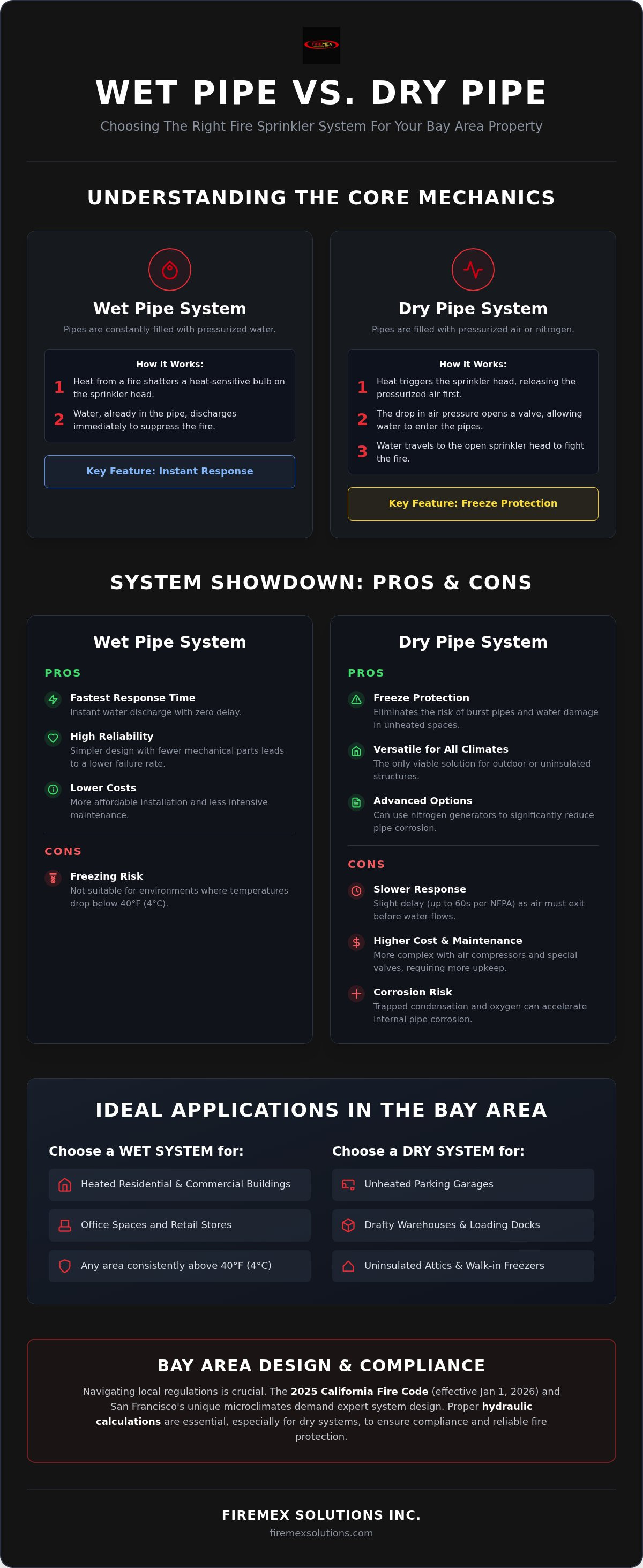
Choosing the right fire suppression requires understanding how water actually reaches a flame. The primary distinction in wet pipe vs dry pipe sprinkler systems pros and cons lies in what sits inside the pipes before a fire starts. Wet systems are constantly filled with pressurized water, while dry systems contain pressurized air or nitrogen. Local temperature is the deciding factor; if your property stays above 40 degrees Fahrenheit, a wet system is typically the preferred choice for its simplicity and speed.
How Wet Pipe Systems Provide Immediate Response
These systems are the gold standard for residential fire sprinkler systems because they offer the fastest reaction time. Each sprinkler head features a heat-sensitive glass bulb or a fusible link that acts as a plug. When a fire raises the ambient temperature to a specific threshold, the bulb shatters, allowing water to discharge instantly. Since water is already present at the head, there's zero delay in suppression, making these systems exceptionally reliable for life safety.
The Mechanics of Pressurized Air in Dry Systems
In unheated environments like parking garages or warehouses, standing water would freeze and burst the pipes. Dry systems solve this by using pressurized air to hold back the water supply at a specialized dry pipe valve. To grasp Fire sprinkler system mechanics in this scenario, think of the valve as a gatekeeper. When a fire triggers a head, the air escapes first. This drop in pressure allows the valve to open, finally letting water travel through the network to the fire. While this prevents freeze damage, it does introduce a slight delay compared to wet systems.
Pros and Cons: Evaluating Your Fire Suppression Options
Evaluating wet pipe vs dry pipe sprinkler systems pros and cons involves looking beyond the initial price tag. Wet systems offer superior reliability because they lack complex moving parts like air compressors. This simplicity translates to a lower failure rate and fewer points of vulnerability. However, for dry systems, the NFPA mandates a 60-second water delivery limit. It's a critical safety metric that ensures fire suppression isn't delayed dangerously while air exhausts from the lines. While dry systems prevent freezing, they face higher internal corrosion risks due to the constant presence of oxygen and trapped condensation. Balancing these wet pipe vs dry pipe sprinkler systems pros and cons requires a clear understanding of your building's unique environment.
Wet Pipe Pros: Efficiency and Low Maintenance
Choosing a wet system often results in a more affordable commercial fire protection strategy. Installation is straightforward since you don't need specialized valves or compressors. This also simplifies your recurring fire sprinkler inspection. Lower labor costs and fewer mechanical components mean you spend less on maintenance over the system's life while maintaining high confidence in its performance.
Dry Pipe Pros: The Shield Against Freezing
For unheated parking structures in San Francisco or drafty warehouses in Oakland, a dry system is a strategic necessity. It eliminates the risk of frozen pipes that lead to catastrophic water damage and system failure. To combat the corrosion that often plagues these systems, many owners now utilize nitrogen generators. This advanced approach replaces oxygen with inert gas, significantly extending the pipe's lifespan. If you're uncertain which path fits your building, our team can provide expert system design to ensure total certainty and long-term safety.
Bay Area Implementation: Design and Compliance for 2026
Compliance in San Francisco often hinges on specific building layouts and local environmental factors. The 2025 California Fire Code, which became effective on January 1, 2026, mandates stricter standards for larger buildings. Navigating these rules requires expert fire sprinkler system design to ensure hydraulic calculations account for the pressure drops inherent in air-filled lines. A core part of the wet pipe vs dry pipe sprinkler systems pros and cons discussion is how these designs handle local requirements. While wet systems are standard, the city's unique microclimates often necessitate dry configurations in vulnerable zones to prevent burst pipes.
When to Choose Dry Pipe in the Bay Area
Property owners should specify dry systems for walk-in freezers, uninsulated attic spaces, and exposed loading docks. Coastal fog and high humidity in neighborhoods like the Sunset District create localized moisture risks that can lead to pipe failure if not managed correctly. In these environments, the air-filled lines act as a safeguard against freezing. However, this protection requires diligent upkeep. Owners must ensure quarterly draining of "drum drips" to remove condensation. Neglecting this task can lead to accidental system trips or internal corrosion.
The Critical Role of NFPA 25 Inspections
California Title 19 and NFPA 25 mandate strict testing intervals to maintain system integrity. Dry systems require an annual partial trip test and a full-flow trip test every three years to verify water delivery speeds. Firemex Solutions Inc. manages these complex schedules for SF owners, providing total certainty that your property remains compliant. If a component fails during testing, securing a local expert for residential fire sprinkler repair in the Bay Area is the fastest way to restore your shield and avoid costly municipal fines.
Secure Your Property with Total Certainty
Choosing the right fire suppression strategy isn't just about meeting a code; it's about matching your protection to the specific microclimate of your building. Wet systems offer unmatched response times for standard environments, while dry systems provide a vital shield against freezing in unheated spaces. Thoroughly evaluating the wet pipe vs dry pipe sprinkler systems pros and cons ensures your investment remains compliant with the latest 2025 California Fire Code standards. As a C-16 licensed contractor with over 20 years of SF Bay Area expertise, we provide the expert oversight needed to protect your assets and lives. We remain committed to your safety with 24/7 emergency repair availability... Request a Professional System Evaluation from Firemex Solutions Inc. today. Your peace of mind is our highest priority.
Frequently Asked Questions
Does a dry pipe system take longer to put out a fire than a wet system?
Yes, dry pipe systems experience a slight delay in water delivery compared to wet systems. Because the pipes are filled with pressurized air or nitrogen, that gas must first exhaust through the open sprinkler head before water reaches the fire. NFPA standards generally require water to reach the remote head within 60 seconds to ensure effective suppression.
Can I convert my existing wet pipe system to a dry pipe system?
You can convert a wet system to a dry one, but it involves more than just draining the water. You'll need to install a specialized dry pipe valve, an air compressor, and ensure all piping is properly sloped to prevent condensation traps. A professional evaluation is necessary to determine if your current pipe material can handle the increased corrosion risks.
Which system is better for a residential home in San Francisco?
Wet pipe systems are the superior choice for the vast majority of San Francisco residential homes. Since local temperatures rarely drop below freezing for extended periods, the added complexity of a dry system isn't usually necessary. Wet systems provide an immediate response and lower maintenance costs, making them the most reliable guardian for your family and assets.
What is the average cost difference between wet and dry pipe installations?
Dry pipe system installations are typically 30% to 50% more expensive than standard wet pipe systems. This price gap accounts for the specialized dry pipe valve, air compressors, and the more complex design requirements. When weighing the wet pipe vs dry pipe sprinkler systems pros and cons, property owners must also factor in the higher long-term maintenance costs associated with dry systems.
How often do dry pipe systems need to be inspected in California?
California fire codes require dry pipe systems to undergo several inspection cycles to remain compliant. While wet systems often focus on annual checks, dry systems require quarterly inspections of the dry pipe valve and priming water levels. Additionally, a full-flow trip test is mandatory every three years to ensure water reaches the heads within the legal time limit.
What causes a dry pipe system to 'accidently trip' or discharge?
Accidental trips usually occur when the air pressure inside the pipes drops below the trip point, causing the dry pipe valve to open. Common culprits include slow air leaks, compressor mechanical failure, or a loss of power to the system. Understanding these wet pipe vs dry pipe sprinkler systems pros and cons helps owners prioritize the routine maintenance needed to prevent these disruptive events.
Comments