


Fire Marshal Violation Notices: Corrections and Consequences
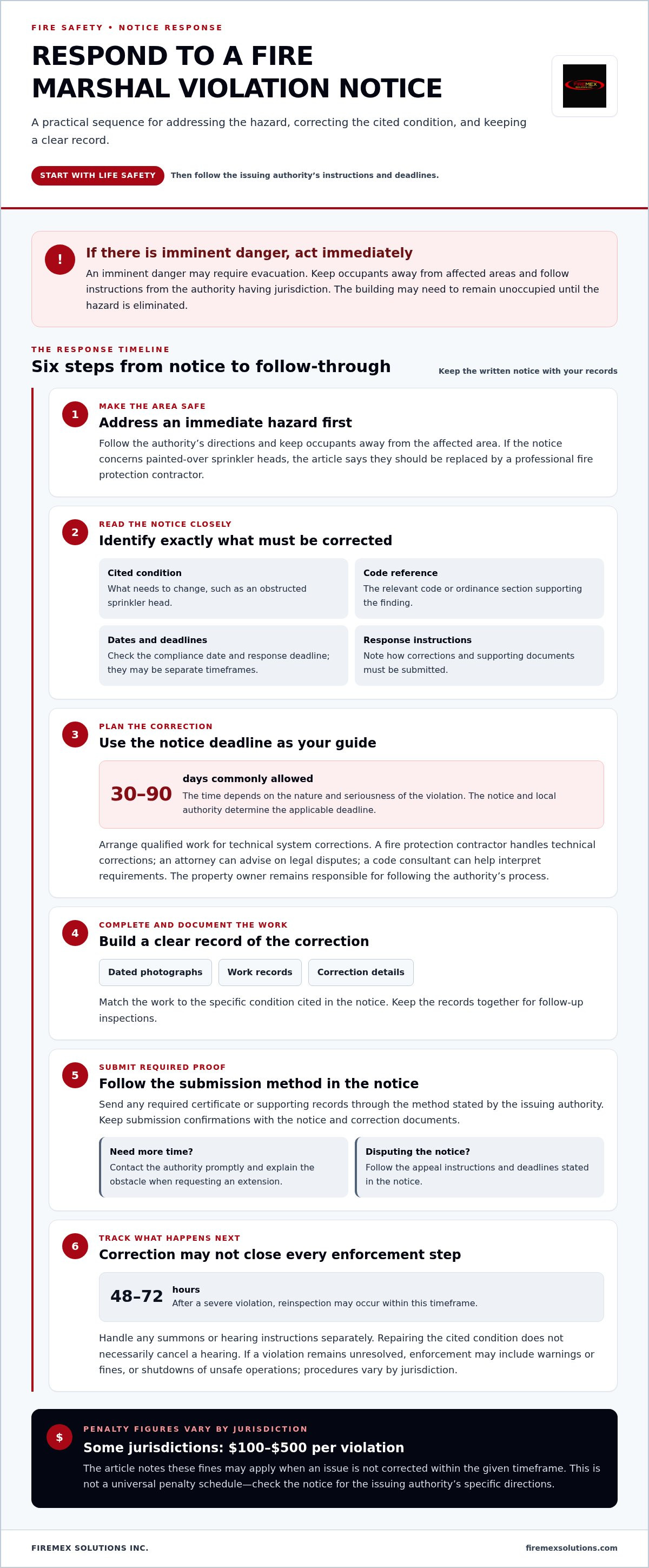
Dealing with a fire marshal violation notice starts with identifying each required correction and the deadline on the notice. Notices commonly allow 30-90 days to correct a violation, depending on its nature, but an imminent danger can require evacuation until the hazard is eliminated. A written notice should describe the corrections and cite the relevant code or ordinance sections, giving you a clear basis for action.
A fire marshal violation notice can feel urgent, especially when it sets a deadline or identifies a safety hazard. Start by reviewing the cited condition, required correction, response instructions, and deadline. This guide explains how to organize the response, document the work, and understand what may happen if a deadline is missed.
Table of Contents
What Happens If You Need to Make a Fire Violation Correction?
First address any immediate hazard, then use the notice to plan repairs and required responses. The issuing fire department or local authority determines the applicable process and deadlines.
Immediate Action for Life-Threatening Violations
Immediate corrective action means addressing a condition that threatens life before routine compliance steps. An imminent danger may require evacuation, with the building remaining unoccupied until the hazard is eliminated. Keep occupants away from affected areas and follow instructions from the authority with jurisdiction. Painted-over sprinkler heads should be replaced by a professional fire protection contractor.
Correction Steps and Certificate Submission
A correction resolves the specific condition cited in the notice. Review the finding, deadline, and required proof; notices commonly allow 30-90 days, depending on the violation. Arrange qualified work, document completion, and submit any required certificate or supporting records through the method stated by the issuing authority. To request an extension, contact that authority promptly and explain the obstacle. To contest a notice, follow its appeal instructions and deadlines. Ask the local fire marshal about applicable fire codes and appeal procedures for your area.
Benefits of Correcting Violations
Correction addresses the hazard and creates a record of your response. Keep dated photographs, work records, and submission confirmations together for follow-up inspections. After a severe violation, reinspection may occur within 48-72 hours, so organized records help show what work was completed.
Professional Help for Responding to a Notice
A fire protection contractor handles technical system corrections. An attorney can advise on legal disputes, while a code consultant can help interpret requirements. Choose support based on the notice: use a qualified contractor for a sprinkler defect, and legal or code expertise when disputing an interpretation. Each professional can address their area of work, but the property owner remains responsible for following the authority’s response process.
Enforcement for noncompliance
Enforcement is the official response when a cited fire code condition remains unresolved. Local fire marshals or fire department inspectors may issue warnings or fines, or shut down unsafe operations. The response can depend on the hazard’s severity, the deadline, and progress toward correction. A blocked exit, failed alarm system, and unsafe storage condition each present different risks to occupants.
In some jurisdictions, fines can start at $100-$500 per violation if the issue isn’t corrected within the given timeframe. Businesses may have up to 90 days to remedy a violation, depending on its severity. These figures don’t establish a universal penalty schedule; enforcement rules and procedures vary by jurisdiction. Review the notice for the issuing authority’s specific directions.
Ignoring a notice can lead to further enforcement, including legal action or restrictions on unsafe operations. Keep records of completed work and communications with the authority. If the notice includes a summons or hearing instructions, handle those as separate parts of the response. Repairing a condition does not necessarily resolve every enforcement step listed in the notice.
For a sprinkler-related finding, correcting the cited system defect can support fire prevention and document progress. A professional fire sprinkler repair can address sprinkler issues. Keep the repair documentation with the notice and follow any remaining instructions from the issuing department.
What a written notice of violation should include
A written fire marshal violation notice records a cited fire safety problem and the action required to address it. It should describe the corrections and cite the relevant code or ordinance sections. Use those details to understand the specific fire code violations rather than guessing at a general safety goal.
Read the correction description alongside the cited section. For example, a notice about sprinkler clearance should identify the required correction and applicable code section. If the language is unclear, ask the issuing department to explain the cited condition and its connection to the fire code. Keep the notice with inspection records and correction documents when you are dealing with a fire marshal violation notice.
Check the document for these key details:
Correction: What condition needs to change, such as an obstructed sprinkler head.
Code reference: The relevant code or ordinance section supporting the finding.
Dates: An official summons or notice includes a compliance date and a response deadline. Treat these as separate timeframes.
Response instructions: Note how the issuing department expects corrections or supporting documents to be submitted.
A clear citation helps distinguish fire protection work from unrelated repairs. It can also show whether the finding concerns equipment, access, or another fire safety issue. If a notice identifies a sprinkler-system problem, match the correction to the cited defect and retain completion records. Clear documentation supports prevention and helps explain the steps taken if the condition is reviewed again.
For a cited sprinkler issue that requires technical design work, explore fire sprinkler system design with Firemex Solutions Inc. as a practical next step.
Firemex Solutions: Residential Fire Sprinkler Systems
Firemex Solutions Inc. can help when a fire marshal notice identifies a residential sprinkler system or design issue. Its residential fire sprinkler systems and fire sprinkler system design address system needs in homes. Commercial fire sprinkler systems and underground fire service serve other project types.
Use the written notice to identify the cited defect and required correction before arranging work. Firemex Solutions Inc. designs and installs systems to meet current state codes and national safety standards. Sprinkler work addresses the system side of a violation, but does not replace submissions, hearings, or deadlines required by the issuing department.
If your notice concerns a residential sprinkler system, contact Firemex Solutions Inc. to discuss the project.
Move Forward With a Clear Correction Plan
Dealing with a fire marshal violation notice is also an opportunity to strengthen the building’s fire protection, not just resolve an inspection finding. Coordinate the authority’s process with the technical work: assign responsibility for each action, retain records, and track follow-up. This helps distinguish completed repairs from a completed enforcement response.
For sprinkler-related needs, Firemex Solutions Inc. offers residential fire sprinkler systems, commercial fire sprinkler systems, and underground fire service. These services can help property owners address system issues as they respond to a notice. Firemex Solutions Inc. can handle sprinkler work, while the issuing authority’s deadlines and instructions remain part of your response.
Contact Firemex Solutions Inc. to discuss a sprinkler project and its requirements. Contact Firemex Solutions Inc. for help, and take the next step toward a safer, better-documented property.
Frequently Asked Questions
What Happens When the Fire Marshal has Completed the Inspection?
After discussing the findings, you may be asked to sign the inspection report and keep a copy. Read it before signing so you understand which conditions the inspector recorded. If the inspection identifies an imminent hazard, the building may need to be evacuated until the danger is eliminated. Keep the report with any written notice and related records.
What should I do first after receiving a fire marshal violation notice?
Start by checking whether the notice identifies an immediate threat, then find its correction deadline and response instructions. If dealing with a fire marshal violation notice involving an unsafe sprinkler condition, keep occupants clear of the hazard and arrange the appropriate technical correction. Save the notice and inspection report together so the cited condition remains clear as work proceeds.
How do I read a fire marshal violation notice and identify the code violations?
Match each described condition to the code or ordinance section cited in the notice. Separate fire code requirements, which address fire prevention and safety during building use, from building code rules concerning structural design and construction. For properties in San Francisco, San Jose, Oakland, Redwood City, Los Altos, Hayward, Fremont, Burlingame, Belmont, San Mateo, San Carlos, Palo Alto, Cupertino, Berkeley, Santa Rosa, Concord, Saratoga, or Mountain View, identify the authority responsible for that address.
What deadlines apply to correcting fire code violations or appealing a notice?
Correction deadlines depend on the violation and jurisdiction; notices commonly allow 30-90 days. In New York City, an FDNY Summons lists separate compliance and hearing dates, so completing repairs doesn’t remove the hearing obligation. In Vermont, an alleged violator must submit a written appeal of an administrative penalty within twenty (20) days of receiving it. Follow the dates and appeal process stated by the issuing authority.
What documents, photos, or inspections are needed to prove a violation has been corrected?
Keep the inspection report, written notice, and records showing what work addressed each cited condition. Before-and-after photos can document visible changes, such as clearing an obstructed exit; retain invoices or technical reports for system work. For an FDNY Certificate of Correction, submit supporting documentation through FDNY Business by the summons compliance date, then keep the submission record with your files.
Comments