


Fire Sprinkler Inspection Requirements: The 2026 Bay Area Compliance Guide
- 1 day ago
- 6 min read
A single overlooked pressure gauge check could be the difference between a routine morning and a 'red tag' shutdown that halts your entire Bay Area operation. It's stressful to manage the overlap of national NFPA standards and strict California Title 19 mandates. Understanding the latest fire sprinkler inspection requirements shouldn't feel like a high-stakes guessing game. You deserve the total certainty that your life safety systems will perform exactly as designed during an emergency.
We understand the pressure of keeping a property compliant while managing daily overhead. This guide provides a clear roadmap to master the 2026 regulatory landscape, ensuring you avoid costly fines and protect your assets. We'll examine mandatory inspection frequencies, the new digital reporting standards for San Francisco, and the critical five-year certification process that keeps your insurance providers satisfied and your building secure.
Table of Contents
Navigating NFPA 25 and California Title 19 Requirements
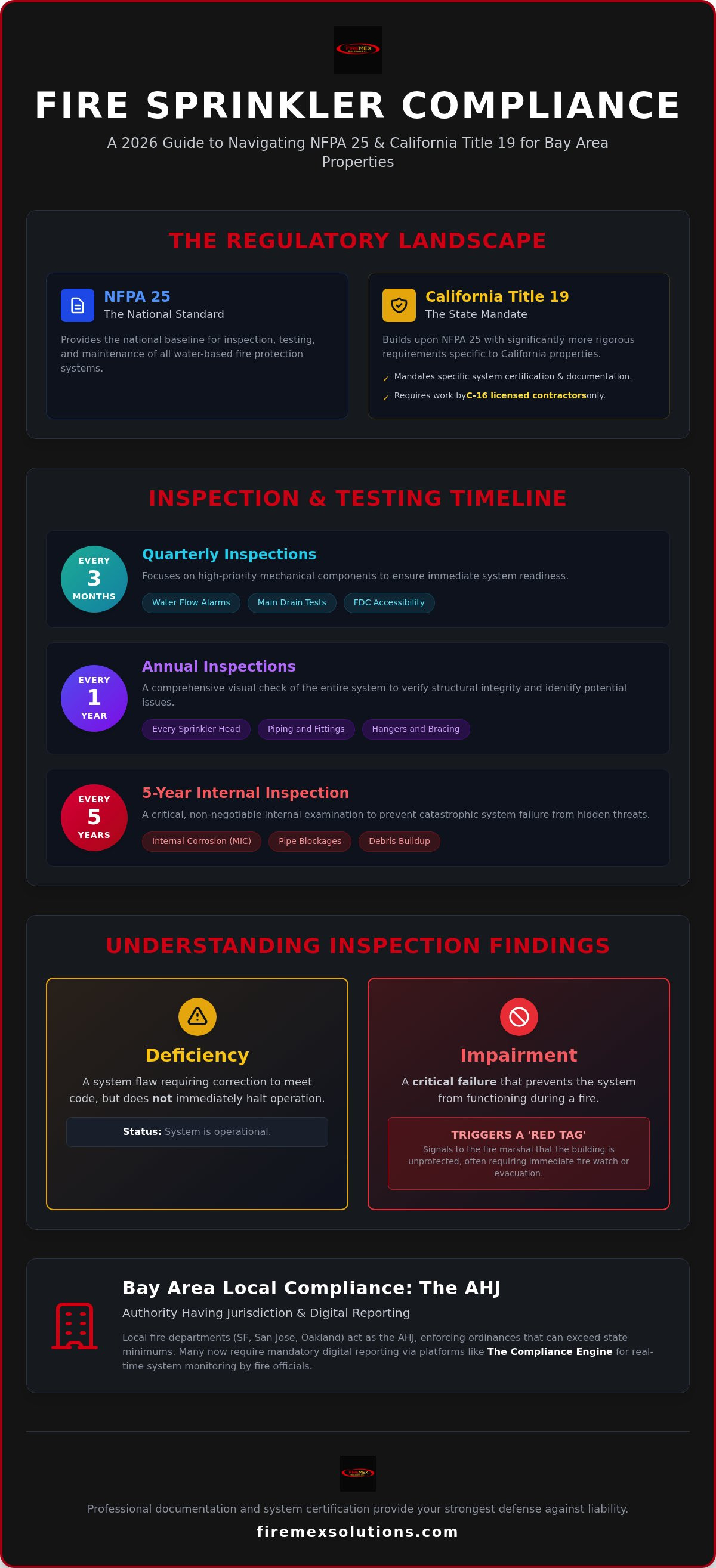
Maintaining a fire sprinkler system involves more than a quick visual check. The national foundation for these tasks is NFPA 25, which dictates the baseline for inspection, testing, and maintenance. However, California property owners must adhere to California Title 19 (Public Safety). This state regulation is significantly more rigorous than the national standard. It sets specific mandates for how systems are certified and documented within our state. It also requires that only C-16 licensed contractors perform this specialized work. Staying current with these fire sprinkler inspection requirements isn't just a safety preference; it's a legal obligation. Failing to meet these standards can invalidate your insurance coverage and jeopardize your commercial fire protection status. We've seen how a single missing certification can lead to insurance claim denials after even a minor incident.
The Role of the Authority Having Jurisdiction (AHJ) in the Bay Area
The local fire department or fire marshal serves as the Authority Having Jurisdiction (AHJ). In cities like San Jose, Oakland, and San Francisco, the AHJ oversees compliance and enforces specific local ordinances that often exceed state minimums. Many Bay Area departments now require digital reporting through platforms like The Compliance Engine to track system health in real time. This ensures that fire officials have instant access to your system’s status during an emergency. Understanding the specific fire sprinkler inspection requirements for your jurisdiction is critical for fire protection and safety. If your records aren't filed correctly with the local marshal, your building could face penalties. We prioritize these administrative details so you don't have to worry about bureaucratic red tape or unexpected fines.
Fire Sprinkler Inspection Frequencies: A 2026 Compliance Checklist
Compliance starts with a disciplined schedule. Per NFPA 25, property owners must follow a tiered approach to satisfy modern fire sprinkler inspection requirements. Quarterly visits focus on high-priority mechanical components like water flow alarms and main drain tests. We also ensure Fire Department Connections (FDCs) are clear, capped, and accessible for emergency responders. Annual requirements are more exhaustive. These involve a physical check of every sprinkler head, pipe, and hanger throughout the building to verify structural integrity. For older Bay Area structures, the 5-year milestone is non-negotiable. This involves internal pipe inspections to identify microbiologically influenced corrosion (MIC) or debris that could cause a system failure during a fire. Skipping this internal check is a common mistake that leads to catastrophic pipe blockages and costly emergency repairs.
Visual vs. Physical Testing: What Happens During a Professional Visit
A professional visit balances two distinct types of checks. Visual inspections identify obvious hazards like painted heads, leaks, or corroded pipes that compromise the system's response time. Physical testing goes deeper by activating valves and alarms to ensure they operate correctly under actual water pressure. This rigor is especially vital for fire sprinkler inspection in multi-family residential units, where life safety is paramount. After each test, you receive detailed documentation and system certifications. These reports act as your definitive proof of compliance for fire marshals and insurance providers. If you are unsure when your last 5-year check occurred, you can book a system certification review with our licensed team to ensure your property remains a safe haven.
Beyond the Checklist: Certification and Repair Protocols
When a professional assessment reveals issues, they are categorized as either deficiencies or impairments. A deficiency is a system flaw that needs correction to meet California Title 19 but doesn't immediately stop the system from operating. An impairment is a critical failure that prevents the system from functioning during a fire. This triggers the 'Red Tag' process. A red tag signals to the local fire marshal that your building is currently unprotected, often requiring an immediate fire watch or evacuation. Restoring safety quickly is essential to avoid legal penalties and property shutdowns. We prioritize these repairs to get your system back online without delay.
Professional documentation is your strongest defense against liability. In the event of a fire, insurance adjusters and legal teams will scrutinize your maintenance records. They want proof that you consistently met all fire sprinkler inspection requirements. Having a clear, documented trail of passed tests and resolved issues proves you exercised due diligence. It protects your assets and your reputation as a responsible property owner.
Handling Repairs and Securing Your System Certification
Finding a problem during a routine test is stressful, but it's also the first step toward a safer building. We make the transition from inspection to residential fire sprinkler repair Bay Area seamless and efficient. Once we address any deficiencies, we issue an official certification seal. This physical and digital record satisfies both fire marshals and insurance adjusters by confirming the system's integrity. Firemex Solutions acts as your 'Reliable Guardian' by managing the entire lifecycle of your life safety equipment. From the first turn of a valve to the final certification seal, we provide the expert oversight needed for total certainty.
Securing Your Property for 2026 and Beyond
Mastering fire sprinkler inspection requirements is about more than avoiding a fire marshal's citation. It's about creating a dependable shield for your assets and the lives within your building. By staying ahead of the California Title 19 schedule and addressing system impairments immediately, you ensure total certainty in your fire protection strategy. Firemex Solutions Inc. brings 20+ years of Bay Area safety expertise to every project. As a licensed C-16 Fire Protection Contractor, we manage the full lifecycle of your system, from comprehensive certifications to expert repairs. You don't have to face the complexities of safety management alone. Schedule your 2026 fire sprinkler inspection with the experts at Firemex Solutions Inc. today. We're here to provide the professional oversight you need to rest easy, knowing your property remains safe and fully compliant. Protecting lives...
Frequently Asked Questions
How often does NFPA 25 require fire sprinkler inspections for commercial buildings in 2026?
NFPA 25 mandates a tiered schedule including weekly or monthly visual checks of gauges and control valves. You must also conduct quarterly flow tests and comprehensive annual physical inspections of all components. Every five years, an internal pipe investigation is required to check for obstructions. Adhering to these fire sprinkler inspection requirements ensures your commercial property remains compliant with both national and California state laws.
What is the difference between a fire sprinkler inspection and a fire sprinkler test?
An inspection is a visual survey of the system to identify obvious issues like leaks, corrosion, or painted heads. A test is a physical operation of the equipment to confirm it works as designed. Testing involves activating water flow alarms, opening valves, and verifying pump performance. Both are essential components of the fire sprinkler inspection requirements to ensure the system responds correctly during a real emergency.
Can a building owner perform their own fire sprinkler inspections in California?
While building staff can perform simple weekly or monthly visual gauge checks, they cannot certify the system. California law requires a C-16 licensed contractor to conduct the quarterly, annual, and five-year inspections and tests. Only a licensed professional can sign off on the official documentation required by fire marshals and insurance providers to prove your building meets all current safety standards.
What happens if my fire sprinkler system fails its annual inspection?
If your system fails, the inspector categorizes the issues as either deficiencies or impairments. Minor deficiencies require scheduled repairs, while critical impairments may result in a 'red tag' and an immediate fire watch requirement. You must resolve these issues and have the system re-inspected to receive your compliance certification. We handle these repairs promptly so you don't face extended property shutdowns.
Comments