


Wet Pipe vs. Dry Pipe Sprinkler Systems: The 2026 Bay Area Property Owner’s Guide
- 11 minutes ago
- 5 min read
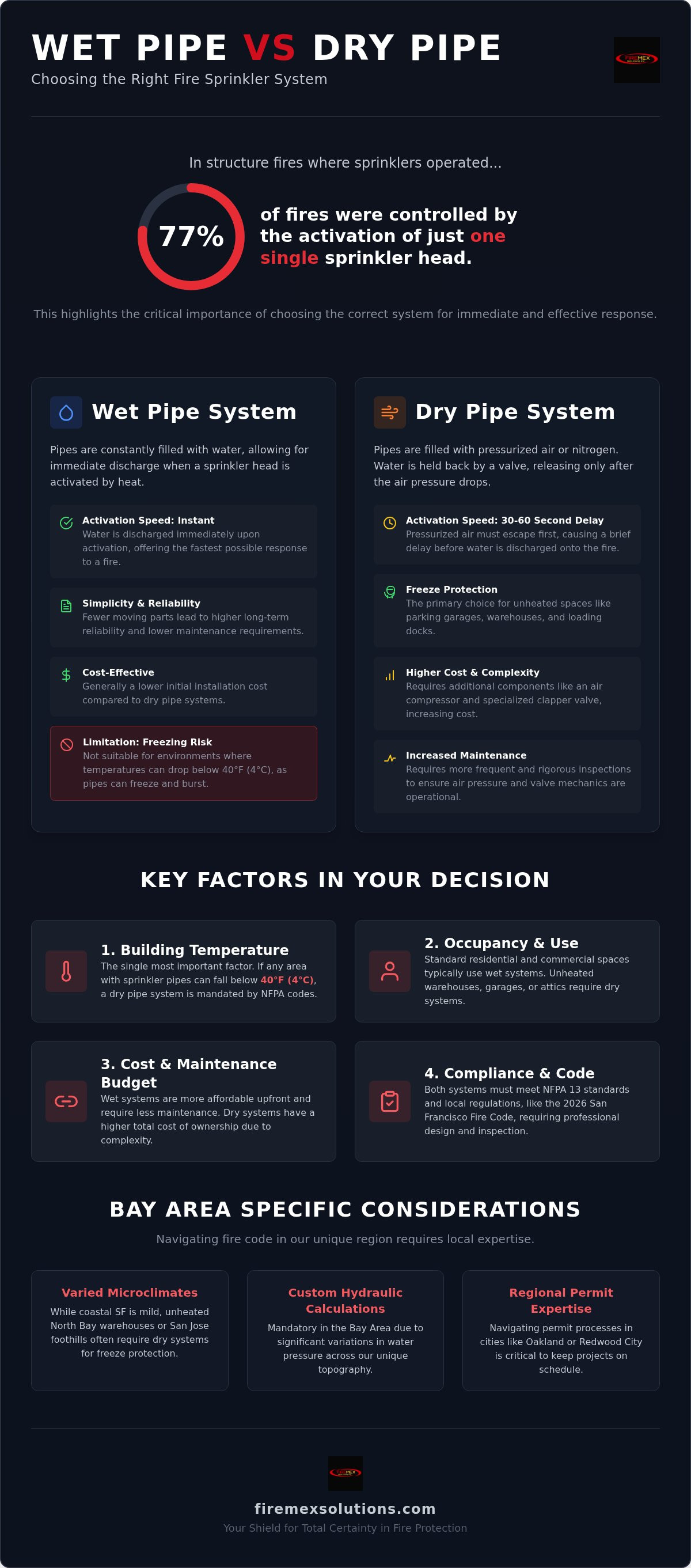
In over 77% of structure fires where sprinklers operated, only one head was needed to control the flames. This level of precision is why your choice between wet pipe vs dry pipe sprinkler systems is one of the most critical safety decisions you'll make for your Bay Area property. Choosing the right configuration is about more than just compliance; it's about ensuring your building remains a secure environment.
You likely already know that keeping your building up to code is a non-negotiable part of ownership. However, the fear of accidental water discharge or pipes freezing in unheated spaces can make the process feel overwhelming. It's natural to feel anxious about the high-stakes legal requirements of the 2026 San Francisco Fire Code updates. Always ready...
We'll provide the total certainty you need to choose a system that acts as a dependable shield for your assets. This guide explores the mechanical differences between these systems, current NFPA 13 standards, and how expert oversight ensures your system remains ready.
Table of Contents
Understanding the Mechanics: How Wet and Dry Pipe Systems Work
Selecting the right protection starts with grasping the fundamental fire sprinkler system mechanics that differentiate these two technologies. The primary distinction between wet pipe vs dry pipe sprinkler systems lies in what is stored inside the piping network before a fire occurs. While the mechanics of wet pipe vs dry pipe sprinkler systems differ, both rely on heat-sensitive elements to initiate fire suppression. Total certainty...
The Critical Differences in Activation and Water Delivery
Wet pipe systems are the standard for residential fire sprinkler systems in the Bay Area because of their simplicity. When heat triggers the glass bulb or fusible link in a sprinkler head, water discharges instantly. There are no moving parts between the water supply and the fire. This simplicity results in lower maintenance and higher long-term reliability for heated buildings.
Dry systems involve a more complex sequence. They utilize a specialized clapper valve, which acts as a gateway. This valve uses air pressure to hold back the water supply at a remote, heated location. When a head activates, the air escapes first. This drop in pressure allows the clapper to swing open, finally letting water into the pipes. This process creates a 30 to 60 second delay in water delivery. While this delay is accounted for in the design phase, it's a trade-off for protecting unheated spaces. Dry systems require more frequent oversight to ensure the mechanical valves remain operational and the air pressure stays consistent. Always ready...
Selecting the Right System: Climate, Cost, and Maintenance Factors
Your building's thermal environment is the primary driver when choosing between wet pipe vs dry pipe sprinkler systems. While the coastal Bay Area enjoys mild weather, microclimates in the North Bay or San Jose foothills often drop below freezing. NFPA codes mandate a dry system or heat tracing whenever temperatures are expected to fall below 40°F. This ensures your pipes don't burst during a cold snap, preventing devastating water damage and system failure.
The decision impacts your budget beyond the initial installation. Wet systems offer a simpler, more cost-effective design for heated interiors. Conversely, dry systems require a higher investment due to the need for air compressors and specialized valves. For specialized commercial fire protection, such as in unheated parking garages or cold storage facilities, the added complexity is a necessary safeguard for your assets. Always ready...
Why Temperature Control Dictates Your Fire Protection Strategy
Maintaining proper air pressure is vital to prevent "false trips," where water enters the dry pipes prematurely. To combat oxygen-induced corrosion, modern dry systems often utilize nitrogen generators. This advanced technology replaces oxygen with inert nitrogen, significantly extending the pipe's lifespan and reducing repair needs. Total certainty...
Managing these internal environments requires specialized expertise and a proactive approach. If you're unsure which thermal threshold your property falls under, a professional assessment can provide the clarity you need to stay compliant. You can rely on the team at Firemex Solutions to evaluate your specific site needs and provide a dependable shield for your property. Proven results...
Professional Installation and Maintenance in the San Francisco Bay Area
The design phase is where safety becomes a precise blueprint. In the San Francisco Bay Area, custom hydraulic calculations are mandatory because water pressure varies significantly across our unique topography. Whether you are installing wet pipe vs dry pipe sprinkler systems, these calculations ensure the water supply meets the demand of your specific building layout. Choosing between wet pipe vs dry pipe sprinkler systems requires a partner who understands these local pressures. Navigating the permit processes in cities like Oakland or Redwood City requires regional expertise to keep your project on schedule. Total certainty...
Maintaining system readiness is a lifelong commitment to safety. A recurring fire sprinkler inspection is the only way to guarantee your system will perform when it matters most. For homeowners, addressing small leaks quickly through residential fire sprinkler repair Bay Area prevents minor drips from turning into costly water damage. Always ready...
Meeting California Fire Codes and Local Compliance Standards
Compliance is governed by NFPA 25, which mandates quarterly and annual inspections to verify mechanical integrity. California Title 19 also requires a rigorous 5-year certification process. During this cycle, a C-16 licensed contractor performs internal pipe examinations and flow tests that go far beyond a visual check. The South San Francisco Fire Department serves as the local authority having jurisdiction, reviewing plans and conducting final field inspections to ensure every system meets the highest safety standards. Proven results...
Securing Your Bay Area Property with the Right Protection
Your building's thermal environment is the single most important factor when weighing wet pipe vs dry pipe sprinkler systems. While wet systems offer reliable simplicity for heated interiors, dry systems provide the necessary shield for unheated spaces prone to freezing. Staying compliant with 2026 fire codes requires more than just the right hardware; it demands a proactive approach to inspections and certifications. Total certainty...
Firemex Solutions Inc. brings 20+ years of Bay Area fire safety expertise to every project. As a locally owned and operated South San Francisco contractor, we're C-16 Licensed and Fully Insured to handle your most complex safety needs. Protect your property with a custom fire sprinkler consultation from Firemex Solutions Inc. today. We're here to ensure your peace of mind remains unshakable. Always ready...
Frequently Asked Questions
Can I convert a wet pipe system to a dry pipe system later?
Yes, you can convert a system, but it involves substantial mechanical upgrades. You'll need to install a specialized dry pipe valve and an air compressor while verifying that all existing pipes are pitched correctly for drainage. This conversion is often complex because air pressure is more likely than water to find tiny leaks in your older piping network. Always ready...
Are dry pipe systems more prone to corrosion than wet pipe systems?
Dry systems are indeed more susceptible to internal corrosion. When you compare wet pipe vs dry pipe sprinkler systems, the presence of pressurized air and trapped moisture in dry pipes creates a corrosive environment. To protect your investment, we recommend using nitrogen generators. These displace oxygen and significantly slow down the degradation of the metal pipes. Total certainty...
How much more does a dry pipe system cost compared to a wet pipe system?
A dry pipe system requires a higher financial commitment than its wet counterpart. When choosing between wet pipe vs dry pipe sprinkler systems, expect higher initial labor and material costs for air compressors and specialized valves. Property owners should also budget for more frequent testing cycles to ensure these mechanical components remain fully operational and compliant. Proven results...
What happens if the air compressor in my dry pipe system fails?
If the compressor fails, the air pressure inside the pipes will eventually drop below the threshold required to hold back the water. This causes the dry pipe valve to trip, flooding the system with water. If this happens in a freezing environment, you risk catastrophic pipe bursts. Regular maintenance ensures your compressor stays reliable. Always ready...
Comments