


Multi Family Fire Sprinkler Inspection San Francisco: The 2026 Checklist
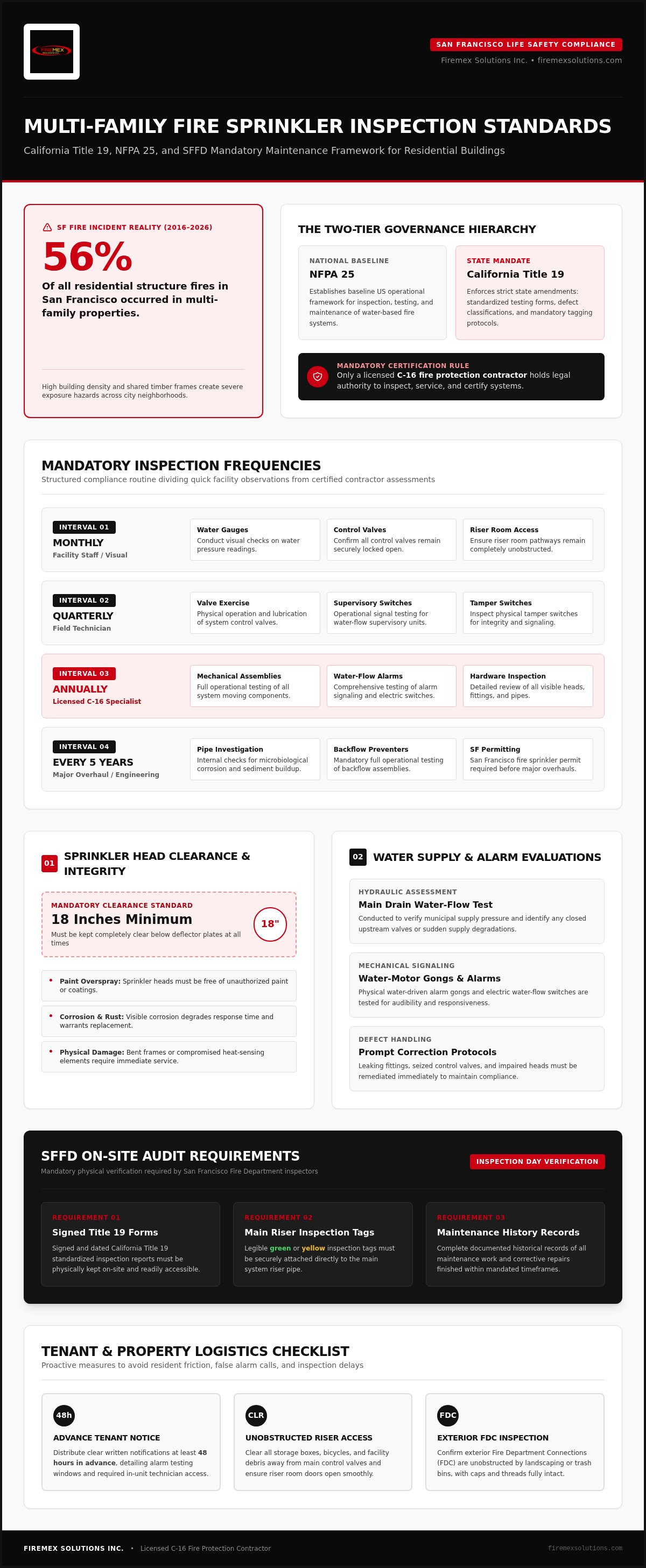
Between 2016 and 2026, 56 percent of all residential structure fires in the city occurred in multi-family properties. That reality explains why local officials maintain rigorous oversight, and why completing your multi family fire sprinkler inspection San Francisco requirements on time is critical. You already know the headache of balancing complex California Title 19 rules with resident schedules while trying to avoid failed reviews and municipal fines.
True compliance isn't about scrambling right before an SFFD inspector arrives; it's about establishing a dependable, proactive maintenance schedule. In this 2026 checklist, you'll discover the exact testing frequencies mandated by local codes, learn how to manage flow and alarm checks without frustrating tenants, and gain a clear roadmap to keep your building fully protected and certified.
Table of Contents
San Francisco Multi-Family Fire Sprinkler Regulations and Mandates
Operating an apartment building or condominium complex in San Francisco presents unique structural challenges. Between tight lot lines in the Mission and multi-story Edwardian timber framing in Pacific Heights, density hazards are real. A certified fire sprinkler system serves as your building's frontline defense, containing localized flare-ups before they threaten shared walls. Because the stakes are so high, staying compliant with every multi family fire sprinkler inspection San Francisco mandate isn't merely an administrative duty; it protects lives, historic architecture, and property investments across every neighborhood.
To establish baseline standards across mixed-use or multi-tenant layouts, property managers frequently consult guidelines for commercial fire protection in San Francisco. Merging commercial reliability with residential life safety ensures complete protection throughout common corridors, utility hubs, and living quarters.
The Interplay of NFPA 25 and California Title 19
While NFPA 25 provides the national framework for water-based fire protection, California Title 19 enforces strict state-specific amendments. California mandates standardized testing forms, clear inspection tagging protocols, and defined defect classifications that general national standards don't address.
Under California regulations, only a licensed C-16 fire protection contractor holds the legal authority to inspect, service, and issue formal system certifications. During routine audits, the San Francisco Fire Department requires clear, uncompromised documentation:
Signed, dated Title 19 inspection report forms kept securely on-site.
Legible green or yellow inspection tags attached directly to the main riser.
Documented records of all maintenance work and corrective repairs completed within mandated timelines.
Maintaining these verification records guarantees an efficient audit whenever city officials arrive for a multi family fire sprinkler inspection San Francisco review.
The Multi-Family Fire Sprinkler Inspection Checklist by Frequency
A dependable life-safety routine relies on clear intervals. Managing a residential complex requires separating quick in-house observations from mandatory professional assessments. Following a structured schedule keeps your hardware reliable and your property compliant.
Monthly: Conduct visual checks on water gauges, confirm control valves are locked open, and ensure riser room access remains completely unobstructed.
Quarterly: Have a technician exercise control valves, test water-flow supervisory switches, and inspect physical tamper switches.
Annually: Bring in a licensed C-16 specialist for full operational testing of all mechanical assemblies and water-flow alarms.
Every 5 Years: Complete an internal pipe investigation to identify hidden microbiological corrosion or sediment blockage, alongside mandatory backflow preventer testing. Major system overhauls may require securing a San Francisco fire sprinkler permit before work begins.
Routine Component Checks and Annual Operational Testing
During the annual evaluation, technicians inspect every visible sprinkler head. They check for paint overspray, rust, and verify at least 18 inches of clearance below deflector plates. Physical damage or bent hardware requires immediate attention.
Specialists also perform main drain water-flow evaluations to verify municipal supply pressure and test mechanical water-motor gongs. Coordinating your schedule through our guide to fire sprinkler inspection in San Francisco helps you stay ahead of municipal deadlines without unnecessary disruption. When you're ready to align your maintenance calendar, partnering with a dependable team like Firemex Solutions Inc. provides steady protection and total compliance across every multi family fire sprinkler inspection San Francisco cycle.
Preparing Multi-Tenant Buildings for Inspection Day and Certification
Smooth testing requires thoughtful logistical coordination. In dense San Francisco apartment buildings, unexpected alarm bells quickly generate tenant panic and unnecessary calls to dispatchers. Distribute clear written notices to residents at least 48 hours in advance, specifying testing windows and technician entry requirements. On the service side, verify that storage boxes, bicycles, or maintenance debris don't block access to control valves, riser rooms, or exterior Fire Department Connections.
When tests uncover leaking fittings, seized valves, or damaged heads, address them immediately. Completing timely residential fire sprinkler repair in the Bay Area resolves system deficiencies before field reports reach municipal desks. Swift correction helps you pass your multi family fire sprinkler inspection San Francisco audit without costly delays or code citations.
Post-Inspection Documentation and Local SFFD Filing
Once testing concludes, your contractor completes official California AES reporting forms and mounts an updated certification tag onto the main riser. Because local rules build directly on standards from the National Fire Protection Association, property managers must store these signed forms in an on-site binder for unannounced SFFD audits. Partnering with seasoned professionals like Firemex Solutions Inc., backed by over 20 years of Bay Area C-16 licensed experience, ensures smooth annual filing and total life-safety peace of mind.
Secure Your Multi-Family Property with Confident Compliance
Navigating life-safety regulations doesn't have to be overwhelming. When you maintain a disciplined testing calendar, keep on-site documentation organized, and communicate clearly with tenants, passing annual reviews becomes straightforward. Staying proactive with your multi family fire sprinkler inspection San Francisco schedule protects both your valuable architectural investment and the residents who depend on it every day.
With over 20 years of dedicated Bay Area experience, our licensed California C-16 specialists deliver comprehensive testing fully compliant with SFFD and California Title 19 mandates. We take pride in minimizing tenant disruption while giving property owners complete operational certainty. Schedule your multi-family fire sprinkler inspection with Firemex Solutions Inc. today to ensure your residential community stays safe, compliant, and thoroughly protected.
Frequently Asked Questions
How often do multi-family fire sprinkler systems need inspection in San Francisco?
Multi-family systems follow a tiered schedule under NFPA 25 and California Title 19. Routine visual gauge assessments occur monthly, while mechanical flow alarms and valves receive quarterly reviews. Complete physical evaluations require an annual multi family fire sprinkler inspection San Francisco certification by a licensed specialist, complemented by an internal pipe and backflow assessment every five years.
Can a building maintenance technician perform official annual sprinkler certifications?
No, on-site maintenance staff cannot issue legal compliance tags or submit certified Title 19 reports. While staff members can perform basic monthly visual checks on open valves and riser gauges, California law strictly mandates that only a licensed C-16 fire protection contractor can conduct formal testing, handle system repairs, and sign official certification documents for local fire marshals.
What happens if a San Francisco multi-family building fails its fire sprinkler inspection?
Failing an inspection results in a corrective deficiency notice from your technician or the SFFD. Non-critical issues typically allow 30 days for authorized repairs, but severe impairments require immediate resolution or a dedicated fire watch. Failing to rectify deficiencies promptly can lead to red-tag shutoffs, steep municipal fines, and increased property liability.
How do property managers handle tenant unit access for interior sprinkler head checks?
Property managers must issue formal written entry notices at least 24 to 48 hours prior to service, in accordance with California tenant laws. Outline specific arrival windows and explain the life-safety benefits to encourage resident cooperation. Pairing building staff with the C-16 technicians during unit walkthroughs keeps inspections rapid, respectful, and minimally disruptive for your multi family fire sprinkler inspection San Francisco schedule.
Comments