


Expert Fire Sprinkler System Design for San Francisco Bay Area Properties
- Aug 2
- 7 min read
What if a single missed detail in your blueprints could delay your move-in date by months? In the San Francisco Bay Area, the gap between a failed inspection and a successful residential fire sprinkler installation Bay Area is often found in the engineering phase. You want a home that is safe, but you also want a design that respects your architectural vision without the clutter of unnecessary piping. It's a delicate balance that requires a disciplined, professional approach to California Title 24 and local municipal codes. Expert oversight... This is the foundation of a dependable shield for your property.
We understand the pressure of meeting local fire marshal expectations while trying to maintain the aesthetic integrity of a luxury home. Total certainty is our standard. This article explains how professional engineering and local code compliance ensure your fire sprinkler system design provides maximum protection and passes inspection the first time. We'll provide a clear roadmap of the design-to-permit process, helping you achieve cost-efficiency and swift approval from the local AHJ. By the end, you'll have the clarity needed to secure your property with a system that is as reliable as it is discreet.
Table of Contents
The Fundamentals of Fire Sprinkler System Design and Safety
A fire sprinkler system is more than just a network of pipes; it is a meticulously engineered life safety blueprint that must harmonize with California Building Code Title 24. For property owners in San Francisco or Oakland, the design phase is the most critical period of a project. This stage determines pipe sizing, head placement, and water supply requirements before physical installation begins. Professional design is non-negotiable for insurance compliance and legal liability protection, especially in high-density Bay Area neighborhoods where fire spread is a constant concern.
Investing in a professional residential fire sprinkler installation Bay Area means starting with a design tailored to your building's specific occupancy. This engineering process ensures that every component works in unison to provide a dependable shield for your assets. By calculating water pressure and flow rates with precision, designers create a system that responds instantly to heat, providing total certainty when it matters most.
NFPA 13 vs. 13R vs. 13D: Which Standard Applies?
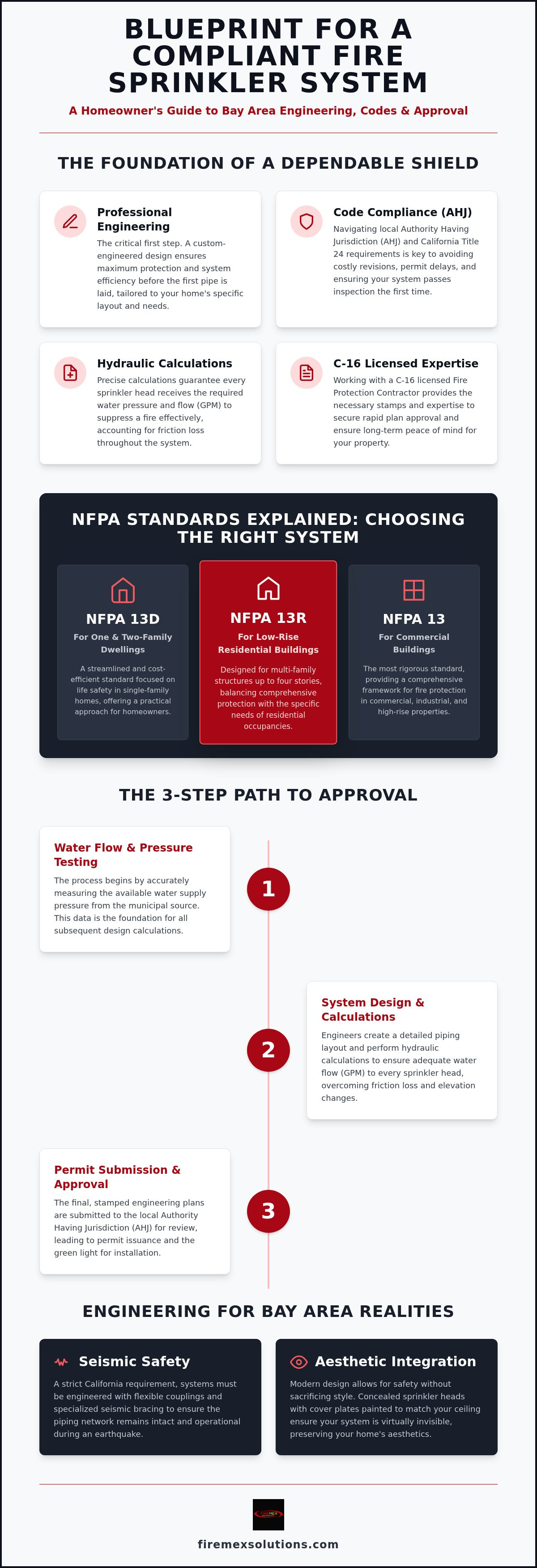
Understanding the differences between these standards is vital for cost-efficiency. NFPA 13 is the rigorous standard for commercial buildings, while 13R and 13D focus on residential environments. Choosing the correct standard impacts the complexity and total cost of residential fire sprinkler systems. NFPA 13D, for instance, is specifically designed for one and two family dwellings, offering a streamlined approach that prioritizes life safety while remaining fiscally accessible for homeowners.
Discreet Design: Balancing Safety with Home Aesthetics
Modern engineering has solved the conflict between safety and style. We use strategic head placement to maximize coverage while minimizing visual clutter in modern SF architecture. Designers can now specify concealed sprinkler heads that vanish into high-end ceilings, using cover plates that match your paint color perfectly. This level of detail is a hallmark of a high-quality residential fire sprinkler installation Bay Area, ensuring your home remains a sanctuary without sacrificing the protection that only a professionally designed system provides.
Engineering the System: Hydraulic Calculations and Seismic Safety
Precision is the hallmark of a safe home. While the previous section covered the broad fundamentals, the engineering phase is where the math meets the metal. Hydraulic calculations are the core of this process. These calculations ensure that every sprinkler head receives the required gallons per minute (GPM) to suppress a fire effectively. Designers must meticulously account for friction loss, which occurs as water moves through pipes, fittings, and changes in elevation. Without this level of detail, a system might look correct on paper but fail to perform under pressure during a real emergency.
In our region, engineering must also account for the earth beneath us. Proper Seismic Protection for Sprinkler Systems is a strict California requirement. We utilize flexible couplings and specialized bracing to ensure the system remains intact during a tremor. This engineering also involves a deep integration with the underground fire service. We verify that the municipal supply can meet the system's demand, providing a dependable shield for your property from the street to the ceiling.
The Design Process: From Blueprint to Approval
Success in a residential fire sprinkler installation Bay Area follows a disciplined three-step progression. First, we conduct water flow testing to determine local street pressure in cities like Oakland or San Jose. Second, we establish a hazard classification based on the building’s specific use. Finally, we create a piping layout and perform final hydraulic calculations for permit submission. If you're unsure how these steps apply to your project, it's helpful to consult with a licensed professional early in the planning phase.
Retrofitting Challenges in Older Bay Area Buildings
Installing modern safety systems in historic Redwood City or San Francisco homes requires a specialized touch. Design strategies change significantly when working with older structures that weren't built with fire suppression in mind. We develop creative pipe routing solutions that preserve architectural integrity while meeting current California Fire Codes. It's about finding the balance between modern safety and the timeless character of your home, ensuring total certainty without compromising your property's soul.
Navigating Permitting and Installation in the Bay Area
The final hurdle in any residential fire sprinkler installation Bay Area is securing approval from the Authority Having Jurisdiction (AHJ). Requirements are not uniform across the region. The San Francisco Fire Department often has distinct standards compared to departments in Palo Alto or Berkeley. These local nuances make a C-16 license and the proper professional stamps essential for rapid permit approval. A design that looks perfect on paper might be rejected if it doesn't account for specific municipal amendments.
Choosing a local partner like Firemex Solutions Inc. ensures your design is buildable and compliant with these hyper-local codes. Our team bridges the gap between engineering and fire sprinkler installation San Francisco. This localized expertise acts as a dependable shield for your timeline and your budget. We prioritize a no-nonsense approach that moves your project from the drafting table to the job site with quiet confidence.
Common Design Errors That Delay SF Projects
Project delays often stem from incorrect water supply data. If the initial flow test is inaccurate, the system may fail the final bucket test, requiring expensive revisions. We also see failures when designers overlook local amendments to the California Fire Code in cities like San Mateo or Burlingame. These small details can halt a residential fire sprinkler installation Bay Area if they aren't caught during the engineering phase. Precision in the early stages prevents these costly setbacks.
The Role of System Certification and Inspection
A well-documented design simplifies the final fire sprinkler inspection process. Inspectors look for consistency between the approved plans and the physical installation. Once the work is complete, accurate As-Built drawings are vital. These documents serve as the permanent record for your property, ensuring future maintenance and certifications proceed without confusion. Total certainty in your safety system starts with these final, disciplined steps.
Secure Your Property with Professional Engineering
A safe home begins with a design that leaves nothing to chance. We have explored how precise hydraulic calculations and seismic bracing form a dependable shield for your assets. By prioritizing local code compliance and aesthetic integration, you'll ensure your system passes inspection without the stress of costly revisions. Expert design is the critical first step for any successful residential fire sprinkler installation Bay Area project. It's the bridge between complex California Title 24 regulations and the practical needs of your property.
Firemex Solutions Inc. brings over 20 years of Bay Area safety expertise to every blueprint. As a C-16 Licensed Fire Protection Contractor, we ensure every design is fully compliant with NFPA and California Fire Codes. We provide the total certainty you need to move your project forward with confidence. Our team is ready to help you navigate the specific demands of your local fire department while protecting the architectural integrity of your home. Ready to move forward? Get a Professional Fire Sprinkler Design Quote from Firemex Solutions Inc. and secure your peace of mind today. Your property deserves the oversight of a seasoned professional who understands the unique landscape of the San Francisco Bay Area.
Frequently Asked Questions
How long does the fire sprinkler system design process typically take in the Bay Area?
The engineering phase for a residential fire sprinkler installation Bay Area typically takes two to four weeks. This timeframe includes the site evaluation, detailed hydraulic calculations, and the creation of the final blueprints. It's important to remember that the total schedule also depends on the local Authority Having Jurisdiction. Cities like San Francisco or San Jose often require several additional weeks for plan review before they issue the necessary permits.
Do I need a separate fire engineer for my residential project in California?
You don't usually need a separate fire engineer for standard residential projects in California. A C-16 Licensed Fire Protection Contractor has the legal authority and technical proficiency to design and engineer these systems. This integrated approach ensures that the design for your residential fire sprinkler installation Bay Area is both code-compliant and practical for installation. Only specialized high-rise or complex commercial structures typically require a Professional Engineer stamp.
Can I design my own fire sprinkler system for a new home build?
No, property owners are not permitted to design their own fire sprinkler systems. California law requires these systems to be engineered by licensed professionals who have mastered NFPA standards and Title 24 regulations. A professional designer ensures that pipe sizing and head placement are mathematically sound. Attempting a DIY design creates significant legal liability and risks the safety of your home, whereas a licensed contractor provides total certainty.
What information is required to start a fire sprinkler hydraulic calculation?
We need specific technical data to begin the hydraulic calculation process. First, a recent water flow test from the local utility is required to establish the available street pressure. Second, we need complete architectural plans to determine room volumes and ceiling configurations. Finally, we must identify the building's elevation and the location of the water entry point. This information allows us to accurately calculate friction loss and ensure system reliability.
Comments