


Underground Fire Service Installation: A 2026 Bay Area Property Owner’s Guide
- Aug 14
- 6 min read
In the Bay Area, the success of your building's life-safety system is decided long before the first sprinkler head is installed. Many property owners realize too late that the gap between civil excavation and fire safety compliance is where most costly delays occur. It's exhausting to manage the friction between different contractors while trying to satisfy specific municipal inspectors in San Francisco or San Jose. We understand that you need more than just a pipe in the ground; you need total certainty that your infrastructure is code-compliant and built to last.
This guide masters the complexities of underground fire service installation Bay Area, helping you navigate NFPA 24 standards and 2026 California Fire Code requirements. We will outline the essential timeline from initial trenching to the final certification, ensuring your building's foundation is permanent, leak-free, and ready to pass inspection on the first attempt.
Table of Contents
The Foundation of Fire Safety: Understanding Underground Fire Service in the Bay Area
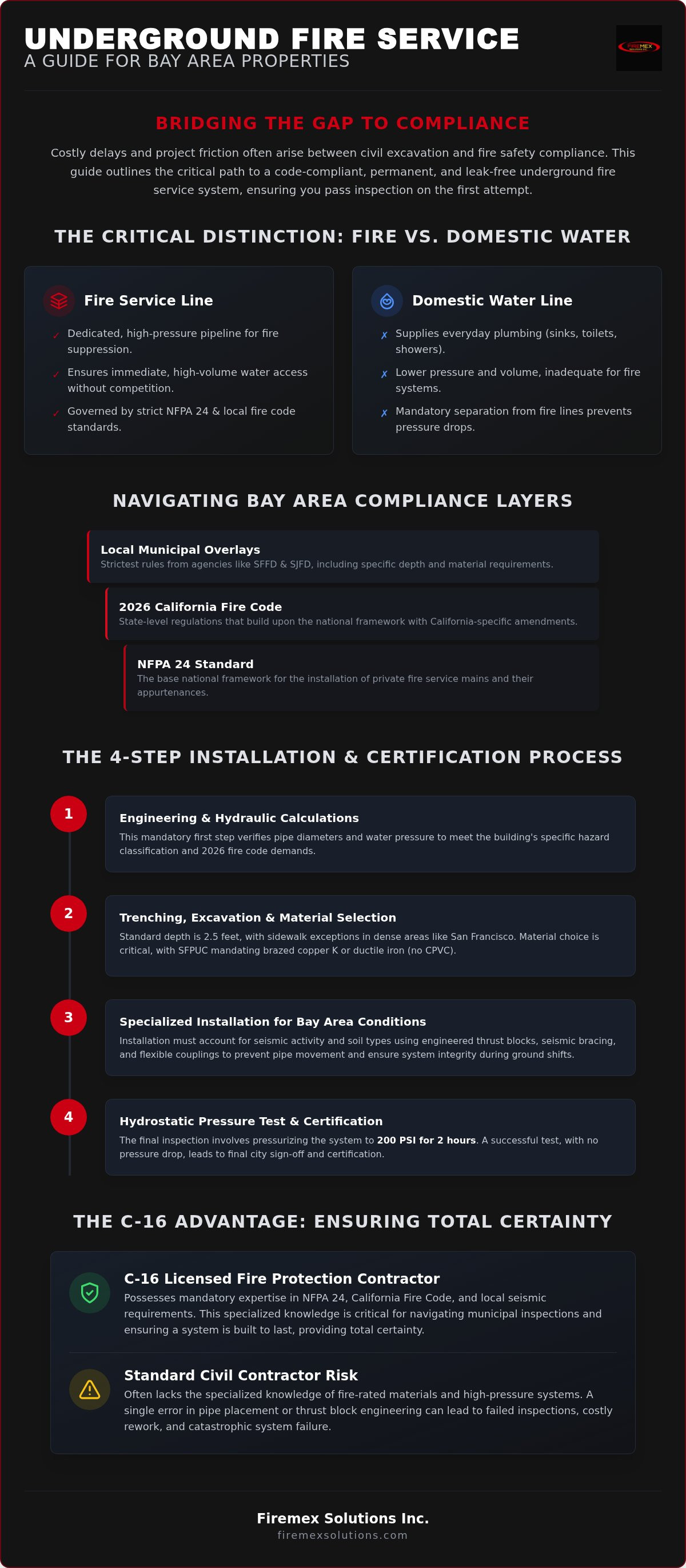
The underground fire service is the lifeline of your building's safety infrastructure. It's a dedicated, high-pressure pipeline that connects the municipal water main directly to the building's fire riser. While it might seem efficient to combine this with domestic water lines, 2026 standards require separation to ensure the fire sprinkler system has immediate access to high-volume water without competing with everyday plumbing. This distinction is vital for maintaining the hydraulic pressure needed to suppress a fire effectively during an emergency.
In the current 2026 regulatory environment, property owners must navigate a layered compliance structure. National standards like NFPA 24 provide the base framework, but local agencies such as the San Francisco Fire Department (SFFD) and San Jose Fire Department (SJFD) impose stricter municipal overlays. Successful underground fire service installation Bay Area requires a deep understanding of these specific city requirements to avoid costly project delays and ensure total safety. These codes are updated frequently, making localized expertise a non-negotiable asset for any project team.
Seismic Considerations and Local Soil Challenges
The Bay Area's geological diversity presents unique engineering hurdles that standard plumbing doesn't face. In San Francisco, soil conditions range from solid bedrock to unstable fill, requiring precisely engineered thrust blocks to prevent pipe movement under high pressure. We utilize seismic bracing and flexible couplings to ensure the system remains intact during significant ground shifts. Standard civil contractors often fail seismic inspections because they lack the specialized knowledge of how fire-rated materials must interact with the Bay Area's specific seismic safety codes. Using the right materials for our local geography ensures your safety foundation remains permanent and leak-free.
The Installation Process: Navigating Engineering, Excavation, and Testing
Precise engineering is the mandatory first step for any project. Hydraulic calculations must precede the first shovel in the ground to verify that pipe diameters and water pressure will meet 2026 fire safety demands. This ensures the system delivers the exact volume required by the building's specific hazard classification. A successful underground fire service installation Bay Area requires this level of detail. Trenching follows design approval. While most jurisdictions require a 2.5-foot depth of cover, we frequently navigate San Francisco's specific sidewalk exceptions where existing utility congestion allows for shallower installations under strict engineering oversight.
The transition from the municipal tap to the building's fire department connection (FDC) is the most critical segment of the project. This connection must be seamless to avoid pressure drops during an emergency. Adhering to the City of Santa Rosa's installation standard or similar regional guidelines provides the necessary roadmap for a successful city sign-off. If you're planning a new build, consulting with experts in underground fire service early can prevent major coordination issues between civil excavators and fire contractors.
Material Standards and the Hydrostatic Pressure Test
Material selection is governed by strict local mandates. The SFPUC prohibits CPVC for underground mains, instead requiring brazed copper K or ductile iron. These materials are built to survive the 200 psi hydrostatic pressure test. During this two-hour window, the system is pressurized while an inspector monitors for even the slightest drop. We prevent common failure points, such as shifting joints or leaking valves, through disciplined installation techniques. This ensures total safety. Our expert oversight keeps your life-safety foundation permanent and leak-free.
Choosing a C-16 Contractor: Ensuring Compliance and Total Certainty
Selecting the right partner for underground fire service installation Bay Area requires verifying specialized credentials. In California, the C-16 Fire Protection Contractor license is mandatory for installing and maintaining fire safety systems. Unlike standard civil contractors, a licensed professional understands the rigorous technical demands of the NFPA 24 standard. This expertise is critical because a single error in pipe orientation or thrust block placement can lead to catastrophic system failure during a fire or seismic event. We provide the total certainty you need to protect your assets and the lives within them.
Managing municipal bureaucracy is often the most stressful phase of underground fire service installation Bay Area. An experienced contractor acts as a dependable shield; they handle complex SFFD submittals and coordinate permit approvals with local water departments. This oversight ensures your project stays on schedule and avoids the delays common with inexperienced teams. Once the installation is complete, the focus shifts to long-term reliability. We guide property owners through the transition to the NFPA 25 inspection cycle, ensuring your building remains code-compliant and safe for years to come.
The Firemex Advantage in the San Francisco Bay Area
With over 20 years of industry experience, Firemex Solutions Inc. brings academic-grade engineering standards to every project. Our South San Francisco hub allows for rapid response across the Peninsula and East Bay. We offer a comprehensive range of services, from residential fire sprinkler systems to large-scale commercial underground mains. By combining technical proficiency with quiet confidence, we serve as your partner in safety. We prioritize your specific scheduling needs while maintaining a firm commitment to regulatory excellence and fiscal accessibility.
Protecting Your Asset with Permanent Fire Safety Infrastructure
We've explored why separate fire lines are a 2026 necessity and how seismic engineering keeps your system intact during ground shifts. Passing a city-witnessed hydrostatic test requires more than just digging; it demands precise hydraulic calculations and the right material selection. Choosing a seasoned expert for your underground fire service installation Bay Area ensures you meet every local municipal code from San Francisco to San Jose on the first attempt.
With C-16 licensed expertise and over 20 years of experience, we provide NFPA and state code compliant solutions that stand the test of time. Secure your property’s foundation with Firemex Solutions Inc. today. Your investment in high-quality fire service is the ultimate shield for your assets and the lives within them.
Frequently Asked Questions
How deep does an underground fire line need to be buried in the Bay Area?
Most Bay Area jurisdictions require a minimum of 30 inches, or 2.5 feet, of cover for fire service lines. The SFPUC maintains specific depth requirements for 2-inch copper lines, though sidewalk congestion in San Francisco occasionally allows for engineered exceptions. Adhering to these burial depths protects the infrastructure from heavy surface loads and ensures the system remains permanent and leak-free for decades.
Do I need a separate underground line for fire sprinklers and domestic water?
Dedicated lines are standard for commercial and multi-family projects to ensure high-volume water flow is available during emergencies. While some smaller residential systems use integrated piping, a separate underground fire service installation Bay Area is the most reliable way to guarantee pressure. This separation prevents domestic water usage from compromising the hydraulic performance of your building's essential life-safety foundation.
What is a hydrostatic test, and why is it required for fire lines?
A hydrostatic test is a mandatory safety procedure where the underground line is pressurized to 200 psi for two hours. This test identifies even the smallest leaks or structural weaknesses before the trench is backfilled. It provides property owners and municipal inspectors with total certainty that the pipeline can handle the extreme pressure required to feed a fire sprinkler system during a crisis.
Can any plumbing contractor install a fire service main in San Francisco?
No, only contractors holding a specialized C-16 Fire Protection license are authorized to install fire service mains in California. General plumbers often lack the specific engineering knowledge and municipal submittal experience required for SFFD approvals. Choosing a specialist for your underground fire service installation Bay Area ensures your project satisfies all 2026 regulatory standards and passes city-witnessed inspections on the first attempt.
Comments